 |
 |
  
|
 |
A Primer on Scientific TestingUnderstand the basics of scientific testing. Skeptoid Podcast #13 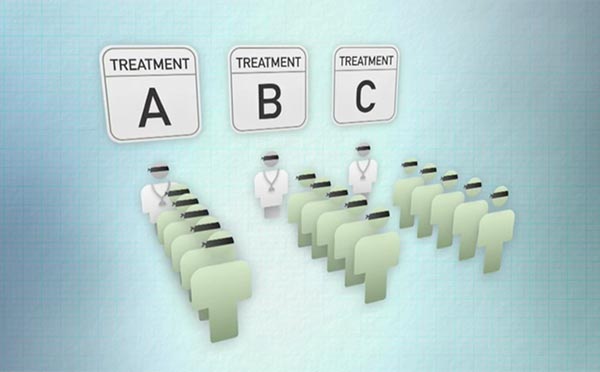 by Brian Dunning Today we're going hide our crib notes in our hats, pull our sleeve down to cover the notes written on our arms, and dive into the world of testing. Much of the feedback I received on the wheatgrass juice episode concerned claims that wheatgrass juice has already been tested and been proven to cure many different diseases and promote many types of well being. And if I had a dollar for every email I received accusing me of being in the employ of Big Evil Corporations who are frightened of wheatgrass juice, I would be able to afford a shot of this quack beverage every single day. But has it truly been tested, according to what scientific testing really means? So I hereby present this primer on scientific testing, to better equip the layperson with the ability to determine the validity of claims being made, or the published results of supposed research. Valid claims and real research will follow the whole process that I'm about to outline, and they'll tell you about it too. If the poster you read in Jamba Juice doesn't detail the testing procedure used to substatiate its claims, or if the testing procedure is not similar to that outlined herein, then you have very good cause to be skeptical of any claims that it makes. If something works, its makers should be happy to prove it to you. Testing of something in medicine, for example, is done by what we in the brotherhood call a clinical trial, more formally known as a randomized controlled trial. The same general principles apply to any kind of scientific testing. The aspect of randomization refers to the random distribution of subjects into similarly sized groups. When done thoroughly and responsibly, statistical methods are used to remove any sort of bias for the assignment of subjects, and to ensure that the assignments are not known to the participants or the administrators. Make no mistake, even this apparently simple first step of testing is a thorough one, and it's this kind of comprehensive attention to detail that separates a real test from the typical anecdotal "testing" claimed by supporters of most pseudoscientific phenomena. One of the most important characteristics of a valid test is the control. Let's say your wrist hurts, and so you try acupuncture, and your wrist feels better. You're likely to consider that you've just tested acupuncture, and it worked, thus proving its efficacy. But in fact, this was not a valid test, because there was no control. Your wrist may have healed naturally. Your wrist may have been healed by a psychic in the next room. There is no way to know what effect, if any, the acupuncture had. It may have even slowed the healing, for all you really know. The most basic kind of control would have been to have at least two people with similar injuries, where one received the acupuncture and the other received a control procedure, and all else would have had to be equal. Even if you take an aspirin for a headache and someone asks you how it worked, you truthfully can't say, ever; because you had no alternate version of yourself who didn't take the aspirin as a control to compare against. With a control, you have the beginnings of a valid test. Blinding is another fundamental of trials. Blinding means keeping the test participants in the blind. If people know what they're being given, know what results they're expected to report, or know what kind of result to look for, the results are untrustworthy. Everyone is a human being, and if you're not blinded, you may unknowingly skew the results, or you may have opportunity to wield some agenda that you might have. Everyone has expectations, preconceived notions, biases, and perceptual errors. Researchers know this, and they know unblinded subjects to be virtually useless in most kinds of tests. Blinding can be single, double, or even triple. In a single-blind test, the participants in the experiment don't know any information that might skew the results. If they're testing a drug taken orally, the participants must not know whether they're taking the real drug or the control placebo. If they're receiving acupuncture, they must not know whether they're receiving traditional acupuncture or sham acupunture; so the experience would have to be designed to be the same for both groups, for example having the needles in sleeves that make it impossible to tell whether they were just poked or if the needle actually went in. If they're taking wheatgrass juice, they must not be able to tell whether they're drinking real wheatgrass juice or a placebo, so it would have to be administered in some form where they couldn't tell. The purpose of blinding the participants is to prevent them from either knowingly or unknowingly manipulating the results of the test, by reporting or reacting differently. Single blind tests are good, but double blind tests are better. In a double blind test, neither the subjects nor the people administering the tests know what group any given subject is in. They also don't know whether they're giving the real substance being tested or a placebo. A double blind test removes the chance that a test administrator might skew the results by acting differently, either knowingly or unknowingly, and thus providing information to the test subject. Triple blind tests take it the furthest extreme. A triple blind test is just like a double blind test, but with the additional element of the statisticians also being blinded. For the people tabulating and analyzing the results of the test to be blinded, the data is presented to them in a coded form so that they're not able to know anything about any given subject or administrator. They'll see data like "Subject A was given substance B by administrator C, and had a 13% improvement." They don't know if subject A was in a control group or a test group, they don't know what substance B is, and they don't know who administrator C is. In this way they're able to present detailed results of the test that are completely unbiased, because even the statisticians themselves don't know what the data mean. Once your testing is done, your results are ready for publication. If you want your report to be taken seriously, it needs to be subjected to — and survive — the process of peer review. Peer review means having your research submitted to experts in the field. So who are these experts and who chooses them? That usually depends on who's publishing the research. If it's a scientific journal, the editorial staff will usually maintain a stable of referees in the community. These referees are typically well regarded professionals in the field, all of whom have been through this wringer themselves and been published. If your research was responsibly conducted and your conclusions are well supported by the evidence, then the referees will typically give it apassing grade for publication. Let's say a UFO researcher writes a paper that says UFOs come from another dimension, and he has some of his fellow UFOlogists — whom he considers his peers — to endorse his paper. Does that make it peer reviewed? No, because he chose the referees himself. What if the editor of an undergound UFO pamphlet chooses a panel of UFOlogists who endorse the paper, does that make it peer reviewed? No, because these referees are clearly biased, and their scientific acumen would not survive any type of scrutiny from the general scientific community. Typically the publication must be one with a long standing reputation, and strict requirement, of thorough peer review. The process of peer review is not perfect, as it relies on individuals who, though they've been scrutinized by a committee themselves, are still human beings who can make mistakes, get lazy, have agendas, or just bad hair days. But peer review succeeds far more often than it fails, and if you want anyone to take your research seriously, it must be peer reviewed. So that's the basics of it: Good experimental design, proper handling of data, and a thorough and transparent independent review process. Remember: Articles that report reliable results will always detail the testing that was done and the methods used. If the claim is far fetched, and the supporting documentation of testing that the claimants are willing to share is inadequate,you have very good reason to be skeptical.
Cite this article:
©2025 Skeptoid Media, Inc. All Rights Reserved. |