 |
 |
  
|
 |
All About FrackingSkeptoid Podcast #275 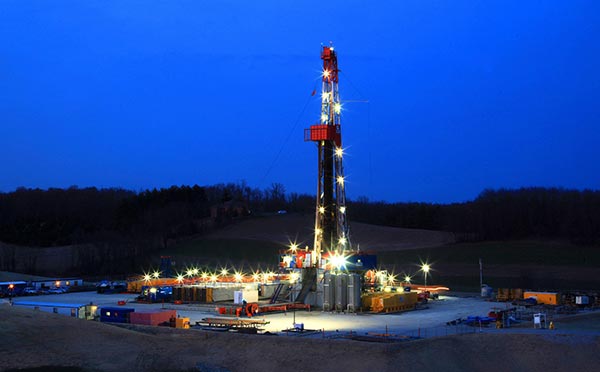 by Brian Dunning There are few technologies today quite so popularly disliked today as fracking, short for hydraulic fracturing, the practice of pumping high-pressure water into natural gas reserves deep underground to break up the rock and make the gas easier to mine. Fracking has been harshly criticized all around the world as dangerous, and has even been banned in a number of countries. There are charges that fracking uses toxic chemicals which contaminate ground water supplies; that it causes earthquakes; that it's killing endangered species; that tap water in fracking areas contains so much methane that it can actually burn; and that mysterious illnesses have resulted from the poisonous chemicals it pumps underground. Sound scary? It should. But how much of it is true? Fracking is a perfect place to turn our skeptical eye. The 2010 movie Gasland brought these claims (and many others) to the public attention. Gasland painted a horrifying and emotionally charged picture of conspiracy, profiteering, environmental ruin, and the reckless wholesale poisoning of people and animals by the drilling companies. The energy industry was quick to respond to the apparent slander, even posting a web page called "Debunking Gasland" (and others) that not only denied virtually all of the movie's factual claims, but also was heavy on ad-hominem attacks against its maker, an activist whom they describe as an avant-garde stage director with no expertise in either geology or drilling. Whom should the average person on the street believe? Unfortunately, they generally only hear from one of these sources or the other, and rarely or never get the unbiased, science-based facts. Natural gas is found in the pores of shale or coal, and it escapes through natural fractures. Surface deposits are relatively easy to recover with simple drilling, no fracking required; but for the deepest and richest deposits, those from about 1.5 to 6 km underground, high pressure reduces the number of naturally occurring fractures and the rock's permeability is insufficient to extract much gas. These deep, non-porous formations are where fracking makes sense. Shale beds are often less than a hundred meters thick, so fracking boreholes are usually drilled horizontally to extend through as much of the bed lengthwise as possible, sometimes reaching through as much as a kilometer. The boreholes are sealed with pipe. High pressure water, sometimes as high as 10,000 psi, is then sent down this pipe. This system acts just like a hydraulic ram, where great force can be applied over a large area by introducing high pressure into the ram from a small entry point. This force splits the shale apart, creating numerous small fractures usually about 1mm wide. Then, to prop these fractures open to allow the gas to escape, a "proppant" is added to the water, which is basically sand. Getting this sand into the fractures is the whole point of fracking. Once done, extraction wells going straight down into the shale bed are far more productive, as the gas now has many free escape routes. Although fracking has been in use since about 1950, it's only been applied in a large scale to natural gas mining since about 2000. About 90% of natural gas mines in the United States access rock that has been fracked. Fracking greatly increases the output of mines, producing domestic energy and profits and all the inflammatory economic and political implications thereof. So what problems does fracking create? The most dramatic and popularly reported problem is that of burning tap water: hold a match next to a running tap and the methane contained in the water (methane is the main component of natural gas) will burst into flames. Gasland and many other sources have asserted that this is due to fracking. The burning water is a fact; whether it has anything to do with fracking is another matter altogether. Like much in science, the facts are more complicated. The first thing to understand is that water wells are shallow. The deepest private residential wells go perhaps a couple hundred meters, though most are much shallower. Fracking takes place kilometers deeper underground; and in most places, the fracked shale beds are separated from the surface watersheds by multiple rock formations of different types. There's little or no transference of anything — gas or liquid — between fracked layers and surface layers; they're simply too far apart and separated by too much rock. However, the burning water is an undisputed fact. So where is this methane coming from, if not from fracking? As it happens, it's natural, worldwide, for anyone who has a well in a natural gas area. Natural gas is not found only in the deep shale beds, it's in shallower layers as well; so we always expect some gas to make it into well water in particular regions. But the mining of natural gas also has a few consequences that can force methane into aquifers. First, the underground changes in pressure can prompt methane to migrate from areas of high pressure to areas of low pressure. Second, poorly sealed natural gas wells can (and do) leak methane into adjacent strata. These poorly sealed wells are human errors that it's the responsibility of the driller to repair. Third, old abandoned wells do the same thing, but often without anyone repairing them. None of these problems are related to fracking, per se. When the Colorado Oil & Gas Conservation Commission investigated the burning water of the well owner most prominently featured in Gasland, whose tap water was gray and actually effervesced, they found that his methane was naturally occurring and had nothing to do with any natural gas drilling. His water well had been drilled directly into a shallow natural gas deposit. Nevertheless, Gasland portrayed this as a consequence of fracking, which is wrong at two levels. Such well owners do have steps they can take to eliminate the problems, whatever the source of their methane. The simplest and most effective is to have the well properly vented. Methane weighs half as much as air, and venting it to the atmosphere is the standard practice and generally solves everything. Well venting would still need to be done even if fracking had never been invented. It is an established fact that methane in tap water is found in greater concentrations in areas that have been fracked. In 2011, a much-publicized Duke University study found that, on average, levels were 17 times higher in private wells within 1,000 yards of a drilling site. But while an attention-grabbing headline implies a causal relationship, the only thing we know for sure is that this correlation is exactly what we expect to find. In areas where there is natural gas, (a) it's going to be found in wells, and (b) energy companies are going to come there to drill. The study noted that no data exists of methane levels in the water before the mines existed, and so no reason to suspect that mining or fracking had any impact on the levels. The researchers found that 13% of the wells had amounts of methane that exceeded "action levels", meaning that the wells should be vented to remove the methane. What about the claims that fracking pumps hundreds of different poisonous chemicals into the ground? Well it's true, sort of, but not the way it's portrayed. The main chemical is simple water, which makes up about 98.5% of most fracking fluid. About 1% consists of one of many different types of proppant, basically sand. The type of proppant chosen for each job depends on the geology. The rest of the fluid, the remaining fraction of a percent, differs all the time. Mainly it's lubricant for the pumping equipment, borehole, and fractures. The goal is to get the sand distributed into the fractures to hold them open, and without the proper lubricants, surfactants, and suspension agents like guar gum, the sand collects in places and creates blockages. Depending on the type of rock, acids might be added to dissolve scale and get more water in. Then there are trace additives of things like corrosion inhibitors to prevent the pipes from corroding, and bactericides for killing bacteria that can clog or corrode. Complete lists of all the fracking fluid ingredients are widely available on the web, as required by law, and anyone concerned about them should take a look. A great place to start is to Google "fracking fluid disclosure". If you're concerned about the fluids used in a specific well in your area, I recommend a website called Frac Focus, which lets you search any well and find out exactly which kind of sand and other compounds were used there. Frac Focus is a partnership between the industry and the Groundwater Protection Council, an association of state and local regulatory agencies. So when we're talking about corrosion inhibitors and benzene and guar gum and bactericides, any reasonable person who drinks water from that area should be concerned. So do you listen to pop culture, which tells us the fracking fluid is toxic and goes directly into your drinking water; or do you listen to geologists and regulators who tell us that never the twain shall meet? The hardest part of understanding fracking for the person on the street is knowing who to trust. I put this question to a friend who's a geologist for Pennsylvania's regulatory agency, right in the middle of some of the United States' most active fracking, and she acknowledged the problem. The movie Gasland is clearly an unacceptable source of information, and similarly, the drilling industry's own PR omits any frank acknowledgement of risks and ongoing investigations. They both have strong propaganda motives. The consensus for the best unbiased information seems to be the US Environmental Protection Agency. If you hate Halliburton, as many do for whatever reason, you'll love the EPA; they've even posted the subpoena they sent Halliburton for failing to provide required information about their drilling operations (instead, Halliburton famously had an exec drink some of its fracking fluid at an industry conference). If you want an unbiased understanding of fracking in general, start your education at EPA.gov/hydraulicfracturing. At this time, the EPA is in the midst of a major investigation into the safety of groundwater supplies that may be affected by fracking. Unfortunately it moves at government speeds; the investigation is due to last through 2012 with a report due in 2014. In the meantime, the good news is that the EPA has yet to document any confirmed groundwater contamination from fracking operations. Even the Duke University study found no evidence at all of any fracking fluid in any of the wells they sampled. However, there have been a number of cases of contamination from accidental surface spills, similar to what we see from virtually every industry that transports and pumps liquids. A number of nations have banned fracking until these investigations are concluded, but the EPA has not yet found any reason to do so in the United States. Like so many technologies, fracking has broad economic and political implications, and consequently incites fiery emotions on all sides. Your choice is whether to jump into that fire, or to study what we've learned by testing. Whether you think we need the energy production, or how much money Halliburton makes, are different questions; and should not be conflated with the science. Let the pundits answer those questions, and let the science determine the safety. I followed up this episode with a post on SkepticBlog addressing the related question of whether fracking has been shown to cause earthquakes, a claim that has been brought up a number of times in the feedback to this episode. —BD Important update: Although the act of fracking is itself not guilty of any particular environmental damage, natural gas reservoirs that require fracking are the leading source of atmospheric methane in the United States and some other countries. See the episode on methane's impact on global warming for complete details. For this reason alone, fracking must be stopped as soon as possible — nothing to do with mysterious burning tap water. —BD
Cite this article:
©2025 Skeptoid Media, Inc. All Rights Reserved. |