




Boost Your Immune System (or Not)

Is "boosting your immune system" for real? Is that possible, and can you really buy it in a bottle?

Filed under Alternative Medicine, Consumer Ripoffs, Health

Skeptoid #227
October 12, 2010
Podcast transcript | Listen | Subscribe
Also available in German
Bookmark and Share

Today we're going to point our skeptical eye at one of the most popular marketing gimmicks from the past few years: the sales of products and services with the claim that they will "boost your immune system". It sounds simple and desirable. Who wouldn't want a superpowered immune system capable of fighting off anything from a cold to cancer? Is such an ability really something you can buy in a bottle?

It's an easy claim to sell to people, because it's so clear and seems to make such obvious logical sense. The stronger your immune system, the greater its ability to fight disease. It sounds like it should be just like building muscle: A stronger bodybuilder can lift heavier weights, and a boosted immune system can fight off stronger diseases. Doesn't that sound right?

It may, but it's a completely invalid analogy. A healthy immune system is more accurately represented by a balanced teeter totter. If your immune system is compromised or otherwise weakened, one side of the teeter totter sags, and your body becomes more easily susceptible to infection. Conversely, if your immune system is overactive, the other side of the teeter totter sags, and the immune system attacks your own healthy tissues. This is what we call an autoimmune disease. Conditions like lupus, rheumatoid arthritis, psoriasis, and multiple sclerosis are all autoimmune diseases caused by "boosted", or overactive, immune systems. You're at your healthiest when the teeter totter of your immune system is balanced right in the center; neither too weak, nor too strong.

If you could boost your immune system, it would automatically and immediately be harmful.

So what do these companies mean when they claim their products boost the immune system? Fortunately for your body, they generally mean nothing at all. In recent years, the Federal Trade Commission and the Food and Drug Administration has been trying to crack down on products making unsubstantiated health claims, such as boosting the immune system. This is difficult for a number of reasons. First, "boosting your immune system" is medically meaningless; there is no such thing, so the assertion does not constitute a medical claim all by itself. You may recall that the supplement product Airborne was fined by the FTC and ordered to refund the money of everyone who had ever bought their product, but this was only because they went farther and specifically claimed their product could treat and prevent colds. Second, regulators are hopelessly outnumbered by the hordes of mail order and Internet businesses that can literally pop up overnight, to say nothing of the many well established companies like Airborne. Third, it's a very simple matter for such companies to subtly change their wording to make it even less specific, and thus escape prosecution. Today it's popular for products to say they "support a healthy immune system", and so they do, in the same way that any food or even breathing keeps your body alive and thus "supports" all its functions. They could just as honestly say their product supports body odor and aging.

Up until about ten years ago, nobody had invented the marketing term yet, so nobody ever thought to buy special supplements or specially grown produce to boost their immunity. Without such products, one wonders how the human race could have survived hundreds of thousands of years. Or even the 1980s or 1990s. Were we really less healthy then? Did we all truly have compromised immune systems?

You see, health is not the result of a superpowered immune system. Health is simply the absence of disease. Good health is the baseline. You can't be healthier than baseline. Once you're at the baseline, anything that happens to your immune system in either direction is bad. For a person in good health, who watches their diet and exercises, to walk into a smoothie store and order the special immunity boosting supplement, would be harmful to their health. Would be, if that supplement actually did anything.

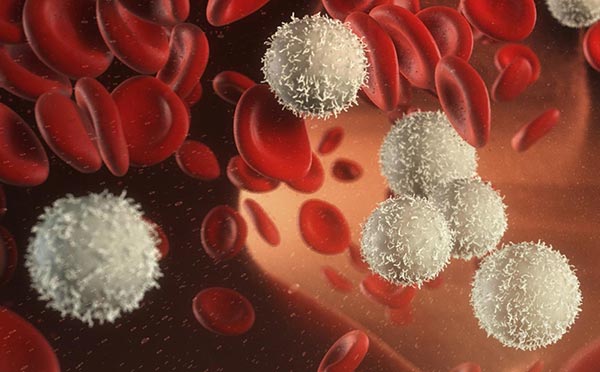
It would be easy for companies to demonstrate that their products work as advertised. The immune system is a surprisingly complex collection of structures and processes throughout the body. Many of these are types of cells that can be found in the blood. If a product actually boosted your immune system, it would have to increase the counts of one or more of these cell types. That's something that we could measure directly, and prove or disprove the claim. The problem with doing such a test is that it would be unethical, since you would have to give someone an imbalance likely to result in an autoimmune disease.

Let's take a quick look at what some of these systems are:

All of those systems together comprise our "innate" immune systems, and they're just the half of it. We also have "adaptive" immune systems, and these are the systems that react to specific pathogens, multiply, and then become long-term guards against a recurrence of that same pathogen, becoming a sort of "memory" for your immune system. The adaptive immune system grows every time you challenge it with a specific germ, and it's also what reacts to a vaccine and becomes a prophylactic against a specific disease. The adaptive immune system is made up of special cells called lymphocytes, which include:

Those are the major components, but believe me, I've just given you an oversimplified 30,000-foot view of the immune system. Both halves, the innate and the adaptive, are comprised of many different components. Some act in concert, some act independently. There are many, many different ways in which parts of your immune system can be compromised, and addressing each of these deficiencies requires a different strategy. The notion that a single juice drink or supplement pill can "boost your immune system" is — to borrow a phrase — "so wrong it's not even wrong".

Since the function of the adaptive immune system is to react to challenges and develop new defenses, it can indeed be improved. Every time you catch a cold or get vaccinated, your adaptive immune system builds a new army of killer T cells ready to fight off a future recurrence of the same pathogen. There is no nutritional supplement, superfood, or mind/body/spirit technique that will do this for you. Those B cells only know which proteins to express by being attacked by specific disease agents.

$2/mo $5/mo $10/mo One time

The usual response that I hear to these arguments is that "immune boosting" products are simply trying to restore healthy immune function, since we're all walking around with compromised immune systems, because we eat badly and are obese and live in a toxic world. This is a familiar argument, and it's also easy to sell. It sounds like it makes sense. People do overeat, we love our prepared foods, and few of us take any special interest in the chemicals making up the objects in our daily lives. Has this truly resulted in compromised immune systems?

In fact, the opposite is true. Obese people generally have inflammation, which is an immune response. We catch colds and have no difficulty in producing symptoms. When we're exposed to irritating substances, we react with hives or itching or asthma, all of which are immune responses. Practically every one of us has some immune system response going on right now. The claim that living in our modern world has compromised our immune systems is measurably, and unambiguously, untrue.

There are real conditions in which immune systems can be compromised. These include primary immunodeficiencies, which are usually genetic and exist from birth, and require complex medical intervention; and acquired immunodeficiencies, usually resulting from disease, like AIDS, some cancers, even chemotherapy. A specific component of the immune system is affected and requires a specific treatment. Acquired immunodeficiency can result from malnutrition, but you have to be practically starving to death. It's the opposite problem from eating too many cheeseburgers.

Supplements, juices, or any products that claim to "boost your immune system" are frauds. They are for-profit solutions to a problem that does not exist and was invented by clever marketers to scare you into buying the products. Don't stand for anyone telling you that your balanced teeter totter can be brought into better balance by piling sandbags on one end.

No. Immune systems can't be
Just Say No and make the facts known with a Skeptoid T-shirt. Includes complete references! Get it now.
(See the full design)

Follow me on Twitter @BrianDunning.

Brian Dunning

© 2010 Skeptoid Media, Inc. Copyright information

References & Further Reading

Brain, M. "How Your Immune System Works." Discovery Health. Discovery Communications Inc., 1 Apr. 2000. Web. 8 Oct. 2010. <http://science.howstuffworks.com/life/human-biology/immune-system.htm>

Crislip, M. "Boost Your Immune System?" Science-Based Medicine. Science-Based Medicine, 25 Sep. 2009. Web. 7 Oct. 2010. <http://www.sciencebasedmedicine.org/?p=1828>

Goldacre, B. "When it comes to a cold, you might as well try goat entrails." The Guardian. 22 Nov. 2008, Newspaper.

Hall, H. "Boost My Immune System? No Thanks!" Skeptic. 22 Mar. 2010, Volume 15, Number 4: 4-6.

Schindler, L. Understanding the Immune System. Washington, DC: U.S. Dept. of Health and Human Services, Public Health Service, National Institutes of Health, 1988.

Singh, S., Ernst, E. Trick or Treatment. New York: W. W. Norton, 2008.

Wallace, A. "An Epidemic of Fear: How Panicked Parents Skipping Shots Endangers Us All." Wired. 1 Nov. 2009, Volume 17, Number 11.

Reference this article:
Dunning, B. "Boost Your Immune System (or Not)." Skeptoid Podcast. Skeptoid Media, Inc., 12 Oct 2010. Web. 20 May 2013. <http://skeptoid.com/episodes/4227>

Discuss!

10 most recent comments | Show all 172 comments

Is this article an exercise in mere semantics? What people mean when they say "boost the immune system" is, roughly, "reduce the number of infections I get" and "reduce the amount of time I experience symptoms." Colds are often the implicit measure. The immune system analogy is misleading, sure, as an identification of the biological mechanism, but this article does not address the question of why some people are more likely to contract a cold, given a certain dose of rhinovirus, or why others are likely to get over colds more quickly. If there are so many balanced scales, why do some balanced scales do a better job of protection? Can Airborne or garlic or echinacea or any other favored remedy reduce the likelihood of a cold or the amount of time experiencing symptoms? In other words can these interventions help me get a "strong" balanced scale? That is the real thing I believe people want to know in discussions of "boosting the immune system," and this article curiously avoids saying a thing thing about the real question.

Glen, Sunbury
November 14, 2012 3:48am

You know, now that you mention it, I'm not entirely sure that I, personally, did survive the 80's...

Ben, Columbus, OH
November 29, 2012 10:52am

The point you make is that the immune system needs to be in balance and boosting it throws it out of balance. But a system in balance can still vary in strength without losing balance. To use your analogy, you could imagine the teeter-tooter's height above ground as its strength and that can vary while still remaining level.

So it could be possible to have a weak and balanced or strong and balanced immune system.

I can quite imagine an immune system going out of balance and attacking the patient even though the patient has a very weakened immune system - e.g. though HIV. And also a much stronger immune system keeping most diseases at bay more quickly without attacking the body.

So I couldn't agree with your statement

"If you could boost your immune system, it would automatically and immediately be harmful."

Your arguments didn't support that conclusion at all and as the rest of the article is dependent on this being true, I didn't feel you'd made that case at all.

This, of course, isn't to say that you're wrong - only that the analogy and argument didn't prove your point convincingly.

You didn't provide evidence that a weak immune system can't launch an auto-immune attack, or that, for example, the speed of response of an immune system to an invader isn't dependent on your overall health and that 'speed' could be an indication of strength and can be enhanced.

Neill Jones, Bristol, UK
December 04, 2012 2:18pm

Boosting immune systems from the pharmacy stand, supermarket or naturopaths office is pseudoscience.

We are omnivores and get on quite well on a range of diets but we do highlight deficiencies in regional diets or in time of a dearth of natural foods from those environments

Now there is a valid notion that super athletes who have resting metabolic rates the same as your "hard day's yakka" may need supplements.

But an immune booster? Yep.. a vaccination of the medical kind could be called that.

Look if immune response could be food managed for the general bod could you please keep it to yourself and let a qualified specialist deal with folk who need it.

There are just the sort of allergic folk who read this sort of gargle and may actually make themselves very sick.

Damn, I feel like purchasing an epipen just reading this immune boosting speculation.

Mud, At virtually missing point, NSW, OZ,
January 17, 2013 11:52pm

Your argument is based on Semantics.

"Supplements, juices, or any products that claim to "boost your immune system" are frauds."

I guess you haven't searched for things like mushrooms on PubMed in a while. The right keywords return thousands of results about successful use in various diseases (even cancer).

I guess the proper word may be something like "immune modulator", but again your argument is mostly about semantics.

And this is just one of many examples.

Markus, Dallas
January 19, 2013 9:07pm

@Mud--I was just thinking that vaccines are the best kind of immune boosters I know of.

There are things we can do to maintain our body's immune system. Eating well. Exercising. Getting enough sleep.

But there are so many people out there who want to sell us things that won't work by telling us things that aren't true. And it's good to look carefully at those claims.

Sara, Salt Lake City
January 21, 2013 5:59pm

Frauds abound everywhere.

They take advantage of folk who love to "live their disease" as well as the folk who are looking for any option.

I am afraid that localised hypochondria probably deserves agressive marketing of fraudulent claims.

Sadly, athletes are only too willing to spread the "good news" in Australia.

I hear it so very often;

"if you are desperate you will try anything".

Mud, missing point, NSW, Oz
January 25, 2013 3:51am

You got this one wrong, unfortunately. If not, then please explain how interferon cures hepatitis C in about 50% of patients infected with the virus (and don't say it boosts immune response, because apparently that is "meaningless"). Of course, I won't say that many supplements that claim to boost the immune system actually do anything, but the idea is scientifically valid.

Bob K., Austin, TX
May 03, 2013 7:10pm

Bob, that's a great point had we bothered to canvass how drugs work.

As to the idea being scientifically valid, anyone can posit anything. But you need empirical data to sell drugs, make a claim of efficacy (for reward) or even make the claim where others may review your work.

The notions that ideas arent examined are fallacies. They are exhaustively challenged and all you have to do is look them up.

I hope this isn't a show stopping comment as many of the claims (nearly all of the vitalism) deserve to be discussed in a skeptoid like this.

Mud, Sin City
May 03, 2013 10:26pm

All I'm saying is that "boosting your immune system" isn't meaningless. Interferon HAS exhaustive empirical evidence. So if a supplement were shown to increase interferon levels, it would be possible that it actually "boosts immune response" and therefore could help one fight off a viral infection. Have some supplements been shown to increase interferon levels? I can think of a couple that contain IFNs and/or have been shown to increase IFN levels. For example, http://www.ncbi.nlm.nih.gov/pubmed/17464769

http://www.ncbi.nlm.nih.gov/pubmed/8457628

Bob K., Austin, TX
May 05, 2013 8:55pm

Make a comment about this episode of Skeptoid (please try to keep it brief & to the point). Anyone can post:

Your Name:
City/Location:
Comment:
characters left. Discuss the issues - personal attacks against other commenters, posts containing advertisements or links to commercial services, nonsense, and other useless posts will be deleted.
Answer 6 + 1 =

You can also discuss this episode in the Skeptoid Forum, hosted by the James Randi Educational Foundation, or join the Skeptalk email discussion list.

What's the most important thing about Skeptoid?

Support Skeptoid
 
Skeptoid host, Brian Dunning
Skeptoid is hosted
and produced by
Brian Dunning


Newest
Polybius: Video Game of Death
Skeptoid #362, May 14 2013
Read | Listen (11:27)
 
The 16 Personalities of Sybil
Skeptoid #361, May 7 2013
Read | Listen (11:50)
 
Lincoln Kennedy Myths
Skeptoid #360, Apr 30 2013
Read | Listen (11:07)
 
Cupping for the Cure
Skeptoid #359, Apr 23 2013
Read | Listen (10:38)
 
Listener Feedback: Aliens and UFOs
Skeptoid #358, Apr 16 2013
Read | Listen (10:02)
 
Newest
#1 -
8 Spooky Places, and Why They're Like That
Read | Listen
#2 -
Skinwalkers
Read | Listen
#3 -
The Suicide Dogs of Overtoun Bridge
Read | Listen
#4 -
Student Questions: Food Woo and Iron Man at the Airport
Read | Listen
#5 -
Negative Calorie Food Myths
Read | Listen
#6 -
Listener Feedback: That Darned Science
Read | Listen
#7 -
The Loch Ness Monster
Read | Listen
#8 -
Area 51 Facts and Fiction
Read | Listen

Recent Comments...

[Valid RSS]

  Skeptoid PodcastSkeptoid on Facebook   Skeptoid on Twitter   Brian Dunning on Google+   Skeptoid RSS  


"Fast Food Phobia"
inFact with Brian Dunning


Support Skeptoid
Join today and become
a part of this.