 |
 |
  
|
 |
Student Questions: String Theory, the Asian Flush, and the Peltzman EffectSkeptoid answers some questions sent in by students around the world. Skeptoid Podcast #188 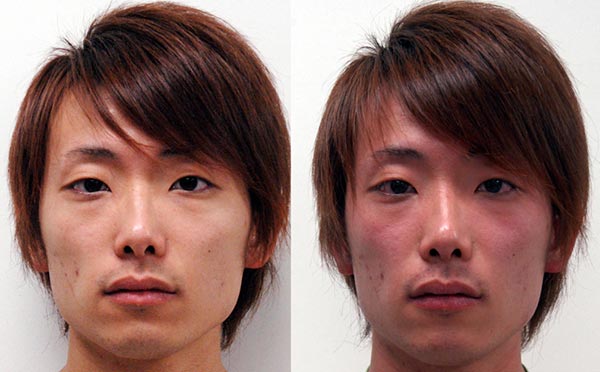 by Brian Dunning Some very interesting student questions this week. We're going to talk about what the heck string theory is and why it's important, if it is; a problem affecting nearly half of Asian people when they drink alcohol called the Asian Flush reaction; economics applied to traffic in the form of the Peltzman Effect; the alleged health benefits of full-spectrum lighting; and finally, we're going to take a critical look at the age-old belief that some people with bum joints can predict weather changes. Do external variances in temperature, humidity, or pressure actually affect what goes on inside your knee joint? Let's begin with string theory: String Theory
A "quantum theory of gravity" is (in oversimplified terms) an attempt to develop a complete theory that describes how gravity works in the world of quantum physics, much like we already have for the other three fundamental forces. Having such a theory is important because it would probably help get us to a unified theory, which would explain all the forces in nature. String theory, which is a blanket term describing about a half dozen or so different formulations of string theories, is one candidate for a quantum theory of gravity. String theory itself seeks to explain interactions with a mathematical model based on vibrating strings, points, or membranes. Quantum theories of gravity are an open area of research. Many people are working on many different models; and although string theory has been among the most successful, none of these models are anywhere near complete, proven, or tested. However, even in this nascent state, they certainly are legitimate scientific fields, and are important research. String theory has, however, drawn criticism for being unscientific, stemming from the requirement that valid scientific theories make testable predictions. String theories are theoretically testable, but not realistically testable. The energy levels at which the equations work are many orders of magnitude above the energy levels we can create in our largest particle beam colliders, and in fact far above those of any theoretically possible collider. Thus, if the predictions made by string theory can never be tested, it's of no value as a theory. So while some physicists still maintain that the work is important, an increasing number are turning away from it. Some feel it's on its way out. To learn more about the theory itself, check out Discover Magazine's contest where people had 2 minutes to describe it. The Asian Flush
Alcohol induced facial flushing is a condition in some people, including up to half of Asians by some accounts, where they can't tolerate alcoholic beverages. They may easily become nauseated, dizzy, or drowsy, but the predominant symptom is a reddening of the face, sometimes accompanied by swelling, and sometimes covering the whole body. The condition appears to be correlated to a deficiency of the enzyme ALDH2, which is responsible for the breakdown of acetaldehyde. When it can't be broken down, it accumulates and causes the symptoms. The responsible gene has been tentatively traced all the way back to single tribe in southern China. Most of the research on this question comes out of Japan, as they're among the population most affected. Many sources say that people with alcohol induced facial flushing are more likely to get cancer if they drink alcohol. This conclusion appears to be well supported, from the available data. One study found an association among men who both drink and smoke heavily were slightly more likely to get esophageal cancer if they also have the flushing response. Another study concluded that ALDH2 deficiency was an important screening factor in early detection of esophageal cancer. But other cancers do not seem to have the correlation. A study among women with breast cancer found a slightly increased risk among women who drink alcohol, but whether or not these women experienced facial flushing when they drink made no difference. People so afflicted typically don't enjoy drinking, and so one silver lining is a decreased prevalence of alcoholism. When you drink less, you're less likely to get any disease that's caused by alcohol consumption, like some digestive tract cancers, including esophageal cancer. So the conclusion that appears to be best supported by existing research is that people who experience alcohol induced facial flushing are less likely to get some cancers, but only because they probably drink less. As long as you don't drink heavily, the condition by itself does not appear to carry any special risks other than the unpleasant symptoms. The Peltzman Effect
The Peltzman Effect was nicely summed up in an episode of the TV show CSI: "The safer they make the cars, the more risks the driver is willing to take." It's named after the regulatory economist San Peltzman who first described the effect. It doesn't just apply to driving cars, but to all systems where regulations are put into place designed to improve safety or avert trouble. You're more likely to do crazy tricks on a tightrope if there's a safety net. You're more likely to make risky stock market investments if you have a nest egg that's invested securely. Many people drive safely regardless of the laws. Most of us would probably wear seatbelts even if it wasn't the law, but do we drive crazier because we have the comfort of knowing the airbag is there? There is always a wilder segment of the population for whom this is indeed the case. When this happens, the overall safety of the system for everyone is actually decreased. When you make it safer to take risks, more people will take them; and then we have to weigh the higher number of accidents against the protection afforded by the safety devices. The Peltzman Effect is real, and together with its corollaries, is quite interesting. Daylight Lamps
Daylight lamps, also known as full spectrum lamps, are ultraviolet lights intended to mimic the spectrum of natural daylight. Some claim that using these lights indoors confers all sorts of health benefits, mainly Vitamin D production, but also including better calcium absorption, lower tooth decay, fewer colds, more energy, improved physical strength, reduced eye fatigue and headaches. No credible research exists that supports any of these claimed benefits. However the Vitamin D question has indeed been studied, and the results are clear: Although Vitamin D production can be somewhat stimulated by artificial lighting on people otherwise deprived of light, the intensity is the only determining factor. Extremely bright lights are required. The color of the light, and whether it's a "daylight lamp" or not, makes no difference. The reason is probably that terms such as "daylight lamps" and "full spectrum lighting" are marketing terms only. They do not, in any way, mean that the product does indeed mimic sunlight. That's virtually impossible for a flourescent tube. All it means is that the manufacturer markets its color as having been matched closer to that of daylight, by the application of different phosphors to the inside surface of the tube; but there are no standards or requirements they must follow when using these terms. This is not to be confused with the actual use of ultraviolet light therapy to treat conditions such as Seasonal Affective Disorder as discussed in Skeptoid #136, or the use of red light to help restore sleep patterns in people deprived of day/night cycles. Arthritis and the Weather
At the risk of having everyone with joint pain come after me with pitchforks and torches, the correct answer is B. Atmospheric conditions, including temperature, pressure, and humidity, do not affect the temperature, pressure, or humidity inside the human body. Thus, there is no plausible way that the weather could impact joint pain. Like taking Vitamin C to cure a cold, this is another medical myth that is so deeply ingrained that it's really hard to shake. For most of my life I believed my bum knee could predict weather changes. I thought it worked like a barometer. I was unaware that simply riding in an elevator produces much greater shifts in atmospheric pressure than common weather fronts. And so I fell victim to confirmation bias. You see the weather is almost always changing one way or another, and whenever my knee happened to hurt, I'd take notice if the weather was indeed changing. If it didn't, I probably just attributed the knee pain to the bum knee. Confirmation bias causes us to assign undue significance to events that confirm our belief, and causes us to rationalize away any events that don't. Changes in humidity are even less plausible. Human bodies have very specific hydration levels. Walking through a sprinkler dramatically shifts the relative humidity outside your body, but does not affect your body's internal hydration. Neither does a humid or a dry day. The synovial fluid inside your joint is the same whether you're in the desert or the bathtub. If you became dehydrated enough for your synovial fluid to be affected, you would experience many other more severe symptoms of dehydration first. Ice packs and heat packs can, however, be used to alleviate joint pain. The difference is that these, when applied directly for a period of time, are effective thermal conductors and will change your deep tissue's temperature at the point of application. However, weather only affects your skin, as air is a thermal insulator not a conductor; so long as you are properly clothed and don't experience hypothermia or hyperthermia, your body temperature remains unaffected. I'm always on the lookout for more student questions, so if you can record your voice on your computer or your cell phone or anything, send me your questions for a future episode. Just come to Skeptoid.com and click on Student Questions.
Cite this article:
©2025 Skeptoid Media, Inc. All Rights Reserved. |