 |
 |
  
|
 |
High Fructose Corn Syrup: Toxic or Tame?A skeptical look at whether high fructose corn syrup is really any worse for you than sugar. Skeptoid Podcast #157 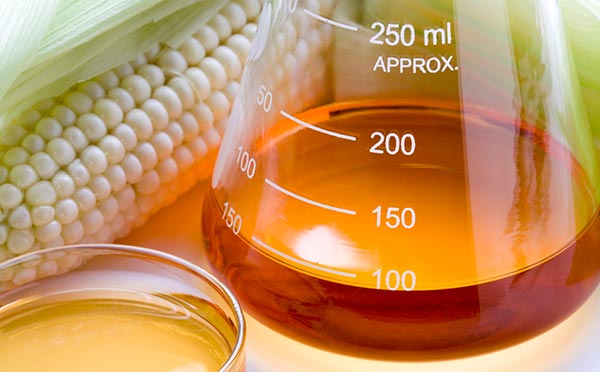 by Brian Dunning Today we're going to pop open a can of root beer, pour it over some ice cream, and enjoy a nice float from these two of many foods sweetened with high fructose corn syrup, or HFCS, and see what happens. Although decades of experience tell us that nothing much will happen that wouldn't happen with any other equally calorific food, a vocal and growing minority charges that HFCS is a dangerous chemical poison. It causes obesity and diabetes, and for just about any disease you can find on the Internet, someone claims that HFCS is the cause. There are even conspiracy theories that Big Corn gets kickbacks from Big Pharma to keep people sick. So what's the truth? What are the real differences between sugar and high fructose corn syrup? What are its pros, and what are its real cons? For some reason, high fructose corn syrup has become a huge public worry. It's been one of the most common questions that listeners have been emailing me about. Do I need to be concerned? Can you point your skeptical eye at the evil food producers who are poisoning us with HFCS? Search the Internet and you'll find all kinds of calls for boycotts and 30-day HFCS-free diets. Even the renowned expert on health and nutrition, filmmaker Michael Moore, has warned that the President should make the elimination of HFCS his number three priority. I know that whenever I seek advice on healthy living, I go to someone who looks and eats like Michael Moore. Now I don't want to bore anyone to death with the whole chemistry thing, but here's a ten-cent definition of terms. Carbohydrates come in basic molecules called monosaccharides, or single sugars. The two monosaccharides we're discussing are glucose and fructose. Regular table sugar is a disaccharide of glucose and fructose, which means that the two monosaccharides are chemically bound into a larger, more complex disaccharide molecule called sucrose. That's sugar. HFCS consists of the same two monosaccharides, only they're just mixed in together, the molecules are not bound. This means that HFCS can come in different blends. The more fructose relative to glucose, the sweeter it is. HFCS 55, which is 55% fructose, has a sweetness comparable to sugar and is used mainly in soft drinks. HFCS 42 is 42% fructose, and is a little less sweet than sugar and is used in most other foods. When you consume regular sugar, sucrose, the first thing your digestive system does is break the chemical bond and separate it into glucose and fructose. So once saccharides are in your body, it makes very little difference whether they came in as table sugar or as HFCS. You can also cook table sugar, and unbind the saccharides that way. The corn lobby is always saying that HFCS is nutritionally the same as sugar, and this is what they're talking about. The chemistry is actually quite simple. So why the controversy, and why all the scaremongering about the terrors of HFCS? The fact is that there is huge correlation between HFCS consumption and obesity, and all sorts of obesity related conditions like diabetes and heart disease. Nobody disputes that. The problem arises when people make the common error of mistaking correlation for causation. There's an equally valid correlation between obesity and dirty dishes. The cause of obesity and obesity related diabetes is overeating more calories than you burn. It makes no difference whether you overeat food containing pure cane sugar, food containing HFCS, or organic spinach: Too many calories is too many calories, and you'll become obese and suffer the same obesity related complications no matter what you ate to get you there. Fat is fat. So if it doesn't matter, why do American companies put HFCS in so many food products? The answer is simple: Farming conditions here are generally better for corn than for sugar. We have to import a lot of our sugar, mainly from Brazil, Mexico, and the Dominican Republic. To protect American corn farmers, we hit those sugar imports with tariffs. In retaliation, those countries put similar tariffs on the HFCS they import from us. Presto, HFCS stays cheap in the US, and sugar stays cheap in Latin America. Thus, Mexican Coke is made with sugar, and American Coke is made with HFCS. High fructose corn syrup is not only cheaper for American companies, its being a liquid makes it a lot handier to use. It's easier and cheaper to transport, for one thing. It has certain advantages in baking, browning, and fermentability. It doesn't recrystalize after baking like sugar can, and makes foods moister. OK, fine, so what are the disadvantages of HFCS? Real disadvantages are pretty humdrum, obvious things like it's not as handy to drop a spoonful into your coffee or to keep in the little paper packets on a restaurant table. I found a huge number of bogus claims about it. Usually they misunderstand or misrepresent the chemistry, or they focus on the correlation instead of the cause. Here's one that gets the chemistry wrong:
Regular corn syrup is all glucose. High fructose corn syrup is basically half glucose and half fructose, exactly the same as table sugar. Neither of these is pure fructose, which seems to be what these study participants drank (no source was given). It's a common misconception that because of its name, high fructose corn syrup is composed largely or entirely of fructose. It's not. Dr. Oz, the thoracic surgeon whom Oprah promotes as a health expert on everything, also gets the chemistry wrong. He says:
This is an effect of fructose. Since HFCS and cane sugar have the same amount of fructose, they have the same effect on your leptin, which is a hormone that helps to regulate your metabolism. This particular charge is the one that's closest to true. Since the fructose in sugar is still bound to the glucose when you eat it, it does take some time before your body breaks the bond and the fructose is freed — anywhere from a few seconds to perhaps an hour. It's therefore plausible that there could be some delay in feeling full when you eat food sweetened with HFCS relative to if you'd eaten an equivalent quantity of sugar, but all the studies have thus far shown no difference. There's one thing that complicates this type of research, and that's that the corn industry, including major producers of HFCS products like soft drinks, often fund some of the research that finds no special risks associated with HFCS relative to other sweeteners. My own experience reading research is that it's rarely clear who funded it. The exception is that when a reputable journal publishes such an article, where there would be a clear bias or conflict of interest, it's pointed out up front to remove any possibility of impropriety. Outside of this, I generally have no idea who funded a given study. You can go to the authors' websites and find out who they work for, and sometimes you can get an idea. But should you always assume that scientists are not actually doing research, but merely parroting the commercial desires of whoever funds their grant? No doubt a small number do, but these are rarely or never the ones whose work passes the scrutiny of peer review and makes it into a reputable journal. They are often the ones whose work is published in lame alternative journals that merely claim peer review, and these are pretty easy for a seasoned researcher to spot. My conclusion is that when a study is of high quality and passes peer review to get into a reputable journal, it's generally reliable, regardless of who funded it. So with that in mind, I plowed into PubMed to see what's being published about HFCS, careful to avoid studies funded by "Big Corn". I found quite a few clinical trials, like this one from the American Journal of Clinical Nutrition that concluded:
And this one, from the journal Nutrition that studied only normal-weight women:
Now I know from experience that I can't tackle a subject like this without being accused of being in the pocket of Big Corn, Big Pharma, Big Food, and Big Government as part of a giant evil conspiracy to keep everyone sick for fun and profit. I can stand on my head and shout "Don't overeat, eat healthier, avoid foods with added sweeteners" a hundred times, and people will still accuse me of saying everyone should go around with direct intravenous injections of HFCS. The culprit is overconsumption of high-calorie foods; singling out HFCS or replacing it with sugar does nothing to address health or weight problems. But, like I often say, you shouldn't listen to me anyway, you should find out the facts for yourself. Don't go to Big Corn or Big Government, and don't go to Oprah or other alternative healthcare promoters. Go to someone like the American Medical Association. They're not on anyone's payroll; they're an association of all of the world's best doctors, and their only purpose is to promote public health. Here's what the AMA has to say on HFCS:
If you're overweight, stop overeating, and stop trying to place the blame elsewhere.
Cite this article:
©2025 Skeptoid Media, Inc. All Rights Reserved. |