 |
 |
  
|
 |
Should Tibet Be Free?Misinformation and fantasy surrounds the popular Tibet notions. Skeptoid Podcast #111 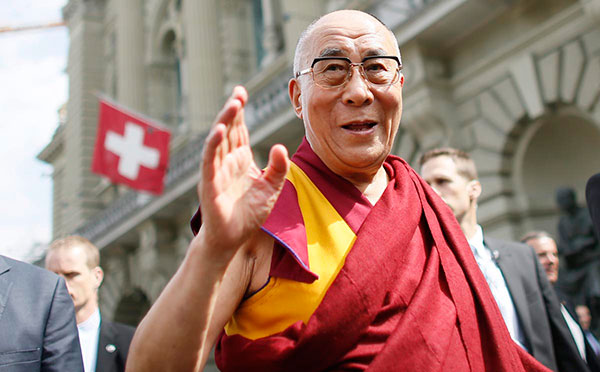 by Brian Dunning Perhaps an equally important question is "Should a science podcast take on a political topic?" For a long time, listeners have been sending me requests to do an episode about Tibet, and for a long time I've been putting the requests into a folder and keeping it stored away. This is Skeptoid, not Politicaloid, and my purpose is not to advocate one side or the other in political questions where you have two sides that are perfectly valid to different groups of people. But the more requests I've received, the more I've realized that there is a lot of misinformation, if not true pseudoscience, surrounding Tibet. There is, undoubtedly, a set of popular pop-culture beliefs out there, based entirely upon made-up crap that bears little resemblance to reality. Mind you, I'm not saying "Hey, you've heard one side, let me give you the other side," because that's the job of a political commentator. What I'm saying today is "Here is the reality of Tibet, go forth and form whatever opinion you like," but base it on reality, not on made-up metaphysical nonsense. I'm encouraging you to apply skepticism to the reasons you may have heard for freeing Tibet. Like most Americans, I grew up watching video of the Chinese army taking howitzers and destroying the massive centuries-old Tibetan monasteries in 1959, and that's an indisputable crime against history, religious freedom, and the dignity of Tibetans. And then I watched video of the Dalai Lama, the exiled spiritual and political leader of the Tibetan people, in his red and yellow robes, speaking words of wisdom and brotherhood and freedom and peace. And I'll freely admit: For nearly all of my life, this was the extent of my knowledge of the Tibet situation: Violence and cruelty from the Chinese; innocence and beauty from the Tibetans. I believe that many Westerners, including many who fervently wave Free Tibet placards, have little knowledge of the situation any deeper than that. But isn't it likely that there's more to it than that? Isn't it equally disrespectful of the Tibetans as it is of the Chinese to attempt to encompass who and what they are with those tiny little pictures? A complete history lesson is impossible, but here's a quick overview of the points relevant to today's discussion. China and Tibet have a long and complicated history. In 1950, China invaded to assert its claim, and ruled by trying to win hearts and minds, building roads and public utilities, and allowing the Tibetan system of feudal serfdoms to remain largely intact. In 1959 the Tibetan ruling class revolted, prompting a Chinese crackdown that sent the Dalai Lama and most other Tibetan aristocrats into exile in India, where they remain to this day. The former serfs became ordinary Chinese citizens, and Tibet is now an "autonomous region" in China, a status that many describe as actually less autonomous than an ordinary Chinese province. From his palace in India, the Dalai Lama now travels the world in a private jet, hobnobbing with the wealthy and powerful, fundraising, and writing highly successful books on metaphysics. Recently there were some anti-China, pro-Tibet protests in Nepal, a neighboring independent nation. This is illegal in Nepal, and the authorities have been cracking down on it. Why does Nepal side with China on this issue? Because they depend heavily on Chinese aid to survive, and this is a requirement that China imposes, though they call it a "request". At first glance you might be shocked that an independent nation would give up its freedom of speech to make a deal with the devil, but that's an easy opinion to form when you're not hungry. It makes sense for Nepal to agree to these terms, because their back is against the wall: They need China's aid. As for China imposing this condition? Well, that's one for you to chalk up in your column of "Things China Needs to Reconsider". So, why doesn't China simply give Tibet the same treatment they give Nepal — let them be an independent nation, give them aid, and just require them to say only nice things about them? Well, Nepal has long been an independent nation; Tibet hasn't. The history of China's rule over Tibet is exceptionally complicated and goes back many centuries. Anyone who tells you that either Tibet is historically part of China, or that Tibet is historically free, is making a disingenuous oversimplification. Personally, I choose to discount this subject completely, and not because it's too intricate to make a clear decision. I discount it because practically every square inch of land on the planet has been taken over militarily or annexed or stolen in one way or another from one people by another people. We don't give California back to the Spanish, and we don't give Italy back to Norway [So many people have asked me about this that I'll clarify. Italy, like the rest of Europe, was repeatedly sacked by Vikings. —BD]. Ancient history is not the way to settle current border disputes. To find a meaningful settlement that makes sense for people today, you have to consider Tibet to be a current border dispute. So while we're chalking up China's claim of ancient possession in the column of "Things China Needs to Reconsider", let's also chalk up Tibet's claim of ancient autonomy in the column of "Things Tibet Needs to Shut Up About". And once we open up that column, we find it's a Pandora's Box. Advocates of a free Tibet make a long list of charges against Chinese oppression, largely centered upon a loss of rights and freedom. This claim makes anyone familiar with Tibetan history cough up their coffee. The only people who lost any rights under Chinese rule are Tibet's former ruling class, themselves guilty of cruelty and oppression of a magnitude that not even China can conceive. The vast majority of Tibetans, some 90% of whom were serfs, have enjoyed a relative level of freedom unheard of in their culture. Until 1950 when the Chinese put a stop to it, 90% of Tibetans had no rights at all. They were freely traded and sold. They were subject to the worst type of punishments from their lords, including gouging out of eyes; cutting off hands, feet, tongues, noses, or lips; and a dozen horrible forms of execution. There was no such concept as legal recourse; the landowning monk class was the law. There was no such thing as education, medical care, sanitation, or public utilities. Young boys were frequently and freely taken from families to endure lifelong servitude, including rape, in the monasteries. Amid all the pop-culture cries about Chinese oppression, why is there never any mention of the institutionalized daily oppression levied by the Dalai Lama's class prior to 1959? Free Tibet advocates also point to the destruction of Tibetan culture. This charge is particularly bizarre. The only art produced in Tibet prior to 1950 was limited to the output of a few monks in each monastery, principally drawings of monasteries. New literature had not been produced in Tibet for centuries. Since the 1959 uprising, art and literature in Tibet have both flourished, now that the entire population is at liberty to produce. Tibet even has its share of well known poets, authors, and internationally known artists now. Make no mistake about China's history of human rights failings: China's "Great Leap Forward" and "Cultural Revolution" programs from 1958 through 1976 were as disastrous for Tibet as they were for the rest of China. There can never be any excuse for the deliberate widescale destruction of life, liberty, and property during those years. Hundreds of thousands of Tibetans, and tens of millions of Chinese, lost their lives during this misguided pretense at "reform". This was a phase that China went through, and it's arguable that Tibet would have been spared this torment if they had been independent at the time. But for your average Tibetan in the field, a serf with no rights, living and working and dying at the whim of his lord, were those decades really worse than they would have been without China? There's no way to know, but to a skeptical mind, it's not a slam-dunk that China's Cultural Revolution was harder on Tibet than Tibet's ruling class had always been in the past. If we think back to our list of red flags to identify misinformation, cultural campaigns and celebrity endorsements should always trigger your skeptical radar. Few campaigns are as near and dear to the hearts of Hollywood activists as "Freeing Tibet". Notable Tibet advocates include Sharon Stone, Richard Gere, Paris Hilton, and the great political science scholar Lindsay Lohan. Journalist Christopher Hitchens notes that "when on his trips to Hollywood fundraisers, [the Dalai Lama] anoints major donors like Steven Segal and Richard Gere as holy." Being anointed as holy probably does great things for your social standing within Hollywood, but it should not be considered evidence of expertise. I'll bet that if you asked either Steven Segal or Paris Hilton to lecture on the events of the Lhasa Uprising of 1959, you'd find that neither knows even the most basic information about the cause they so passionately advocate. Just because Hollywood celebrities promote a viewpoint doesn't mean they're qualified to do so, something that (unbelievably) still seems to escape most people. Furthermore, the people shouting loudest about freeing Tibet don't seem to be aware that that's not even what the Dalai Lama wants from China. He's not seeking full independence, Nepal style; rather he would like to achieve the same status as Hong Kong, which is a "special administrative region". This would give them full economic benefits without having to become a regular province, something along the lines of a US territory. So here's a note to all the Hollywood celebrities: If you really want to support the Dalai Lama, ditch your "Free Tibet" signs and paint some up that say "Change Tibet from an Autonomous Region to a Special Administrative Region". It's not as good of a sound bite, and it's a change that would have little practical impact on Tibetans; but it would allow the Dalai Lama to return to his aristocratic lifestyle and his 1000 room palace at Potala. So to all those who so heatedly call for the freeing of Tibet, first consider whether you have the expertise to know whether Tibet is best served as an autonomous region or as a special administrative region. Understand exactly what implications such a change may have upon the economics and the daily lives of its citizens, or maybe even entertain the possibility that it's a decision best left to Tibetans.
Cite this article:
©2025 Skeptoid Media, Inc. All Rights Reserved. |