 |
 |
  
|
 |
Heating Up to Global WarmingWhy everyone needs to start taking global warming more seriously. Skeptoid Podcast #39 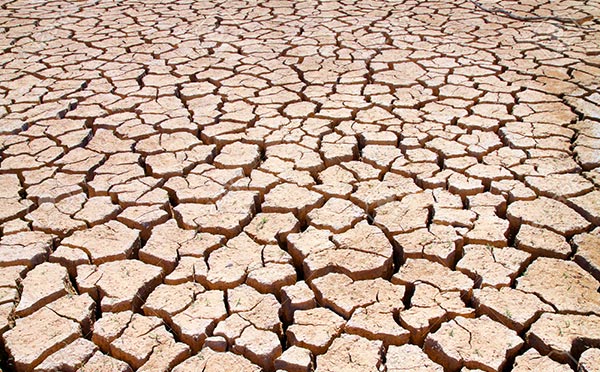 by Brian Dunning There are obvious signs that everyone can see, and that aren't being debated: the Earth is on a warming trend over the past century or so. Ice shelves and glaciers have been shrinking alarmingly everywhere. We know that there's more carbon dioxide in the atmosphere than ever before. Almost all climatologists draw a causal relationship between temperature and CO2, saying that CO2 creates the greenhouse effect, thus causing the higher temperatures. A few people draw the causal relationship in the other direction. Most people say the current trend is truly remarkable, but only if you choose a recent segment of climate history. Some people say that if you look back far enough you'll find many such ups and downs that have been far more dramatic than this one and have lasted many times longer, before there were those evil pesky humans around to cause it. The big question, which is significant because it's one that we probably can do something about, asks how much is human activity to blame for the current trend. Everyone agrees that it's at least partly to blame, but the estimates of how much range from 100% to .00001%. Regardless, it's non-zero, and it really should be zero, and everyone agrees that making it zero should be a goal. But we're left with many intractable questions: How much can we do? How much should we do? How much do we need to do? How much can we afford to do? How much can we get away with? All things considered, where do lines really need to be drawn? Lots of people pretend to have the answers to those questions. In any debate on global warming, both sides will generally say something like "When you actually look at the data, it shows X, not Y." Well, who actually has looked at the data? I don't pretend that I have. I haven't gone down into the cave myself and examined the ice cores under the gas chromatograph. I haven't looked up the raw data from ocean temperature measurements in the Aegean Sea. I haven't personally measured rainfall across southern Africa over the past 100 years. I've seen Al Gore's movie, but that's a meta-analysis of some guy's meta analysis of some other guy's meta anaylsis. None of the clowns out there who presume to speak authoritatively about what the actual data show have looked at any raw data. They've looked at someone's meta-analysis of data collected from many sources. Please, next time you're having a conversation on global warming, don't tell us what the data actually shows, because you saw a guy on TV tell us what the data actually shows. No one person can or ever will "look at all the data." A person can look at an infinitesimally small chunk of data that's out of all meaningful context, but let's get real here: the Earth is about the most complicated system imaginable. NEC's Earth Simulator supercomputer, for years the fastest supercomputer on the planet, is dedicated to this task, and they still can't tell us whether it's going to rain tomorrow. Think about that. The Earth is simply way too complicated for any person to be able to claim to understand. Al Gore says he understands it, and he made the movie An Inconvenient Truth to tell us how alarming the situation really is. Senator James Inhofe says he understands it, and he wrote the Skeptic's Guide to Debunking Global Warming to tell us how alarmed we should be at how alarmingly the alarmists alarm us. Whether you're feeling alarmed or not, I'm sure you agree that it's most responsible to listen to both sides if this is an issue where you feel taking sides is appropriate. I'm afraid I don't see it that way. I'm skeptical of anyone who says we know how much we have to reduce emissions. Here's the way I look at global warming: I don't personally have enough expertise to accurately interpret all the information flying around from both sides, and I can't claim to know for sure how much human activity is responsible for our current trend in average temperatures. But there is one thing that I do know, from simple common sense: Pumping carbon dioxide or any other pollutants into our air is bad. In the United States, the environmental movement successfully killed nuclear power, requiring us to depend almost entirely upon coal, oil, and natural gas power plants. Various studies put the number of annual premature deaths in the United States caused by emissions from these power plants at between 30,000 and 60,000 (thank you, environmental movement). Imagine at least one 9/11-style terrorist attack every month, and that's our ongoing death toll caused just by our power plants. This doesn't even include emissions from manufacturing or transportation. Imagine what this number must be in China, a country with 500 times our annual death toll from coal mining accidents. No matter how you slice it, atmospheric pollution is a horrible, horrible thing. So one way to look at it is — global warming aside — we should stop all emissions immediately, now, yesterday. Everyone already agrees it would be great if we lived in Fantasyland and had zero emissions. And little birds singing on our fingertips. But it's not as simple as that. As evil and politically incorrect as it may sound, the fact is that everything has its cost/benefit ratio. Let's say we turned off all the coal, oil, and natural gas fired power plants in the country. In about 30 minutes, we're back in the Bronze Age. Everyone on life support in a hospital is dead. Every factory stops production. The Gross National Product drops to virtually zero almost immediately. We run out of food in about a week and start cannibalizing each other. That's not the answer. Addendum: This is an old episode, and today we know a lot more about how to address emissions. Mitigation need not cause any economic harm at all, nor any cannibalization; see episode #695, Fighting Global Warming with Economics. There is also no longer any doubt that 100% of the new atmospheric carbon dioxide is from humans burning fossil fuels, which is something we absolutely can completely stop; see episode #549, The Simple Proof of Man-Made Global Warming. —BD Clearly, either extreme is unacceptable, in fact ridiculous. We musn't keep generating greenhouse gases at the current rate, and we can't simply stop it all. And in the attempt to find a happy medium, we can't expect every individual and company to make expensive and complicated changes, in many cases without good alternatives, out of the generosity of their hearts. Sheryl Crow can sing all she wants, but people and industry are still going to do what they need to do. So this means that to get anything done, we have to impose rules and regulations on everybody — like, for example, the Kyoto Protocol, an international agreement attempting to address 55% of global greenhouse gases from 160 countries. I believe the United States was clearly right in its refusal to ratify the Kyoto Protocol, because of its fundamentally nonsensical exemptions. In short, the Kyoto Protocol restricts nations based on how wealthy they are, not based on how much greenhouse gas they produce! The United States would have had to adopt economy-strangling restrictions, while China, which will surpass the United States as the world's largest producer of greenhouse gases by 2010 at the speed at which an IndyCar passes a hobo pushing a shopping basket, remains exempt from any restrictions. India, the world's third largest producer of greenhouse gases, is also exempt. Even Al Gore says that 30% of global CO2 emissions come from forest burning in the exempt third world nations. That's a pretty big chunk that nobody seems to talk much about. Some interpretations have said that without additional controls on the exempt nations, the Kyoto Protocol would result in eventual increases in the total greenhouse gas output. By these interpretations, the Kyoto Protocol is merely a symbolic political statement and not a useful tool for reducing greenhouse gases. Personally I think it was simply a case of too many cooks and conflicting interests. Blanket proclamations like the Kyoto Protocol are not the way to approach the problem with any workable practicality. In fact, 13 of the 15 European nations who did ratify Kyoto have been unable to comply with its requirements. Most reasonable people agree that reducing pollution is generally a good goal, and that it should be done wherever the cost/benefit analysis tips the scale. The costs of making changes can be determined with reasonable accuracy by the pencil pushers and the bean counters. Where these equations become foggy is on the benefit side of the scale. Is the only real potential benefit to be gained the opportunity to have a nice pretty smog-free view of the countryside? Or is the potential benefit our very survival in the face of immediate global catastrophe? How much would you pay for one, and how much would you pay for the other? We simply don't know what we can actually buy here, what we'll actually get for our money. Spend a billion dollars to retrofit factories with carbon dioxide recapturing technologies, and how much is that going to help? Exactly what effect will that have on Al Gore's charts and graphs? Nobody has any idea. It's like we're playing a global game of The Price Is Right: We're standing here with a fistful of dollars, we don't know what's behind any of the doors, and everyone in the audience is shouting. There is a way to find out what we can actually achieve through the reduction of greenhouse gases, and thus know how much of a reduction we need to make, plan a way to pay for it and actually make it happen: Doing more science and learning more about our planet. And we're already doing that. More climatologists are working on the problem than ever before. The risk we face now is getting stuck in the rut of doing nothing until it's too late, waiting for answers that will never fully come.
Cite this article:
©2025 Skeptoid Media, Inc. All Rights Reserved. |