




Organic Food Myths
Is it a revolution in health and the environment, or a counterproductive fad?
Filed under Consumer Ripoffs, Environment, Health
| Skeptoid #19 January 05, 2007 Podcast transcript | Listen | Subscribe |
|
By Brian Dunning, Skeptoid Podcast
Episode 19, January 05, 2007
http://skeptoid.com/episodes/4019
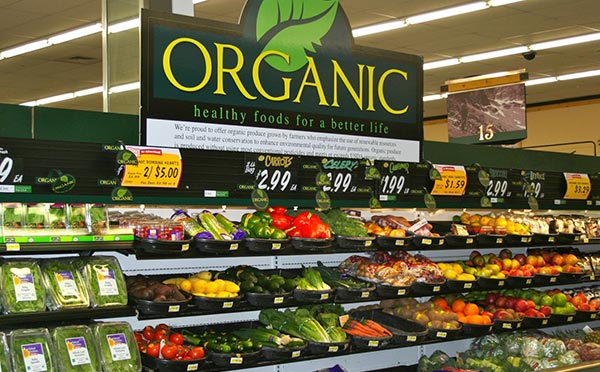
Today we're going to walk into a specialty food market and purchase one of the most trendy, popular, and correspondingly overpriced products on the market today: Organic food.
Organic food is a conventional food crop (genetically exactly the same plant variety as the regular version) but grown according to a different set of standards. In this sense, organic food is really the same thing as kosher food. The food itself is identical, but it's prepared in such a way to conform to different philosophical standards. Just as kosher standards are defined by rabbinical authorities, the USDA's National Organic Program sets the requirements for foods to bear a "certified organic" label. Basically it forbids the use of modern synthetic fertilizers and pesticides in favor of organic equivalents, and for animals it requires that they have not been kept healthy through the use of antibiotics. There are other rules too, and the basic goal is to require the use of only natural products throughout the growth, preparation, and preservation stages.
Organic food is more expensive than conventional food, due not only to its lower crop yields and more expensive organic fertilizers and pesticides in larger quantities, but mainly because it's such a big fad right now and is in such high demand.
Why is that? Is organic food healthier? Does it make an important political statement? The usual arguments boil down to three: that it benefits small farmers rather than big evil companies; that it's somehow healthier to eat; and that the cultivation method is better for the environment. Rather than accepting these emotionally satisfying benefits at face value, let's instead take a skeptical look and see what the data actually show. Let's take these three claimed benefits one at a time.
- Buying organic food benefits small farmers, and represents a blow to the big food corporations.
All right, let's take for granted the position that major food producers deserve to be struck with a blow. I'm sure the starving millions in Africa appreciate the sentiment.
Make no mistake, organic food is big, big business. The days when the organic produce section of the supermarket represented the product of a small local farmer are long gone. California alone produces over $600 million in organic produce, most of it coming from just five farms, who are also the same producers of most non-organic food in the state. 70 percent of all organic milk is controlled by just one major milk producer.
Five or ten years ago, when the major food producers saw that organic food was coming into vogue, what do you think they did? They smelled higher prices charged for less product, and started producing organic crops. Nearly all organic crops in the United States are either grown, distributed, or sold by exactly the same companies who produce conventional crops. They don't care which one you buy. You're not striking a blow at anyone, except at your own pocketbook.
Trader Joe's is a supermarket chain specializing in organic, vegetarian, and alternative foods with hundreds of locations throughout the United States, centered in organic-happy Southern California. Shoppers appreciate its image of healthful food in a small-business family atmosphere. Really? In 2005 alone, Trader Joe's racked up sales estimated at $4.5 billion. The company is owned by a family trust set up by German billionaire Theo Albrecht, ranked the 22nd richest man in the world by Forbes in 2004. He's the co-founder and CEO of German multi-national ALDI, with global revenue in grocery sales at $37 billion. According to Business Week, the decade of the 1990's saw Trader Joe's increase its profits by 1000%. Trader Joe's also compensates its employees aggressively, with starting salaries for supervisors at $40,000. They hire only non-union workers. Now, to any capitalist or business-minded person, there's nothing wrong with any of that (unless you're pro-union or anti-big business). It's a great company, and very successful. Trader Joe's customers are willing to pay their premium prices to get that healthful image. But they should not kid themselves that they're striking a blow at big business and supporting the little guy.
I'm not exactly sure why anticorporatism wound up on the organic food agenda, since it's so counterintuitive. The irony is that the organic food companies supply a smaller amount of food per acre planted, and enjoy dramatically higher profits, which is why anticorporatists hate corporations in the first place.
- Organic foods are healthier to eat.
Did you ever wonder why Chinese drink only hot tea? They boil it to kill the bacteria. Most local Chinese farming uses organic methods, in that the only fertilizers used are human and animal waste: Without being boiled, it's basically a nice cup of E. coli. In the case of China and other poor nations, the reason for organic farming has less to do with ideology and more to do with lack of access to modern farming technology.
The National Review reports that Americans believe organic food is healthier by a 2-1 margin, despite the lack of any evidence supporting this. When you take the exact same strain of a plant and grow it in two different ways, its chemical and genetic makeup remain the same. One may be larger than the other if one growing method was more efficient, but its fundamental makeup and biochemical content is defined by its genes, not by the way it was grown. Consumer Reports found no consistent difference in appearance, flavor, or texture. A blanket statement like "organic cultivation results in a crop with superior nutritional value" has no logical or factual basis.
Some supporters of organic growing claim that the danger of non-organic food lies in the residues of chemical pesticides. This claim is even more ridiculous: Since the organic pesticides and fungicides are less efficient than their modern synthetic counterparts, up to seven times as much of it must be used. Organic pesticides include rotenone, which has been shown to cause the symptoms of Parkinson's Disease and is a natural poison used in hunting by some native tribes; pyrethrum, which is carcinogenic; sabadilla, which is highly toxic to honeybees; and fermented urine, which I don't want on my food whether it causes any diseases or not. Supporters of organics claim that the much larger amounts of chemicals they use is OK because those chemicals are all-natural. But just because something is natural doesn't mean that it's safe or healthy — consider the examples of hemlock, mercury, lead, toadstools, box jellyfish neurotoxin, asbestos — not to mention a nearly infinite number of toxic bacteria and viruses (E. coli, salmonella, bubonic plague, smallpox). When you hear any product claim to be healthy because its ingredients are all natural, be skeptical. By no definition can "all natural" mean that a product is healthful.
Consider the logical absurdity proposed by those who claim conventional growers produce less healthful food. To the organically minded, conventional growers are evil greedy corporations interested only in their profit margin. What's the best way to improve the profit margin? To buy less pesticides and fertilizer. This means they must use far more advanced and efficient products. The idea that pesticides leave dangerous residues is many decades out of date. Food production is among the most regulated and scrutinized of processes, and today's synthetic pesticides and fertilizers are completely biodegradable. They're supported by decades of studies that demonstrate their total safety.
In the United States, 2006 brought two major outbreaks of E. coli, both resulting in deaths and numerous illnesses, ultimately traced to organically grown spinach and lettuce. According to the Center for Global Food Issues, organic foods make up about 1% of all the food sold in the United States, but it accounts for 8% of E. coli cases.
- Organic growing methods are better for the environment.
Organic methods require about twice the acreage to produce the same crop, thus directly resulting in the destruction of undeveloped land. During a recent Girl Scout field trip to Tanaka Farms in Irvine, California, one of the owners told us his dirty little secret that contradicts what you'll find on his web site. Market conditions compelled them to switch to organic a few years ago, and he absolutely hates it. The per-acre yield has been slashed. Organic farming produces less food, and requires more acreage.
Many so-called environmentalists generally favor organic farming, at the same time that they protest deforestation to make room for more agriculture. How do they reconcile these directly conflicting views? If you want to feed a growing population, you cannot do both, and soon won't be able to do either. If you support rainforest preservation, logically you should oppose organic farming, particularly in the developing world. On the other hand, if you demand organic soybeans, then you should have the courage to stand up and say that you don't care whether black and brown people around the world have enough to eat or not.
I'm not making this stuff up. For every dreadlocked white kid beating a bongo drum in favor of organics, there is a Ph.D. agriculturist warning about its short sightedness and urging efficient modern agriculture to feed our growing population. Personally I like forests and natural areas, so I favor using the farmlands that we already have as efficiently as possible. This benefits everyone. I say we dump the useless paranormal objections to foods freighted with evil corporate hate energy, and instead use our brains to our advantage for once. When we find a better way to grow the same crop faster, stronger, healthier, and on less acreage, let's do it. We all benefit.
© 2007 Skeptoid Media, Inc.
References & Further Reading
Armstrong, Larry. "Trader Joe's: The Trendy American Cousin." Business Week. McGraw-Hill Companies, 26 Apr. 2004. Web. 4 Nov. 2009. <http://www.businessweek.com/magazine/content/04_17/b3880016.htm>
Avery, Dennis T., Avery Alex. "Tainted Spinach Raises Big Questions of Manure on Food Crops." Center for Global Food Issues. Center for Global Food Issues, 27 Sep. 2006. Web. 9 Nov. 2009. <http://www.cgfi.org/2006/09/27/tainted-spinach-raises-big-questions-of-manure-on-food-crops/>
FDA. "FDA Statement on Foodborne E. coli 0157:H7 Outbreak in Spinach -- 9/20/06 Update." US Food and Drug Administration. US Federal Government, 20 Sep. 2006. Web. 9 Nov. 2009. <http://www.fda.gov/NewsEvents/Newsroom/PressAnnouncements/2006/ucm108740.htm>
Guthman, Julie. Agrarian Dreams: The Paradox of Organic Farming. Berkeley: University of California Press, 2004. 1-237.
Halberg, N., Kristensen, I. Sillebak. "Expected Crop Yield Loss When Converting to Organic Dairy Farming in Denmark." Biological Agriculture and Horticulture. 1 Jan. 1997, Volume 14, Number 1: 25-41.
Kava, Ruth. "Is Organic Produce Better?" American Council on Science and Health. American Council on Science and Health, 12 Mar. 2002. Web. 9 Nov. 2009. <http://www.acsh.org/factsfears/newsID.228/news_detail.asp>
TJ. "Trader Joe's Jobs." Trader Joe's. Trader Joe's, 1 Jan. 2009. Web. 4 Nov. 2009. <http://www.traderjoes.com/jobs>
USDA. "National List of Allowed and Prohibited Substances." United States Department of Agricutlure: Agricultural Marketing Service. US Federal Government, 25 Sep. 2008. Web. 22 Oct. 2009. <http://www.ams.usda.gov/AMSv1.0/ams.fetchTemplateData.do?template=TemplateN&page=NOPNationalList>
Zorb, C., Langenkamper, G., Betsche, T., Neihaus, K., Barsch, A. "Metabolite Profiling of Wheat Grains." Journal of Agricutlural and Food Chemistry. 1 Jul. 2006, Volume 54, Number 21: 8301-8306.
Reference this article:
Dunning, B.
"Organic Food Myths." Skeptoid Podcast. Skeptoid Media, Inc.,
5 Jan 2007. Web.
18 May 2013. <http://skeptoid.com/episodes/4019>
Discuss!
10 most recent comments | Show all 374 comments
Not only does Organic food have more nutrients, non organic produce is grown from unhealthy plants in unhealthy soil because the pesticides kill worms that aerate the soil and other beneficial insects that keep pests at bay. Because the soil is not aerated, there is more runoff that enters streams, other crops etc. Bad for our Earth.
Organic Food is more expensive because non organic soy and corn is subsidized by the government. Then used to finish(fatten) cattle that are supposed to eat grass and to create modified science food to include in our cereal, rice mixes, almost anything you find in a box.
Think about growing some spinach in your backyard. As long as you haven't used pesticides your dirt is organic. Then you use some free organic scraps from your kitchen to make fertilizer and your healthy plants don't need to be sprayed because they fight off disease on their own. You just saved money on round up and fertilizer from the store. You do have to do some research though and learn some gardening skills and organic practices.
However, organic isn't everything. Just because the label is there doesn't mean you should eat it. They can modify organic corn too. And organic produce grown near a cattle ranch can become infected with E. coli. Protecting ourselves and our families is one difficult task. I know there is always going to be things we can't control about our lives, but once you know the truth it's hard to ignore. Happy shopping! : )
lea, lafayette, CA
January 03, 2013 6:00pm
Lea, please refer to my previous post.
As far as your backyard example goes...back yard produce is definitely not organic. It never will be organic until you have gone through the process to ensure its organic.
Refrain from fallaciation..You havent doen a shred of research, you have watched too much television. Please dont claim that you have researched something and then post your view.
Mud, At virtually missing point, NSW, OZ,
January 03, 2013 6:21pm
An "Organic" plant, has no nutritional advantage to conventional. The flash frozen corn has (almost) the same nutrients as the "organic" "farm fresh" version.
Organic food isn't more expensive solely because "unhealthy corn" is subsidized; it's more expensive because there is less supply and a growing demand. Basic economics at hand; one product with equal demand but half the supply will sell for substnatially more.
Ford, Conor, Poway California
January 07, 2013 2:23pm
Ford, living in the land of cheat organic (california) I appreciate your comment.
Yes it is a fashion that folk will pay dearly for.
Mud, At virtually missing point, NSW, OZ,
January 07, 2013 8:16pm
We've been certified Organic (spinach, cauliflower, some corn, one orchard and some potatoes) and not one argument, other than price, can convince me of the advantage.
Of course we use "certified" insecticides. Drink the Rotenone we spray on the "organic" fields and you'll be as dead as the "organic" we use elsewhere.
The organic fields yield much less, but we charge more,... but let me tell you a secret,... you do not know the difference. You claim to, but my strawberries (which I "say" are organic, but do not label) pass the "tastes better because they are organic" test.
It's a fad. I use far more deisel for far less product, but I charge more.
I've been doing this for all of my 49 years. Same farm, same machines, same animals, different label. The food is fine, the use of the food is the problem.
If you want to know why cancer is prevelant, look at the information technologies that inform you of it! Look at the advances in diagnostics then examine reality: We Live Longer. Food-born illness isn't even on the freakin chart!
I grow organic, but I eat food.
I leave you with reality: NPK. If you don't know what NPK is all about, you don't know anything about food and your pro-organic argument is an idiot's argument.
We've succeeded, not failed.
HFCS,.. another issue. That is abuse.
NB, Northern, NY
January 08, 2013 1:32pm
Thanks NB for your comments. Yes, the issue of nitrate etc loading on organic farms is an issue fraught with woo when interviewing organic or "bio ethical" planters. Neither seem to know their standards.
I have a problem with the standards themselves (inclusive of magic) and the impression they make of general industrial standards (folks, primary industry is industry).
Thankfully most never read a standard.
Thanks for the admission and awareness that a product generally sells on its marketing rather than its true value.
Mud, At virtually missing point, NSW, OZ,
January 08, 2013 10:36pm
This skeptoid is not really about organic food in general, but a rather US-centered story about organic CROPS (not meat) and some organic food consumers that apparently annoy certain skeptics.
The part about myth 1 (food corporations) probably describes the US situation properly, but the presence of big corporation doesn't necessarily imply small organic farmers are no longer active. If anything, the market for quality products has been "opened up" during the last ten years. I buy my quality products (organic or not) from small farmers as well as the larger corporations. Great!
The part about the second myth (health) adds mostely irrelevant discussion of people's opinions regarding "naturalness" and some only marginally relevant statistics about E. Coli outbreaks. It also states that all vegetables of any kind, whether they're grown organically or not, are basically genetically identical, denying that organic farmers often use subspecies that are much resistant against insects and fungi etc. These varieties are different and often taste better.
The third myth regards the environmental benefits. It's not universal: it does not apply to the situation in the Netherlands. We have less and less soil to cultivate yet our vegetable exports soar, even the Ph.D. agriculturist agree. The forests are not threathened and farmer's soil is getting more healthy.
Lastly: the conditions for organically-bred animals as stipulated by law are the best possible. #1 reason for organic meat!
Vincent, Amsterdam, Netherlands
March 21, 2013 6:04am
Organic is fast becoming the alternative to Genetically Modified Crops and that is the main reason why everyone should insist on affordable organic food. Unfortunately marketing hype does little for the organic cause but although organic may not be more nutritious, it certainly is healthier than chemical-laden harvests and the toxic GMO foods. If you truly know what you are eating and know how it is produced then you would definitely choose organic over conventional and GMO farming. I am astounded by the lack of knowledge in this article on the benefits of organic. Know your farmer, know your food.
sonia, South Africa
April 04, 2013 6:13am
There is obviously no misleading corporations, no corporate funded scientific studies, no suppression of nutritional facts or anything alike in the OP's world. Even local doctors get "gifts" from pharmaceutical companies, and half the board of EFSA is on the payroll of multinational food companies. Still the OP trust them. Is that skepticism?
Freke1, Denmark
May 11, 2013 3:26pm
Make a comment about this episode of Skeptoid (please try to keep it brief & to the point). Anyone can post:
You can also discuss this episode in the Skeptoid Forum, hosted by the James Randi Educational Foundation, or join the Skeptalk email discussion list.
What's the most important thing about Skeptoid?


I agree on some, slightly disagree on other points. One important point left out is how "Organic" has been so diluted that most of the early organic farmers would be applaud. There are over 90 pesticides and chemicals allowed by the USDA in organic farming. Most of which were allowed due to lobbying from the big farming chains so they could mass produce organic produce.
Matt, Astoria, NY
January 03, 2013 12:04pm