 |
 |
  
|
 |
How to See Your AuraDespite promotional claims, neither auras nor aura photography are things. Skeptoid Podcast #75 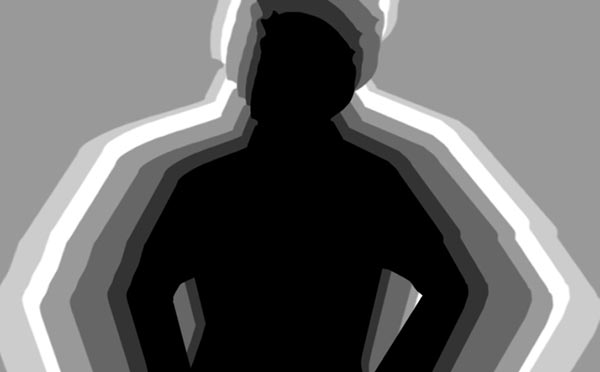 by Brian Dunning Today we're going set up a special camera and view a mystical energy field surrounding your body that's normally visible only to certain sensitive people. Our subject today is aura photography. A listener from Chile wrote in with the following account of a late-night infomercial aired on Chilean television:
Well, there's nothing new about psychics claiming to see your aura. What's missing is any kind of a half-decent explanation for what this aura supposedly consists of. It's really easy to throw around scientific sounding terms like "bioelectromagnetic fields" or "life energy", but such terms do not have any legitimate meaning. We have to ask some basic questions. Does this thing called an aura really exist? Does it convey any useful information about the person? How might it be possible that some people can see it or sense it, while others cannot? To answer the first question, do auras actually exist, we have to abandon untestable verbal claims from psychics who say they can see them but offer no evidence, and look instead to testable evidence. Namely, aura photography. There are three types of aura photographs. The first, which is sometimes seen in video and is usually in color, is simple infrared photography. To take an infrared photograph with a conventional film camera, simply use infrared sensitive film. An infrared photograph shows heat. A shot of a dead object at room temperature appears black or at the same color as the general background, but a living person or other warm object appears white, or in a color video, at a warmer temperature. Charged particles near the skin surface, or near the surface of any warmed object, are excited by the radiated heat and will appear as a glowing band around the person or object. Simple heat does not have any of the mystic qualities attributed to auras, and can be produced equally dramatically with any dead object if you just warm it up. The second type of aura photograph is called Kirlian imaging. It's named for Semyon Davidovich Kirlian, the Armenian electrician who discovered it in 1937, though it didn't really become popular in the world of aura enthusiasts until the 1970's. Kirlian images of auras are all black except for the aura itself, which is manifested as a thin band of jagged white surrounding an object. To take a Kirlian image, the subject to be photographed is placed on a photographic plate which is electrically isolated above an aluminum electrode. Another electrode is connected to the subject, and the resulting image is thus burned onto the photographic plate. Kirlian described this as "bio-plasma", an image of what he called the "life energy" of the object. Scientists call this effect a corona discharge, and you get the same result using any conductive object. It does not have to be alive; a coin will work just as well. Corona discharges have been well understood since the 1700's, and they have nothing to do with "life energy" or the psychic state of an object. Finally, we have the latest, greatest, and stupidest of aura photography techniques, which was developed in 1992 by an electrical engineer named Guy Coggins, and is called the AuraCam 6000. This produces brightly colored pictures showing the person with superimposed brightly colored clouds of light around them. To take an AuraCam picture, the subject sits and rests his hands on the leads of a galvanometer, the same device that Scientologists call an E-meter. The AuraCam takes a conventional photograph of the person which is loaded into a computer. The computer software then synthesizes an image of colorful clouds said to be based on the galvanometer measurement. This colorful halo is then superimposed onto the image of the person, then it's printed out, and presto, you have your mysterious aura photograph. According to Coggins' website:
And how about those colors? How are they determined? Coggins actually gives several different answers on his website: that the colors are determined by corresponding electrical frequencies; that the colors were chosen in consultation with psychics to produce the same colors seen by psychics; and that they are based on the writings of Dr. Max Luscher, correlating personality with color preferences. I guess you can take your pick of how you prefer to believe the colors in your picture were determined. To Coggins' credit, his website is very clear that these images are not suitable in any way for making medical diagnoses, and that they only represent the software's interpretations of the galvanometer reading. He is also very clear that these devices are primarily for making money taking pictures at fairs, and he provides pricing guidelines and lists of events where you might choose to take your AuraCam. I wish that all peddlers of pseudoscience were that honest. Joe Nickell wrote an entertaining account of having his own picture taken at a psychic fair with an AuraCam in Skeptical Inquirer magazine. So an examination of aura photography reveals no useful, testable evidence that auras even exist at all. If we can't establish any reasonable foundation of evidence that they might exist, it's premature to address our second question, whether any useful information can be derived from studying auras. So let's look at our third question: How might it be possible that some people can see auras? Nobody has ever suggested a plausible mechanism for how such a thing might be possible, but if it is, there's a big fat chunk of dough sitting there waiting for anyone who can do it. James Randi has a million dollars in his vault that's yours if you can see auras. Nobody has tried since 1989, when the prize was only $10,000. On the TV show Exploring Psychic Powers Live, a psychic claimed that the auras she could see stretched five inches beyond the person, and that she could see the aura extend beyond the top of a screen that a person was behind. Ten screens were presented, and by prior agreement between her and Randi, she needed to score 80% correct predicting which screens had a person behind them. Random guessing would have resulted in a score of 50%, but she scored only 40%. Since that highly publicized failure on live television, author Robert Bruce, in his book Auric Mechanics and Theory, has taken the classic step of moving the goalposts. He states that auras cannot be seen in complete darkness or if any part of the person emitting the aura is obscured. This special pleading presumes that auras have some quality that places them on a higher plane than what might be testable using basic blinded experiments. So what it all boils down to is that the only supporting evidence for the existence of auras is the logical fallacy of special pleading that claims they are beyond the threshold of detection for anyone except self-described psychics whose claims must be allowed to be untestable. Well, that's bogus, and it's childish. If Robert Bruce had anything in his book that could withstand any kind of scrutiny, he could easily be a million dollars richer. Until aura advocates make some kind of reasonable, quantifiable description of their phenomenon, any discussion of auras — including their photography, their meaning, or their paranormal detection — should be treated with extreme skepticism.
Cite this article:
©2025 Skeptoid Media, Inc. All Rights Reserved. |