 |
 |
  
|
 |
How to Drink Gnarly Breast MilkProponents of colostrum supplements believe that it has a whole range of benefits. Skeptoid Podcast #71 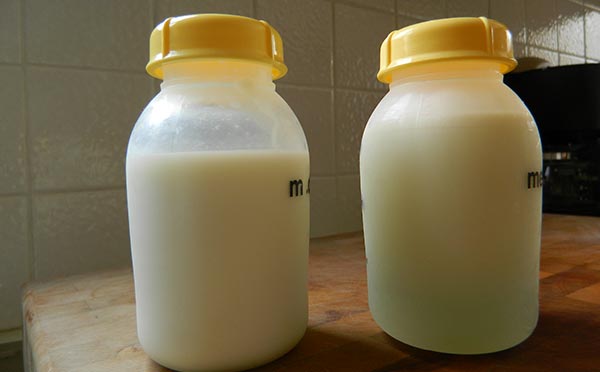 by Brian Dunning Let's mix up a glass of a recent trend in health and fitness: Colostrum, the extra thick and goopy breast milk that mothers produce for a few days right around childbirth. Sound gross? Yeah, it sounds pretty disgusting to me too. So let's see if there's a less horrific way to drink it, and while we're at it let's see if there's any good reason to do so. But first let's talk about exactly what colostrum is and what natural purpose it serves. Colostrum is the thick, sticky, yellow breast milk that mothers produce for just a few days, custom designed for a newborn infant's special needs. If you've ever been a parent, you remember it well. You probably even have a more intense memory of the product that colostrum's primary purpose serves to eject from the newborn body: meconium, that first black tar-like stool that often comes out under surprising pressure. Colostrum acts like a laxative to get the meconium out, which has been building up inside the intestines all during gestation. Since colostrum is the baby's first natural meal, it's low in quantity, to avoid stressing the brand new plumbing. You might expect it to be high in fat but it's actually just the opposite, since fat would be hard on a new digestive system. This, in part, accounts for the way that newborns often lose a few ounces in weight after birth. Colostrum contains a lot of white blood cells and immunoglobulin to kick-start the baby's immune systems, and it also delivers certain good bacteria to prepare the baby's digestive system to receive its first conventional meals. Colostrum also contains a lot of carbohydrates, and one more ingredient that has established it as a favorite in health supplement stores: Whey protein. It's not human colostrum that you'll find on the dietary supplement shelves — though I have no doubt there are some scary people out there somewhere who drink human colostrum — but bovine colostrum, from cows, which is quite similar to human colostrum and is obviously more widely available and in larger quantities. It's generally purified and sold in powdered form, and is essentially a concentrated whey protein supplement. Some powder brands boast of being less purified, with many of bovine colostrum's natural ingredients intact, most notably the immunoglobulin. The premise behind these products is that what's best for a newborn infant is best for everyone. Obviously nature disagrees with this premise, as demonstrated by how dramatically breast milk changes away from colostrum once the meconium is cleaned out of the infant. Protein supplements are generally not regulated by the FDA and should carry the usual warning on the label that neither the product nor its claims have been evaluated by the FDA, and that the product is not intended to diagnose, treat, cure or prevent any disease. So the default skeptical position is usually to shrug one's shoulders and say something like "Show me the money". In other words, let's see the research. To find well-performed research on something like colostrum, what you don't do is go to colostrum.com, or any other website involved in the sales or marketing of the product, and click on their Clinical Trials link. No, you go to PubMed and do a search on bovine colostrum supplement. What you'll find is that quite a number of well-performed trials have been done, and that the consensus of their results (as suggested by my own half-assed meta analysis) is that athletes in training taking a bovine colostrum supplement report a slightly reduced incidence of upper respiratory illness symptoms, as compared to control groups taking conventional protein supplements. In addition, an increase of serum insulin-like growth factor 1 (IGF-1) has been noted, relative to control groups. The next question to ask is what is this IGF-1 stuff, and is it necessarily a good thing to have in your body? It's a growth hormone that occurs naturally in the body, and is at its highest concentration during the puberty growth spurt. Body builders and people into health supplements usually hear the phrase "growth hormone" and grab their wallets, but muscle growth is not really what IGF-1 is about. A variety of clinical trials have been conducted on IGF-1 as a therapeutic agent, and you can find these on PubMed too. It has been tested inconclusively as a treatment for ALS or Lou Gehrig's disease, growth failure, types 1 and 2 diabetes, and burn injury. IGF-1 is available commercially as a prescription drug called Increlex. However, IGF-1 has not been found to be a slam-dunk cure for any of these conditions, and many of these trials also found an increased risk of cancer from IGF-1. In fact, drugs that inhibit IGF-1 are being studied for some types of cancer treatment. The other ingredient that proponents hope to get from colostrum is immunoglobulin G, and colostrum is often sold with words like "hyperimmune" on the label trumpeting the value of colostrum as an immune system booster. A 1997 study compared three groups of subjects: One group taking hyperimmune colostrum immunoglobulin, one group taking plain nonfat milk, and one group taking a control placebo. All groups were then exposed to Cryptosporidium parvum. The results? A glass of nonfat milk offers the same immune protection as "hyperimmune" bovine colostrum. Both offered better protection than the placebo. Regular whey protein, comprised largely of both essential and non-essential amino acids, is a byproduct of cheese making, and is thus widely available. If you shop around you can find it pretty cheap. Bodybuilders on hardcore workout programs can benefit from whey protein. It does assist in the repair of damaged muscle tissue, which is what results in muscle growth. But understand: without the workout program intense enough to damage muscle fibers, the whey protein does nothing at all for muscle growth. You can't just drink protein powder and expect to get buff. Furthermore, the benefits of whey protein are comparable to what the bodybuilder would get anyway from a high-calorie, high-protein diet that he should already be eating if he's on a muscle-building program. In short, if you're looking to get all buffed out, you're probably better off going to the gym than taking some weird experimental drug like the growth hormone IGF-1, even when it comes in the "all-natural" form of bovine colostrum. The thing is that none of colostrum's positive effects are huge. You can take colostrum supplements all day long, and you're probably not going to get cancer, your diabetes probably won't get cured, you probably won't get all buffed out unless you've already working out at the gym, and it probably won't make any difference in whether you get sick or not, especially if you already drink regular milk. The people who sell these products simply read through all the reported effects, select the ones that sound positive, and then write them all over the side of the container. There are also some even more deceptive marketing tactics employed by some sellers of colostrum supplements. For example, some are sold with various "certifications" shown on the label. There is no government agency that certifies various types of colostrum; these labels are marketing logos only, invented by the seller, and consumers should be cautioned to give them no credence whatsoever. In some ways, I liken colostrum to wheatgrass juice. Yes, it does contain some things that are potentially good for you, but overall it's quite an unusual way to get them. People drink wheatgrass juice for the oxygen and vitamin B12, but they don't need anything else contained in chlorophyll, and taking a single breath plus a single Flintstones vitamin pill delivers much more of both, cheaper and easier. Similarly, colostrum powder is a fine way to get whey protein, but a non-newborn body doesn't need hardly anything else in it (like the laxative for meconium), and you can get regular whey protein cheaper and easier if you just buy whey protein.
Cite this article:
©2025 Skeptoid Media, Inc. All Rights Reserved. |