




Skeptoid: Critical Analysis Podcast 
About This Podcast
Subscribe
Subscribe to the Podcast
Episode Guide
Skeptoid Forum
Hosted by JREF
Skeptalk
Email Discussion List
Search:
Answering Student Questions
What Is Skepticism?
Swag & Crap
One Million Dollar Paranormal Challenge
Videos
Appearances
What People Are Saying...
Press Room
Contact
Subscribe with iTunes
Twitter
Skeptoid on MySpace Facebook

A salmon changed into a turtle, which changed into an alligator, which changed into a hippo, which changed into a lion, and then into a monkey, and then into a human being

- An Evolution Primer for Creationists
Recent Comments...

Skeptoid

The Importance of Teaching Critical Thinking

Skeptoid #45
May 16, 2007
Podcast transcript | Listen | Subscribe

Stumble This
Share on Facebook

Follow Skeptoid on Twitter

Today we're going to do something a little bit different. Rather than talk about any one specific phenomenon, I want to talk in general terms about the importance of teaching critical thinking to young people, and how and why it can and should be done better. A skeptical approach to life leads to advances in all areas of the human condition; while a willingness to accept that which does not fit into the laws of our world represents a departure from the search for knowledge.

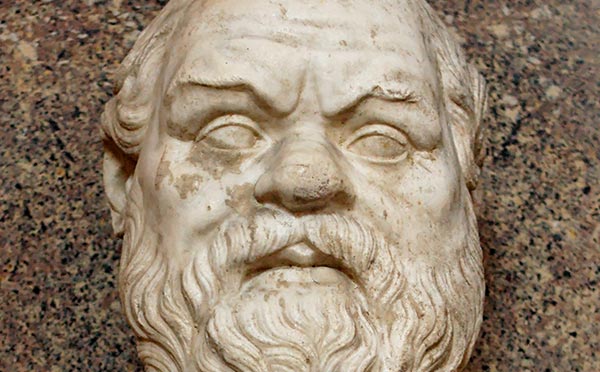
We had a critical thinking class at my high school as an elective, and I think it was generally considered to be the most boring and useless class you could take. If memory serves, the bulk of the class involved reading and studying Plato's Socratic dialogues. If you read them as a teenager, you may recall your reaction was to find them pretty darn dry. They were dialogues between Socrates and other people about such riveting subjects as ancient politics, philosophy, and even mathematics. I don't mean to criticize Socrates; it's just that studying the man and his 2,400-year-old writings is about the least interesting and relevant way for a modern young person to get excited about what Socrates was communicating. Nobody I knew who walked out of that class ever remembered a single concept, or applied it to their life. You can disagree with me and say that you find the Socratic dialogues to be brilliant and fascinating. My point is that the average teenager does not.

But the concepts Socrates introduced, such as the Socratic questions, are brilliant and fascinating when we apply them to things that interest us. More significantly, they become relevant. Take a few Socratic questions:

  • What is the source of your information?
  • What assumptions are you making?
  • Is a different conclusion more consistent with the data?
  • What is an alternate explanation for this phenomenon?

What if we encouraged young people to ask these questions not of early Greek politics, but of the issues they're hit in the face with every day? Global warming. Television psychics. Alternative medicine. New Age religions. Popular assumptions about alternative fuels. Alternative foods. Alleged correlations between Xbox violence and actual violence. Magnet therapy. Isn't it more useful to encourage better ways to think about the subjects that people are already thinking about?

I have a favorite example of an older, less interesting critical thought exercise that was made more relevant and interesting. The philosopher Bertrand Russell, in criticizing major religions, conceived of what became known as Russell's Teapot, a small china teapot allegedly orbiting the sun. Since nobody could disprove its existence, Russell argued that the only reason its existence shouldn't be taken for granted is that there are no ancient texts written about it. He applied Socratic reasoning to point out that ancient texts do not constitute proof of an unprovable concept. Russell's Teapot was freshened when a grad student named Bobby Henderson wrote to the Kansas Board of Education in 2005, which had just mandated that the Christian story of creation should be taught instead of science. He insisted that by the same logic, his non-disprovable Flying Spaghetti Monster deity's myth of creation should be taught with equal time. Fans appreciative of Henderson's logic have since formed the parody religion known as Pastafarianism. The Flying Spaghetti Monster is goofy and glib, but it is a valid example of using critical thinking to analyze the value of a real phenomenon that we face today.

Teachers, what would your students come up with if you asked them to apply similar reasoning and invent an alternative to television psychics, founded upon the same assumptions that Sylvia Browne asks us to make?

Finding fault with television psychics or the Kansas Board of Education is not, by itself, a positive contribution. Skepticism should not be merely a negative influence. Skepticism is not about debunking, disproving, or ruining anyone's faith. Skepticism is about applying the scientific method to arrive at a conclusion that is evidenced to be beneficial, like curing cancer. If, during this process, it first becomes necessary to debunk an unsupported alternative that's in the way, such as treating cancer with magnets, then that debunking serves as a stepping stone to the final solution. Debunking should never be an end in itself, because that alone creates nothing useful. As scientists, we are interested in learning, and often that involves replacing an older hypothesis that's found to be wrong.

Some people criticize science by pointing out that it does not know everything and doesn't have all the answers. Case in point: the popular movie What the Bleep Do We Know. Obviously, this criticism is true. Science is all about the fact that we don't know everything. Science is the learning process. There are ideologies that do offer all the answers, often divine in nature or based on ancient philosophies. When you have all the answers, there is no longer any need to learn, and thus no use for science. If we want to improve the world, improve the human condition, improve technology; learning, and thus science, is the essential way forward. Ideologies that offer all the answers are the essential route to developmental stagnation. When your hear someone criticize science because it doesn't have all the answers, don't argue with them; instead point out that that's the strength of science. We couldn't be learning more every day if we presumed to already know everything.

Some people criticize skepticism because it doesn't leave well enough alone. Many paranormal beliefs and alternative systems, even though they may lack hard scientific evidence, bring comfort to those who practice them and are a positive force in many peoples' lives. There is value and enlightenment to be found in life that isn't necessarily found in a science book. It is often argued that skepticism is not merely unimportant, it can even be harmful. Young people should not complacently accept this short-sighted argument. First of all, happiness and enlightenment are all around us in our world; they are not found only within a given pseudoscience. But moreover, once we begin investing our faith in unsubstantiated or supernatural phenomena, we are contributing to the redirection of attention, influence, and funding away from technologies and concepts that have been evidenced to be beneficial to humanity and to our world. As my good friend says: "If once you start down the dark path, forever will it dominate your destiny; consume you, it will." The choice between pseudoscience and science is the choice between stagnation and progress: Progress toward long life, health, happiness, a cleaner planet, bountiful food, knowledge, and peace.

Stumble This

Brian Dunning
Brian Dunning

References
© 2008 Skeptoid.com

Discuss!

5 most recent comments | Show all 8 comments

Remember, you should always read with skepticism the comments of anyone too lame to put their real name & city.

Kudos on this one, for it addresses the "how to fish" issue, rather than the "give a fish" of specific debunking.

It is the responsibility of each one of us who cares for the future of humanity and the world to think as critically as possible and help others do the same. I'd love to hear the arguments of anyone who disagrees with that.

Todd Barton, Crawfordsville, IN
May 18, 2007 7:42am

Quote:
"Corporations are more than happy to pass multi-dollar grants around in the name of science to research and procure radiation causing tools. A scientific mindset would acknowledge the problems with this solution; is the radiation treatment prescribed due to medical reasoning or financial? That accusation can be shared amongst all science, left-field and mainstream."


There is ample evidence that radiation therapy can be used to treat cancer. Why would someone not want to increase their chances of recovery by attempting this form of therapy? Just because long-term exposure to X-ray radiation in some context can lead to cancer, it does not follow that it cannot be a suitable treatment to cancer if applied in a different, controlled, environment. Context is everything.

A "scientific mindset" will realize that, and not jump to conclusions because the noun used to describe a cancer therapy is the same noun used to describe a cause.

Dominic Cuerrier, Toronto
May 24, 2007 8:46am

"It is the responsibility of each one of us who cares for the future of humanity and the world to think as critically as possible and help others do the same. I'd love to hear the arguments of anyone who disagrees with that."

Todd Barton, Crawfordsville, IN
May 18, 2007 7:42am

I agree Todd, but try the faithers! There's millions out there who would rather be delusional than see through the eyes of reason!

As for a debate over radiation therapy ... "kill or cure"? right!

Aspirin numbs pain & thins the blood...great. But it's based on salicylic acid that causes internal bleeding of the intestinal wall...are you gonna take it still?

The radiation (gamma) is given in thin beams to certain cells, the cancer cells, to kill them. If it hits other cells they die too.

It's a bit like lancing a boil with a hot rod...but it's localised to reduce peripheral damage to tissue. That's not to say burning some one is good, is it?

It's all about context and application.

Breathing too much oxygen can kill, so can drinking too much water!

Is a logical response to this 'scientific' information: "hold your breath and don't drink water!"????

Of course not!

Just "hold your breath 'under' water!"

Griff....gasp...

neil griffiths, Cardiff uk
May 29, 2007 5:05pm

"There's nothing Nitzche couldn't teach ya 'bout the raising of the wrist...Socrates himself was permanantly pissed"...oh sorry I was quoting a very non-scientific drinking song.

It seems to me that egos get very much in the way of science. Everybody wants to be right, and science, or purported scientific fact, are ways to achieve being RIGHT for those who feel in a one-down position going in and who have something, monetary or otherwise, to gain from being RIGHT. Think about it. Stumped? Okay...global warming...creationism...the Darfur conflict...now is it more clear?

My personal observation is that if we look at life and just compare and contrast, we can see for ourselves the universal truths. Immutable laws...or are they?

Hey I don't know and thank goodness for that!~! I like surprises.

Regards,
Suzy Paris

Suzy Paris, Denver, CO
June 30, 2007 7:07pm

I did also did a critical thinking course while at school (age 17), but it was a course not really taken seriously by any of the students. There was also a distinct lack of understanding of some of the concepts by some of the teachers.
Fortunately, before I started the course, I had recently read a book called "Bad Thoughts" by "Jamie Whyte", which meant I was at least a step ahead of most other students.
I would like to recommend this book to you, Brian, and all listeners of skeptoid, as it makes a great read. That's "Bad Thoughts: A Guide to Clear Thinking" by " Jamie Whyte".

Samuel Golten, Horsham, West Sussex, UK
January 16, 2008 12:07am

Make a comment about this episode of Skeptoid (please try to keep it brief & to the point). Anyone can post:

Your Name:
City/Location:
Comment:
characters left. If you paste in more than 1500 characters, it will be truncated. You cannot comment the same episode twice in a row. Discuss the issues - personal attacks against other posters will be deleted.
Answer 9 + 9 =

You can also discuss this episode in the Skeptoid Forum, hosted by the James Randi Educational Foundation.

Join the Skeptalk email discussion list.

Skeptoid book:
Now available!
 
Skeptoid: Critical Analysis of Pop Phenomena, by Brian Dunning
Watch Here Be Dragons, the 40-minute video introduction to critical thinking. Based on the Skeptoid podcast.
 
Skeptoid Widget
Newest

Search for the Missing Cosmonauts
Skeptoid #115
August 19, 2008
Read | Listen (13:38)
Student Questions: Fish Oil, Charities, and Rumors
Skeptoid #114
August 12, 2008
Read | Listen (9:37)
The Most Effective Homeopathy Podcast Ever
Skeptoid #113
August 8, 2008
Read | Listen (10:06)
Genetically Modified Organisms: Jeopardy or Jackpot?
Skeptoid #112
August 5, 2008
Read | Listen (14:27)
Should Tibet Be Free?
Skeptoid #111
July 29, 2008
Read | Listen (11:39)
Newest
#1 -
The Detoxification Myth
Read | Listen
#2 -
An Evolution Primer for Creationists
Read | Listen
#3 -
Religion as a Moral Center
Read | Listen
#4 -
Apocalypse 2012
Read | Listen
#5 -
World Trade Center 7: The Lies Come Crashing Down
Read | Listen
#6 -
Super Sized Fast Food Phobia
Read | Listen
#7 -
Killing Faith: Deconstructionist Christians
Read | Listen
#8 -
New Age Energy
Read | Listen
[Valid RSS]
ZIP Code Database