 |
 |
  
|
 |
Raw Food - Raw Deal?Skeptoid Podcast #30 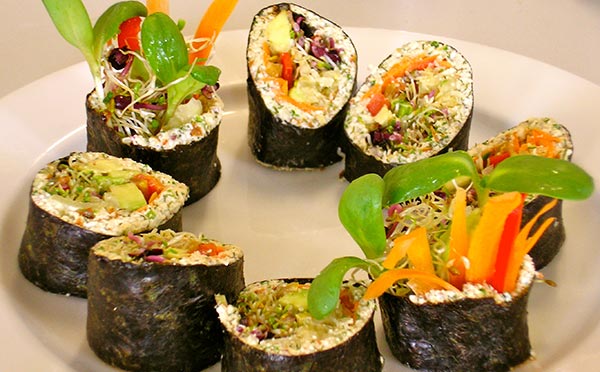 by Brian Dunning Turn your stove off, put those pots and pans away, and prepare to be dazzled by a delicious meal made from fresh, raw fruits and vegetables. But wait! They're not just healthy and delicious: Raw foodists are claiming a lot more than that. Raw foods are delicious, they're easy to prepare, you'll probably spend less money on food, you'll spend less time washing dishes, and you're a lot less likely to burn yourself in the kitchen. Nobody denies any of these benefits; I certainly don't. What I do deny are some of the other, less honest claims that some of the more militant raw foodists make. I don't know why they make these claims, since most of them are so obviously untrue. Raw food is already a great thing; it doesn't need to be defended or supported by lies. I should point out that I am a huge raw food fan. Nobody likes raw food more than I, or eats it in larger quantities. However, my raw food diet consists mostly of fish in Japanese restaurants, and it only supplements my regular diet of normal food. But by making this disclosure, I do claim full protection from the appearance of bias in this episode. Let us now listen to some of the disingenuous claims made by some raw foodists: Animals in the wild don't get sick because they eat a natural, raw diet. Apparently, a lot of raw foodists honestly believe — or at least say that they believe — that wild animals don't get sick, and therefore we wouldn't either if we only ate raw food like animals, as if that's the significant difference between people and wild animals. In fact, disease is the major cause of mortality in wild animals. Check with any of the various wildlife groups who send veterinarians and biologists out into the jungles of the world to care for wild animals. This claim is especially hard to support given the numerous high profile cases of disease in wild animal populations: avian flu, chimpanzee ebola, widespread hoof and mouth disease, bubonic plague in rats. The correlary claim is that raw foodists will not get sick. Unfortunately there is not a single example in the whole human race of someone who doesn't get sick, so this claim is just as untrue. Of all the original raw food gurus who have since passed away, please note that they have all passed away. Eating raw foods will increase your lifespan. Humans are living longer than ever before, and that's shown through overwhelming evidence. This is due to modern health care. You can try to debate this point and say that cooked food makes us live shorter than we naturally should, but you're on thin ice. All the evidence is completely against you. The argument is purely faith-based. By far the greatest driver in longevity is heredity. Diet is not a significant factor, statistically. Actually there is some recent research showing that 80% of centenarians have abnormally large HDL particles, compared to 8% of the general population. On a related note, I am intrigued by the low-calorie longevity. As you probably know, lab mice live 50% longer when fed an extremely low-calorie diet. There is a group of people who call themselves "life extensionists" who eat low-calorie diets. It should be noted that the significant factor in this diet is low-calorie: not vegan, not raw, not organic, not free of corporate hate energy; simple low-calorie is all it takes. But since there are not yet any long term clinical studies on humans, we can't yet assess whether what's good for mice is good for people, but it is still interesting. Because of the same mathematical curiosity that we discussed in the Natural Hygiene episode, people who adopt a raw food diet can genuinely claim to have average lifespans that are longer than the general population. This is because most raw foodists choose to adopt the lifestyle during healthy adulthood, when they're already past infancy and early childhood where many deaths occur in the general population, thus bringing down the general population's average life expectancy. When any group composed largely of adults claims a longer life expectancy than the general population, be skeptical of the reasons they give. It's true of all adults. Humans are the only primates who eat meat. You'll hear this a lot from raw foodists, but it's simply not true, as a read of any reference material, or a trip to any zoo, will reveal. Almost all apes are omnivorous. At one extreme you have baboons, who have been known to hunt goats and sheep in packs. At the other extreme you have gorillas, who eat insects as a small part of their diet. Most other apes, such as chimps, eat eggs, birds, and small mammals. Anyone who tells you this is trying to support an unsupportable claim: they're simply telling a far-out lie to convince you that eating meat is unnatural. Cooked food is toxic. I'm not even sure how to answer this one. Obviously, if cooked food was toxic, everyone on earth would have died long ago. Generations ago. Tens of thousands of years ago. Every speck of evidence shows quite conclusively that everyone talking about this is, well, alive. Cooked food is not toxic, or else we'd be dead. Cooking makes organic compounds non-organic. Let's review what an organic compound is. Ever take o-chem in college? Organic chemistry is the study of carbon compounds, and organic compounds are those formed by living organisms, with molecules containing two or more carbon atoms, linked by carbon-carbon bonds. These can be double bonds, where the carbon atoms share 4 electrons, or in the case of saturated fatty acids, they can be single bonds, where the carbon atoms share two electrons, and the other electrons are shared with bonded hydrogen atoms. Breaking these bonds would, in effect, make an organic compound non-organic. So really, the claim being made by the raw food people is that cooking breaks those carbon-carbon bonds. You would have to really, really cook your food to break these bonds. Carbon-carbon bonds will begin to break at temperatures above 750 Fahrenheit, or about 400 Celsius. So if you cook your food in a ceramics kiln, then yes, it is possible to chemically change it into a non-organic compound. But if you're looking for it to happen at regular cooking temperatures, well then, you need to retake your o-chem. Cooking kills needed enzymes in the food. Without these enzymes, the body cannot properly digest the food. This is one of the more common claims that you'll hear, and it's based on a gross misunderstanding of digestion basics. Our digestive enzymes are produced by our body, and secreted into our mouth and stomach through glands. Humans do not need to eat digestive enzymes in order to digest. We are not Jeff Goldblum in The Fly. Moreover, the claim that cooking "kills needed enzymes" is silly on two fronts. First, pretty much anything that you digest gets "killed" in the process — that's kind of the whole point of digestion. Enzymes contained in the food that you eat are broken down into their constituent amino acids by your digestive process, and it's these amino acids that are absorbed through your intestines. "Killing needed enzymes" is pretty much what you want your digestive system to do: break them up into amino acids that you can use. Trumpeting this fact with alarmism as if it's a bad thing, should really give you pause to consider how well these people know what they're talking about. White blood cells flood the stomach after eating cooked food, because they're trying to fight the poison that just entered the body. Neither I nor a doctor friend had ever heard of a mechanism by which white blood cells could enter the stomach, except in certain acute conditions involving gastric ulcers, where the stomach is open to the vascular system. The claimed phenomenon of pus in the stomach as a consequence of consuming cooked food does not ever appear to have been observed in medical literature, so this has all the appearances of being just another made-up lie. Cooking food renders it unrecognizable to the body as food. Well, again, we have a misunderstanding of the digestive system. The word "food" is just a label that people put on certain things that they eat. I could also eat dirt, and I wouldn't call it food. My stomach doesn't care what I call it: The digestive enzymes in my saliva and my stomach are going to treat it just the same. A raw food guy might eat a banana and a steak, but he's only going to label one of them food. I label both of them food. Doesn't matter to the digestive enzymes, which make no such query and apply no such labels. Regardless of what you call it, the digestive enzymes are going to break down whatever parts of it they can, and the resulting molecules are still going to be absorbed through the epithelial cells in the ileum. The dirt's going to pass right through me, but that cooked steak is going to end up in the raw food guy's bloodstream, nourishing his body, whether he likes it or not. He doesn't have to call it food. Animals live to a much greater multiplier of their maturity age. For some reason, this is often put forth as support for raw foodism. Presumably, raw foodists blame human consumption of cooked food for this. Why they draw this particular causal relationship is not clear. And again, it's another claim that's simply not true, and you don't have to dig very far to discover this. Say that humans reach sexual maturity around age 13, and our average lifespan is around 75. That's about a 6:1 ratio of lifespan to maturity age. By the raw foodists' claim, animals should all be "much higher" than this. While it is true that most smaller animals are higher, most larger animals are right in the ballpark with us, and in many cases their ratios are lower. A lot of animal species achieve sexual maturity when they reach a particular size, not a particular age, so you can't always draw a direct comparison. Bottlenose dolphins, for example, range from 2:1 to 4:1, meaning that they live to be only two to four times their maturity age. Elephants are the same as humans, about 6:1. Gorillas are a little less than humans, ranging 5:1 to 6:1. Siberian tigers range from 4:1 to 5:1. Grizzly bears range from 3:1 to 6:1. In short, the claim is patently untrue, in addition to being irrelevant to raw foodism. The ratio of lifespan to maturity age has evolved in each species by the normal process of natural selection, adapted for each species' needs and environment. Evolution is not driven by recent diet choices. If you want to eat raw food, by all means, go right ahead. It's healthy and it's delicious. But you can enjoy it without making absurd claims, and you can enjoy it without pointlessly attacking the alternatives. Please be careful that you don't catch E. Coli or salmonella, unless you're one of the people that tries to spread any of the above lies; in which case, don't worry about E. Coli and salmonella. If it's raw it can't hurt you. Eat up.
Cite this article:
©2025 Skeptoid Media, Inc. All Rights Reserved. |