 |
 |
  
|
 |
Paganism: A Naked RebellionA look at paganism, its affinity for nudity, and how it differs from mainstream religions. Skeptoid Podcast #23 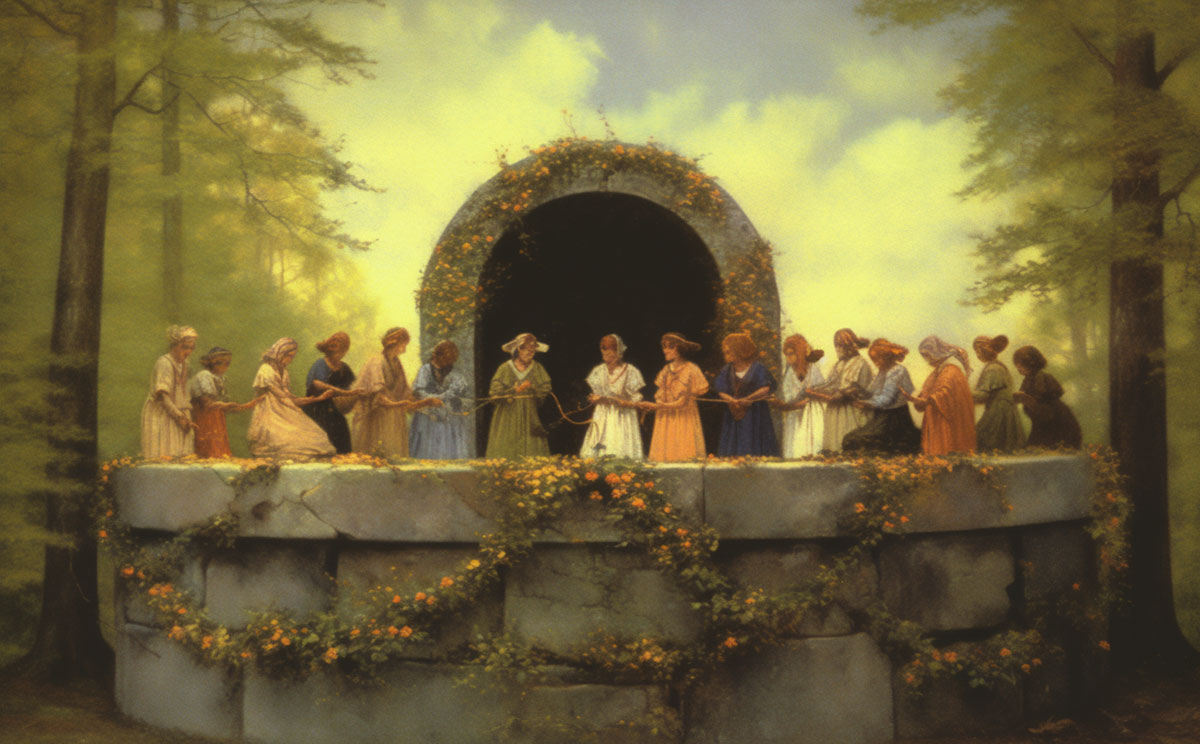 by Brian Dunning Today we shed our arbitrary layers of corporate fabric and dance gaily through the forest glade wearing the suits we were born in — for the theme of the day is paganism. Paganism is not well defined. The definition can be quite broad or progressively narrow. The broadest definition of paganism includes all religions but the Big Three: Christianity, Islam, and Judaism. To a member of the Big Three, a pagan can be anyone who is not a member of their particular church. As you tighten the definition, you first eliminate the Dharmic religions: Hinduism, Buddhism, Jainism, and Sikhism. Whittled down to just those who call themselves pagans, you have the Wiccans, Celtic Druids, witches, Goddess worshippers, and recreations of other ancient polytheistic religions like those from ancient Egypt, Greece, Rome, and the Vikings. For this reason, the term neopaganism is really more accurate to describe modern pagans. Neopaganism typically does not include any Satan worshippers, which is a bit of a popular misconception. In this podcast I'm going to use the term neopaganism as if it's a religion by itself, which isn't really correct, but should generally emcompass the beliefs of most of those who consider their religion to be pagan. Neopaganism is generally polytheistic, with gods ranging from divine beings to things in nature. Spiritualism and divinity are crucial aspects of neopaganism. Despite its separation from the world's major religions, neopagan faith is very much dependent upon supernatural beings or paranormal forces and energies. In some cases, neopagans have advertised their faith as a way to reject the inconsistencies and suspensions of science required by the major religions and yet still remain a spiritual person. However, this doesn't really hold water for me. The spiritual aspects of paganism are equally at odds with science. Pagan gods might be rocks or trees, or they might be Zeus and Athena, or they might be some other mystical force but they are still unmeasurable and undetectable paranormal entities. You can't have it both ways. If you maintain a belief in any spiritual entity, you are rejecting what science tells us about that entity. Goddess worship is popular in neopaganism. The obvious question that the rest of us have is "Who is the goddess?" We've all seen the paintings of the dude with the beard, the white robe, and the Birkenstocks, but never of a goddess. The neopagan god and goddess are not necessarily specific beings. Many neopagans believe that whomever or whatever god is, is not necessarily knowable. But they also believe that the god has masculine and feminine aspects, which they call the god and goddess. Goddess worship is thus not the worship of a particular divine female being, it's a more general worship of femininity itself. Sometimes the goddess is linked to some of the ancient named gods like Athena, Ishtar, or Venus. Sometimes the goddess refers to divine spirituality that neopagans assign to maternity, fertility, and nurturing. Clearly the god and goddess concept is in direct contradiction with Christianity's Holy Trinity, so the absolute incompatibility of goddess worship and Christianity is an important distinction. This is another case where some neopagans try to have it both ways. But I'm not going to sit here and proclaim that this makes their religion invalid. Everyone is free to have whatever divine beliefs they want, and if they want to have a goddess that's compatible with Jesus or Mohammad, fine. It's no more or less valid than anyone else's concept of divinity. One popular allure of paganism is its embracing of free sex and public nudity. I've always believed that more people secretly appreciate free sex and public nudity than are willing to admit it. Wiccans have even institutionalized nudity, calling it "skyclad." Is there an obligation for those who are into skyclad self-expression and disestablishmentarianism to embrace the paranormal by joining a pagan religion? I don't see that there is. Go to Burning Man, if that's what floats your boat, or move to Los Angeles. You can have fun and indulge in individuality without adopting some form of supernaturalism. If the idea is to rebel against the straight lace church that your parents made you go to as a kid, rebel against it by recognizing that it's based on hooey rather than adopting some different but equally silly brand of hooey. Another great way to buck the trend and be your own person is to use your own brain, by being rational and employing critical thinking, rather than using someone else's brain, and joining their organization, be it a neopagan religion, a radical environmental group, or a Republican campaign. Does the average modern Celtic Druid truly profoundly believe the doctrine of his religion, or does he just enjoy the company of a great group of people with a really neat philosophy? I'm all in favor of hanging out with great people with neat philosophy, even running around naked in the forest with them, but I don't need to adopt belief in occult magic and reincarnation — fundamentals of druid doctrine — to do it. It would be great if joining them would give me magical powers, but rationality and critical thinking tell me that it would not be so. This has saved me many full moons of streaking through forests hoping for enlightenment. Self expression, iconoclasm, impatience with social convention, and free thinking are all great things, and something that more people should engage in. But switching from one brand of hooey to another does not accomplish any of them, and doesn't indicate that your thought process was truly critical and skeptical, and certainly not independent or unique. So while you're casting off your robe, cast off some of that joiner mentality and seek your own answers using your own brain.
Cite this article:
©2025 Skeptoid Media, Inc. All Rights Reserved. |