




SUV Phobia

Are SUVs truly as evil as we're supposed to think?

Filed under Environment, Fads

Skeptoid #15
December 20, 2006
Podcast transcript | Listen | Subscribe
Bookmark and Share

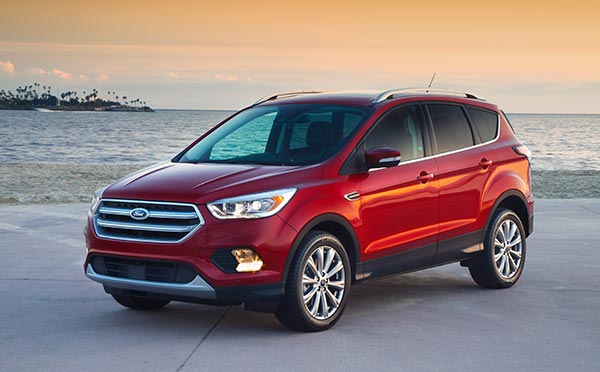
Let's spend some time on the trendy fad of looking for villains to blame for global warming. My flavor of the week is SUV's, those evil gas guzzling, ozone destroying, unethical, politically incorrect, Nazi family soccer wagons. Only let's not do it the trendy way, let's look at the issue skeptically.

Let's start by finding some common ground, some generalizations that most people probably agree with. First, the premise that fuel efficiency in vehicles is a good thing. There are probably very few people who disagree that efficiency should always be a goal. Second, the premise that heavier cars are generally less fuel efficient, thus lighter cars are generally good things. Excess weight burns excess fuel. Cars should not be unnecessarily heavy. Third, many heavy truck-based SUV's are generally heavier and less fuel efficient than light passenger cars.

I'm going to continue with the assumption that you agree with all of the above. Based in part on these generalizations, many so-called environmentalist groups have been lobbying, often successfully, for laws against SUV's. I hope to encourage you to be skeptical of such laws. The problem with making laws based on generalizations is that the exceptions are being unfairly penalized, and some guilty offenders are getting away scott free. Any law against SUV's is a bad law, and here's why.

The vast majority of so-called SUV's are mechanically identical to conventional cars. They are given taller bodies and more upright styling, then sold as SUV's. Their weight, economy, and performance are generally similar to the cars on which they are based. Toyota's Highlander and Lexus RX series are built on Toyota Camry chassis and mechanicals. Honda CRV and Element SUV's are based on the Honda Civic. The Toyota Matrix and Pontiac Vibe are rebodied Toyota Corollas. The Hyundai Tucson, Santa Fe, and Kia Sportage SUV's are based on the Hyundai Elantra and Sonata sedans. The Acura MDX and Honda Pilot SUV's are simply Honda Accords underneath that taller sheet metal. People don't need heavier metal or tougher mechanicals, they simply want a particular cosmetic style or a form factor that's more convenient for carrying people and cargo. And that's fine.

For example, a military Humvee, now also marketed to consumers by General Motors as the H1 Hummer, has portal axles and inboard brakes. Most people don't know what either of those are, but suffice it to say that they represent dramatic structural departures from conventional SUV's. People want to buy a big beefy military vehicle, but GM's engineers know that it's simply not a practical road car. Not wanting their customers to be disappointed, they took their existing conventional Yukon/Tahoe/Escalade vehicle, put a vaguely Humvee-like body on it, and they now sell it as the H2 Hummer. Most people wrongly assume, as GM hoped they would, that it's a second generation Humvee, new & improved, but still with military vehicle roots. Wrong on all counts, but again, most consumers don't know or really care. Not a single component is shared between the H1 and H2. Their whole design paradigms are polar opposites: one is a military truck, the other is a passenger car with a styled exterior. GM knew that people wanted to believe that they're driving a Humvee, so GM tried to license the name Hummer from the Humvee's manufacturer, defense contractor AM General; but AM General refused. GM had to buy the entire company, just to get access to the Hummer name so they could sell more H2's. It was well worth it since GM sells an H2 Hummer for about twice the price of a mechanically identical Yukon or Tahoe. And consumers now blissfully believe they're driving around in military trucks. Yet another example of why you should be skeptical of marketing labels.

People talk about cleaning up Los Angeles' smog by penalizing or banning SUV's. Did you know that a single container ship coming into Long Beach Harbor generates as much carbon emissions as 300,000 cars? Ships are not subject to emission laws. Why not? Are SUV's, most of which are mechanically and economically similar to conventional cars, really the logical targets? SUV's are hardly the cause of our carbon problems. Any road car, H2 Hummers included, is extremely environmentally friendly (as vehicles go), given all the emission laws that they comply with, especially when compared to the average car from only a decade ago.

Paris and London are two cities that have really gone agro over SUV's, fining them for entering downtown. The claim is that they're not only fuel inefficient, but they're too big to park and too dangerous. But, as we've established, the term SUV really only refers to cars with a certain cosmetic style. There are plenty of cars that are fuel inefficient that are not SUV's. There are plenty of cars that are longer than many SUV's. And there are plenty of cars that are tall or heavy and do as much crash damage as SUV's. SUV's probably appear frequently on all three lists, but targeting cars because of their styling is still the wrong path to a useful solution. Ban cars that are fuel inefficient, or ban cars that are too long to park, or ban cars with bad crash ratings. Even do all three. But you won't solve those problems by attacking the irrelevant characteristic of cosmetic styling. So why do lawmakers do it? They don't care about the facts, they care about appealing to the voters' emotions. Ban those evil SUV's, and you'll satisfy the emotions of the ignorant masses. If you're not ignorant, you shouldn't stand for it. You should demand that lawmakers pay attention to the facts. (You might also mind your own damn business and stop trying to legislate what other peoples' priorities should be, but that's another subject for another time.)

Here's another wrinkle for you. Hybrids such as the Toyota Prius and Honda Insight have really pushed the bar higher on efficiency and economy. Thus, there is now a general perception that hybrids get better mileage. Generally true, but again, there are exceptions. The Lexus RX hybrid SUV uses exactly the same V6 engine as its non-hybrid counterpart, and thus posts similar mileage numbers. I drove both vehicles prior to their release in a consumer test. The hybrid system in this case simply adds additional power for acceleration. The improved mileage that you might expect from the hybrid system is canceled out by the additional weight of the battery and motor, particularly on the highway. The Lexus GS is an example of the same philosophy applied to a high-end luxury sedan. In addition, many high-end sports car manufacturers are testing hybrid prototypes for the electric engine's ability to add acceleration off the line. In summary, a hybrid system does not always mean improved economy or cleaner emissions. You should pay attention to the actual numbers that a vehicle posts, not to its label, be it "hybrid" or "SUV".

Here's the first example that pops into my head: my 2004 Audi S4, a 4 door sedan, gets 15 miles per gallon, which is worse than the 16 miles per gallon of my wife's 2006 Toyota 4Runner with the largest V8 engine. Which do you hear so-called environmentalists protesting: common sedans, or SUV's? They're smart: Protesting sedans will strike no nerves, but it's easy to terrify the public with alarmist warnings about those evil SUV's. And I think that this perfectly summarizes the fact that anti-SUV protests and legislation are not only counterproductive, they are factually wrong. When you hear marketing buzzwords and labels instead of valid test data, be skeptical.

$2/mo $5/mo $10/mo One time


No. SUVs are not evil.
Just Say No and make the facts known with a Skeptoid T-shirt. Includes complete references! Get it now.
(See the full design)

Follow me on Twitter @BrianDunning.

Brian Dunning

© 2006 Skeptoid Media, Inc. Copyright information

References & Further Reading

Cardenas, E., Gorman, E. The Hummer: Myths and consumer culture. Lanham: Lexington Books, 2007.

Corbet, J., Koehler, H. "Updated emissions from ocean shipping." Journal of Geophysical Research. 29 Oct. 2003, Volume 108, Number D20: 4650-4666.

De Place, Eric. "How SUVs Can Save the Climate." Sightline Daily. Sightline Institute, 19 Dec. 2007. Web. 22 Jan. 2010. <http://daily.sightline.org/daily_score/archive/2007/12/19/how-suvs-can-save-the-climate>

EPA. "Emission Facts: Greenhouse Gas Emissions from a Typical Passenger Vehicle." U.S. Environmental Protection Agency. US Federal Government, 1 Feb. 2005. Web. 20 Dec. 2006. <http://www.epa.gov/OMS/climate/420f05004.htm>

Padgett, Martin. Hummer: How the Little Truck Company Hit the Big Time, Thanks to Saddam, Schwarzenegger, and GM. St. Paul: Motorbooks International, 2004.

US Dept of Energy/US EPA. "Fuel Economy." Fuel Economy. US DOE/US EPA, 22 Jan. 2010. Web. 22 Jan. 2010. <http://www.fueleconomy.gov/>

Reference this article:
Dunning, Brian. "SUV Phobia." Skeptoid Podcast. Skeptoid Media, Inc., 20 Dec 2006. Web. 16 May 2012. <http://skeptoid.com/episodes/4015>

Discuss!

10 most recent comments | Show all 44 comments

I hate the argument that "SUVs are too big on the road." So are Mack trucks. Do you want to ban those? People in urban areas would starve without trucks bringing in food.

"SUVs don't fit in compact parking spaces." So make larger parking spaces.

SUVs are valid choice, and here in America, we have that sort of freedom.

I think the hype against SUVs is finally dying down as rationality reasserts itself. People can't make a groundless argument forever unless it's backed by a church or political group.

Abby, Austin, TX
February 17, 2010 10:01pm

SUVs are not, and never have been 'fined for entering downtown' in London. There is a congestion charge in operation whereby all vehicles entering the defined zone. This is currently £8 (USD 12) per day.

Irritatingly, there are exceptions to this charge. Electric cars (such as the G-Whizz) are exempt, as are hybrids. This annoys me a great deal - as you skeptics all know, a hybrid SUV is no more fuel efficient than their conventional stable-mates, yet don't have to pay. The hideous Prius can enter London for free, yet the more efficient VW Golf bluemotion is charged the full whack.

And as for the electric cars - where does this electricity come from? Cos I'm betting it's from tonnes of dirty coal belching out more CO2 and assorted other crap than a whole fleet of SUVs! That's before a lot of the energy generated is lost as heat as it races through the overhead cables to charge up your 'emissions free' electric car.

I hate SUVs. It's not scientific, it's snobbery. I think they're ostentatious and vulgar. However, until all vehicles are judged on their efficiency alone (and for electric cars, this includes generation and transport of the electricity) then government policy will sway with the whims of the motor industry ('hybrid carssss are ssssso sssssaintly!") and the vocal and oft ill informed eco-campaigners.

PS - Mr Dunning, I still don't buy that SUVs are comparable to 'normal' cars. The H2 hummer was a bad example to use given you need your own oil well to run one

Chris C, Birmingham, UK
April 19, 2010 3:47am

First of all, you lay out some "common ground" near the beginning. Usually, this means facts that all the readers and the author agree upon. Then you try to pull one of them apart.

Second, it's a bit of a strawman to say that people push for SUVs to be outlawed. Not only that, you claim that there's a significant push to ban SUVs based not on fuel efficiency, but based on being an SUV. I don't see any evidence of this in your references. Please explain.

It seems like, to prove your point about SUVs being as fuel-efficient as compact cars, you rely on the following piece of logic: SUV A uses the chassis from compact car Z. Therefore, SUV A is just as fuel efficient as compact car Z.

Why didn't you cite actual fuel efficiency ratings? Oh, because they don't support your argument.

The Toyota Camry, from your first example, gets a combined 26 mpg, according to the EPA. The Toyota Highlander, your first SUV from your first example, gets 19 mpg. The Lexus RX, the other SUV, also gets 19 mpg. Honda Civic: 29 mpg. CRV: 23 mpg. Element: 21 mpg. The Toyota Matrix and Pontiac Vibe are not SUVs, they're compact cars. Keep comparing fuel efficiency ratings in these cars you're comparing, and you'll keep finding the same thing: the SUV is significantly less fuel efficient than the compact car.

As for the Paris and London "bans," you'll find that they're both based on fuel efficiency, not just some random definition of "SUV."

(Running out of space in this comment.)

Timothy C., Washington, DC
July 10, 2010 1:30pm

I would love to see you re-visit this one, Brian. You are on to an excellent overall theme, but as some of the comments note, you don't do your usually excellent job of fleshing out the details.

Timothy C.'s comments of 7/10/10 are a good example of what you should do to turn this article into a fully developed skeptical analysis of why efficiency ratings alone would be the proper way to legislate passenger car usage.

You also ignore the impact of cosmetic styling on fuel efficiency. The shape of a vehicle is indeed highly influential to its overall efficiency. Cars with large cross sectional areas are less efficient than cars with smaller cross sections, which is one reason why the SUV segment is less efficient, even though they are based on identical passenger car platforms.

I'm sure you are aware of these observations, and they don't weaken your argument. So consider including them in a more effective version of this topic in the future!

By the way, I love your blog. Keep it rolling! But see if you can get your wife to consider trading the Highlander for a V-6 Camry, and your old Audi for something more efficient...

Rob Robertson, Cleveland, OH
August 24, 2010 7:34am

The Audi was not that old; it was a 2004. And the wife's 4Runner is barely able to handle the towing load we put on it even with its V-8, I don't think moving down to a Highlander or Camry would quite do the job. :-)

Brian Dunning, Laguna Niguel
August 24, 2010 11:41am

Dunning claims he never hears environmentalists protesting gas guzzling sedans. If that's the case then why are environmentalists pushing for a 40mpg standard on passenger cars? Sounds like a protest and this protest has been around for quite some time.

Dunning needs to try fact checking rather than rely on ad hominems and arguments from ignorance.

Doug, Wichita, KS
September 04, 2010 3:12pm

"Dunning claims he never hears environmentalists protesting gas guzzling sedans. If that's the case then why are environmentalists pushing for a 40mpg standard on passenger cars? Sounds like a protest and this protest has been around for quite some time."

"September 04, 2010 3:12pm"

This article was written in 2006, just after the height of the silly 'SUV = EVIL' craziness that followed the 'SUV = SUPER SAFE PERFECT ADVENTURE VEHICLE' idiocy. Yes, there are, and have been, plenty of reasonable environmentalists who advocate better mileage all the way around. Much more common, especially then, are the trendy green-wash people who base their stance on superficiality without much deeper consideration. This is due as much to the raise in gas prices that made the SUV less popular, and thus that much less a target, as it does with proper perspective from environmentalists.

At any rate, I believe this criticism of the article is a few years too late.

Brandon, Falconer
October 03, 2010 9:43am

Environmentalists arent all environmentalists. Please do not use the group denotation.

Green peace is a political organisation. So are its ilk.

Please which environmentalists are you writing about so we can discuss

Henk van der Gaast, Sydney
November 25, 2010 9:16pm

Roads in the old European Cities tend to be different and favour small hatchback cars (A.K.A city cars). SUVs (or any big car) are too clumsy to drive around.

However, I agreed that hybrid cars are not as efficient as they claim and normal city cars obtain more kilometres per litre (miles per gallon.

A very practical solution for you would be to switch to either LPG gas or diesel fuel.
Any petrol engine can be modified to accept LPG gas and it is a tried and tested technology. On the other hand diesel engine cars are sold world wide but never really caught within the US. I cannot understand why?
Example France car manufacture Peugeot makes diesel cars with lower emissions than any hybrid while keeping the car fun to drive (And more good looking as well).

Matthew Yeomans, Malta, EU
December 29, 2010 4:55am

That would be turbo diesel engines. Ive driven diesels and gas powered cars and hybrids as well as obviously petrol powered vehicles.

The only reason that I was unimpressed with gas is the very local rules on registration and the very few registering mechanics in this area alone.

Ive taken the lpg off and drive my cluncker around as its intended to be... lorded over by non SUV enjoying SUV drivers clogging up my view of the road around me.

Muddie, Sutherland BatCave, Oz
November 02, 2011 10:02pm

Make a comment about this episode of Skeptoid (please try to keep it brief & to the point). Anyone can post:

Your Name:
City/Location:
Comment:
characters left. Discuss the issues - personal attacks against other commenters, posts containing advertisements or links to commercial services, nonsense, and other useless posts will be deleted.
Answer 6 + 3 =

You can also discuss this episode in the Skeptoid Forum, hosted by the James Randi Educational Foundation, or join the Skeptalk email discussion list.

What's the most important thing about Skeptoid?

Support Skeptoid
 
Skeptoid host, Brian Dunning
Skeptoid is hosted
and produced by
Brian Dunning


Newest
Left Handed Myths and Facts
Skeptoid #310, May 15 2012
Read | Listen (13:42)
 
College of Curiosity - May 26, 2012
May 11 2012
Listen (:57)
 
The Science and Politics of Global Warming
Skeptoid #309, May 8 2012
Read | Listen (12:20)
 
Skeptoid T-Shirt Design Competition
May 4 2012
Listen (1:11)
 
Picnic at Hanging Rock
Skeptoid #308, May 1 2012
Read | Listen (11:25)
 
Newest
#1 -
Kangen Water: Change Your Water, Change Your Life
Read | Listen
#2 -
The Grey Man of Ben MacDhui
Read | Listen
#3 -
The Mystery of the Mary Celeste
Read | Listen
#4 -
Approaching a Subject Skeptically
Read | Listen
#5 -
How to Debate a Young Earth Creationist
Read | Listen
#6 -
The Jersey Devil
Read | Listen
#7 -
MonaVie and Other "Superfruit" Juices
Read | Listen
#8 -
The Bosnian Pyramids
Read | Listen

Recent Comments...

[Valid RSS]

  Skeptoid PodcastSkeptoid on Facebook   Skeptoid on Twitter   Brian Dunning on Google+   Skeptoid RSS  


"Detoxification"
inFact with Brian Dunning


Support Skeptoid
Join today and become
a part of this.