




Student Questions: Energy Shots and Sunscreen

Skeptoid answers another round of questions sent in by students.

Filed under Feedback & Questions

Skeptoid #268
July 26, 2011
Podcast transcript | Listen | Subscribe
Bookmark and Share

Hot Tap Water
Don't drink hot water from the tap.
(Photo credit: iStockPhoto.com)

Although I ran, I've again been caught by students from around the world, and peppered with questions about what's science and what's silly. Today's classroom asks about the usefulness of those popular caffeinated energy shots; the various Internet myths about sunscreen products; the meaning of the word "information" when thermodynamics are invoked to prove creationism; companies that claim to offer the secrets of suppressed miracle cures for cancer; and whether drinking hot water from the tap is as risky as some rumors say it is. Let's get started with energy shots, from a young man in southern California:

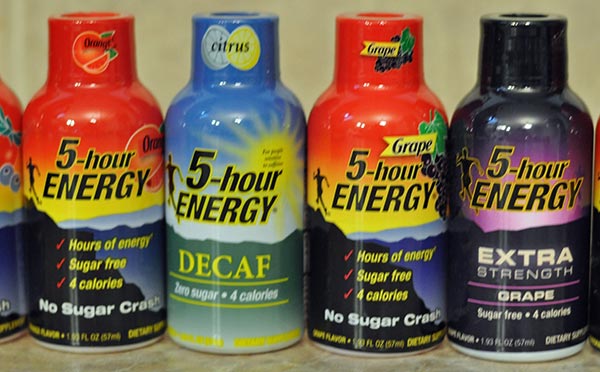
Hi, Mr. Dunning. What's your take on those 5-Hour Energy Shots, and how they affect the users after the supposedly energetic five hour period?

Despite the manufacturers' claims, the only active ingredient in such energy drinks is caffeine. Caffeine is a psychoactive stimulant. It does not provide your body with energy fuel, like food does; instead it temporarily reduces drowsiness and increases your alertness. Anxiety is a primary side effect, and it's this that gives us the feeling of jumpiness. Caffeine temporarily increases our ability to tolerate both mental and physical work, and the effect usually wears off in 3 to 4 hours.

The amount of caffeine found in these beverages is controversial. It's common for testers to find more than is reported on the label. Generally they contain about the same as a cup of coffee, somewhere around 175 to 200 mg. This is about six times what the average caffeinated soft drink contains. That little bottle at the checkout stand packs the whallop of an entire six-pack of cola.

Many of these manufacturers state that their drinks contain vitamins, and this is where the energy boost actually comes from. But, basic nutrition tells us this makes no sense. Vitamins do not provide any usable energy; that comes from the calories in carbohydrates, fats, and even some proteins. Some have tried to backpedal and say their vitamins assist the metabolism of energy. This is basically true, but your body's normal supply of Vitamin B is more than enough to do this job, and supplementation is usually just wasted excess. This claim is risky ground for them to tread; if it were true, they'd basically be advising you to take a 5-cent vitamin pill instead of their overpriced drink.

Hi, this is Alex, a grad student from Arizona State University. I was wondering if any of the purported dangers of sunscreen are true. I've heard that some fail to actually protect from the UV light that causes cancer or that sunscreen itself is a carcinogen and causes health problems that outweigh the benefits.

You've raised two important questions that have been asked a lot in recent years: First, is sunscreen itself unhealthy or even carcinogenic; and second, are sunscreen SPF ratings actually true and reliable? Fortunately, the United States FDA issued new rules in June 2011 that answer both.

The first question is simple enough. There is no evidence that the ingredients in any commercially available sunscreen product have ever given anyone cancer or caused anyone to go blind, nor is there any plausible reason to suspect they might, when used as directed. Neither have any victims ever surfaced. This appears to be nothing more than your garden-variety Internet myth.

Manufacturers have a year from the date of the new ruling to comply with labeling rules that the consumer will finally be able to rely on. The FDA will basically allow two types of sunscreen labeling: "Broad spectrum" sunscreen, which provides protection against both UV-A and UV-B ultraviolet light, will be permitted to show an SPF of 15 or higher and will be labeled "broad spectrum". They will also carry labeling that states that when used as directed with other sun protection measures, they can reduce the risk of skin cancer and early skin aging. Other sunscreen products, with SPF of 14 or lower, will only be permitted to say that they have been shown only to help prevent sunburn, not skin cancer or early skin aging.

So look for sunscreen marked 15 or higher and that says Broad Spectrum, and you'll get the protection you expect, without fear of getting skin cancer directly from the lotion.

Hi Brian, my name's Lachlan McGowan and I study geology and law at the University of Newcastle, Australia. In my online battles with young-earth creationist trolls, I've noticed a new trend for them to use the word "information" to describe DNA. They talk about it being impossible to create new information, or about DNA losing information over time. However, I can't get a definition of "information" out of them, and the only places I can find the word "information" used in science outside of its conventional sense is in the deep physics of black holes and subatomic particles. Is the argument from information even vaguely valid, or is it equivalent to a homeopath's use of the word "quantum"?

Basically what they're doing here is misusing scientific sounding terminology that they've heard but don't properly understand. So to answer your final question, yes, it's exactly like New Agers throwing around the term "quantum" as if the word is an explanation supporting whatever they feel like claiming.

Classical information, like words printed in a book or the arrangement of proteins in DNA, can easily be created and destroyed all day long. One famous example is writing a book to create information, then burning it to destroy it. This does not violate entropy or thermodynamics or anything else, because quantum laws apply only in the quantum world, not in the classical world. Information in that sense refers to the quantum state of particles, which is not changed at all when a book is written or burned, or when a baby is conceived then dies and decomposes. So the reason you can't get a definition of "information" out of them is that they have no idea what kind of information the laws of thermodynamics refer to.

Their claimed paradox of DNA losing information over time is exactly analogous to taking their Bible and occasionally tearing a page out of it. There's no reason you can't do this, and doing so proves nothing. The quantum state of the particles in amino acids is not changed by the degradation of DNA, and the quantum state of the particles in the discarded Bible pages is not lost either.

Hi Brian, this is Michelle from Sydney Australia. I would like to know if you are aware of the group called "Health Sciences Institute" of Baltimore. They help themselves to my mother's bank account to the tune of about $80 a year I think and for this fee they share with her a monthy email about "secret" discoveries such as "A secret cure for cancer" which they say comes from an Amazonian tree called Graviola. I cant wait to hear what you have to say about this and their many other exposes of real but "secret" health cures. Thanks Brian!

Quack miracle health cures have always been, and will probably always continue to be, just about the most marketable products on the planet. 150 years ago, street corner Victorian pitchmen sold snake oil, and the promise of miracles was so perfect then that it hasn't had to be updated in any meaningful way. Throughout their history, the pitches for these cons have had three basic points:

  1. Make up, or read about, virtually any substance and call it a miracle cure for any condition you want.
  2. Give a testimonial from someone, real or invented makes no difference.
  3. Suggest that it's "secret" or suppressed by some conspiracy of the medical establishment; something "they" don't want you to know.

Your example hits all three points pretty squarely. No, I have not heard of your particular institute or their particular miracle cancer cure, but just Google "secret cancer cure" to see how innumerable these are (24 million results for the search I did just now). Why so popular? Consider your example; for $80 a year it's probably one guy who has to do nothing more than write one email a month. If he has 1,000 customers he's making a living. There will always be people desperate for a miracle (I'd love to have one myself), so there will always be someone happy to take their money to promise it.

Hi Brian, my name's Scott from the University of Melbourne. I've been brought up to think that I shouldn't drink hot water from the tap. Can I please get your thoughts on this?

$2/mo $5/mo $10/mo One time

This is an interesting case because the reasons for it are sound, and there is actually a risk; but the reality is that the risk is probably negligible. Tap water is not pure water, obviously. Even the cleanest and safest contains contaminants — chemical, mineral, and organic. Hot water dissolves contaminants more quickly than does cold water. The hot water pipes in your home (those between the water heater and your tap) are probably more corroded than the cold water pipes. Those corroded minerals, including lead from solder, end up in your glass when you fill it with hot tap water.

But consider the actual risk. Imagine a pile of all those corroded minerals on your desk after 20 years. It's probably not a very big pile, perhaps the size of a grapefruit or a melon, as a rough estimate. Consider that nearly all of it went through the bathtub, shower drain, dishwasher, or clothes washing machines. The tiny percentage of that total that went into your coffee mug, over 20 years, can probably be scooped up on your fingernail. That's it. It pales in comparison to what everyone gets environmentally just by existing on Earth. So, is it a real risk? Yes. Should you drink hot water from the tap? Not if you have an alternative. Do you need to worry about it? Probably not.

Infection by Legionella bacteria is another risk that's been discussed. Legionella can cause a potentially fatal infection. However, Legionella grows best in warm water, below 140 degrees, and most home hot water heaters are set to higher, which will kill it. In addition, the infection is transmitted by breathing in water vapor, not by drinking; so if you're going to catch Legionnaires' disease at home, it will be in the shower, not from drinking a glass of hot tap water.

Follow me on Twitter @BrianDunning.

Brian Dunning

© 2011 Skeptoid Media, Inc. Copyright information

References & Further Reading

Baldwin, R. "Information Theory and Creationism." TalkOrigins Archive. talk.origins, 14 Jul. 2005. Web. 22 Jul. 2011. <http://www.talkorigins.org/faqs/information/shannon.html>

Barrett, S. "Questionable Cancer Therapies." Quackwatch. Stephen Barrett, MD, 4 Apr. 1997. Web. 22 Jul. 2011. <http://www.quackwatch.com/01QuackeryRelatedTopics/cancer.html>

CDC. "Water." Lead. Centers for Disease Control and Prevention, 1 Jun. 2009. Web. 22 Jul. 2011. <http://www.cdc.gov/nceh/lead/tips/water.htm>

FDA. FDA Sheds Light on Sunscreens. Washington, DC: US Food & Drug Administration, 2011.

Foster, J., Kallmyer, T. "Caffeine Content of Drinks." Energy Fiend. EnergyFiend.com, 13 Jan. 2006. Web. 22 Jul. 2011. <http://www.energyfiend.com/the-caffeine-database>

Park, J., Band, W. "Rigorous information-theoretic derivation of quantum-statistical thermodynamics." Foundations of Physics. 1 Jan. 1976, Volume 7: 233.

Reference this article:
Dunning, Brian. "Student Questions: Energy Shots and Sunscreen." Skeptoid Podcast. Skeptoid Media, Inc., 26 Jul 2011. Web. 16 May 2012. <http://skeptoid.com/episodes/4268>

Discuss!

10 most recent comments | Show all 56 comments

Hot water drinking: In addition to the issues with UK-style header tank contamination and heaters set too cold serving as culture vats for bacteria (not just Legionella - some cause enteritis) I know of at least two other issues, also applicable to the US, as well as the UK under modern plumbing codes:

Water softeners add appreciable sodium - a hazard for people with heart conditions. They are generally plumbed in so at least the kitchen cold tap is unsoftened, for safety, though laundry and bathroom cold may be softened to save soap and avoid deposits. But the cold going to the heater is softened to avoid calcium deposits in the heater, so ALL the hot water is softened. (Allegedly a hospital once traced a sharp drop in survival in the cardiac unit to the laundry department adding a water softener that also softened the hospital's drinking and cooking water.)

Sacrificial anodes, which protect the tank from corrosion, are made in several types: Magnesium, cheaper aluminum (with which many heaters are shipped), and aluminum/zinc or aluminum/tin/zinc special-purpose rods (to avoid "smelly water due to hydrogen sulfide from the rod's reactions with sulfur compounds and sulfur bacteria). Magneisum is fine. But aluminum is toxic and zinc often contains significant amounts of cadmium. While the amount getting into the water might be small, some people want to avoid any.

So the drill to avoid ALL these risks is only drink or cook with water from the kitchen cold tap.

Michael McClary, Newark CA
October 09, 2011 2:50pm

To Tom, on fluoride: to my knowledge naturally occuring fluorides are different from the fluoride compounds used to fluoridate water. Even so, there seems to be a higher incidence of skeletal problems in those areas that naturally have higher levels of fluoride in their water. Given that fluoride is only beneficial to teeth when applied topically, and is harmful when delivered systematically (as in fluoridated water), it's rather irresponsible to force even more fluoride into public water supplies.

As for sunscreen, it seems that the active ingredients in sunscreens do block UV-B radiation, but also produce free radicals when exposed to UV-B. Given that constant exposure to so many free radicals from external sources eventually causes cancer, Brian has made a rather premature statement in claiming that there is no evidence linking sunscreen ingredients to cancer.

Lastly, on B vitamins in energy drinks. Actually, the body's normal supply of vitamin B (at least in this day and age) is often *not* enough to do the job, especially with vegetarians who often don't get enough B12. Conventional doctors have sometimes made the mistake of assuming that vitamin deficiencies can only produce the classical deficiency diseases, so the absence of those severe symptoms means all is well. That's not really true - a lesser deficiency instead produces lesser symptoms. Still, there is the question of whether the amount of B vitamins added to those energy drinks is useful. It varies.

Jonathan S., Toronto
October 14, 2011 8:12pm

a) and b) you are cherry picking on 80's conjecture publications or maybe current flubber sites. There was a major kerfuffle with the worry about cinnamates/benzoates in consequentially released products, but the dose to CA incidence was unmeasureable and proved to be inconsequential.

UV barrier topicals now give much more protection than in my early surfing days. Good thing too. I get a burn at 7 am in Sydney climes. It is in the only way I can be described as fair.

I suppose I would suggest you view father Ted's holiday. He explains succinctly to father Dougall McGuire..BIG=near, small-Far

c) Sure vegans may need vitamins and supplements if they persist in living a bad life style.

If you want to do a dollar pee in the morning, do so. But dont tell other folk what they arent missing from cherry picked web flubber.

Medical doses of vitamins are not encouraged unless you are ill of any disease your medico has identified as needing such.

Self administration = hypochondria
Talking about it = Munchausens

Mud, Sin City, Oz
October 25, 2011 11:02pm

a) If you know of a publication that thoroughly disproved Paul Connett's research and shows that ingested fluoride is not harmful at all, I'd like to take a look at it. Otherwise, I will remain opposed to fluoridation.

b) I've seen sunscreen criticism focusing on benzophenones and other compounds so far, not so much on cinnamates or benzoates.

c) Your definitions are a bit inaccurate there. Taking in large amounts of niacin because you think you have pellagra could be hypochondria if you don't have pellagra. Taking in more niacin-rich foods to boost academic performance a bit and perhaps reduce risk of getting CHD later (lp(a) regulation) is not. Same goes for Munchausen's. Also, just what constitutes a "medical dose"?

With the health crisis we have today, it's pretty darn obvious that our diet (on average) is not adequate, let alone optimal.

Lastly there's a pretty big gap between eating more nutrient-dense foods and using non-food supplements.

Jonathan S., Toronto
October 26, 2011 5:24pm

a) so you havent done a survey..at least you are consistent.
b) you havet done any chemistry at least you are consistent.
c) my charge of hypochondria stands then. You are doing insanely well on the gullibility indices.
d) our diet is generally OVERADEQUATEI. You havent set a guiding light yourself by promoting fad diets
d) food is food. Supplements for the general public to self administer is hypochondria.

Mud, Sin City, Oz
October 26, 2011 6:45pm

a) Soon.

b) I've done enough chemistry to know that benzophenones, cinnamates and benzoates are not interchangeable. Obviously I'm not yet at the level of a university graduate here. The point still stands that the sunscreen criticism I've seen has focused on the former group of compounds, not the latter two.

c) I give an example of a reason some people, not including myself, might have to do something, and therefore I automatically endorse it. Yay. Still not hypochondria, that necessitates the imagination of a present disease. If you're going to call that hypochondria anyway, you might as well give that label to every MD who follows government suggestions and tells their patients to eat less salt.

d) Overadequate in macromolecules, but more often than not inadequate in micronutrients. The latter are far more important in a practical context.

Honestly, I don't know what "fad" diet I've argued in defense of. Low-carb, no-carb, lots-of-meat or completely-carnivorous are not fad diets, seeing as humans have done that quite often in the distant past.

We're arguing supplements in very vague terms... which is not going to lead the discussion anywhere useful, especially when you haven't defined your interpretation of "supplement." And again, your use of hypochondria in this context is inappropriate.

Jonathan S., Toronto
October 27, 2011 2:47pm

So... you're telling me to reread your post after I've responded to it in its entirety? Are you ignoring the content of my posts again?

Jonathan S., Toronto
October 27, 2011 8:38pm

Ive checked the literature and see that there is enough data to state that if there is an deleterious effect to broadspectrum sunsceesn users, it falls well under the radar of the literature. The effect cannot be teased out from the general study cohorts.

I think I have stated this three times now.

If a diet has a name, its a fad diet.

taking supplements without medical advise is called; Hypochondria.

Looking up someones recipes on wiki is reprehensible!

Mud, Sin City, Oz
November 08, 2011 4:18am

Yes, the effect is small. No, the effect is not nonexistent. When dealing with disease prevention, all factors have to be considered. A reductionist approach doesn't work. Again, using sunblock will be safer than using synthetic sunscreens.

Really? I didn't know that the low-fat diet was a fad, or the vegetarian diet, or even - the omnivorous diet.

Judge a diet by its specific guidelines, not whether you think it's a fad.

You again have completely failed to understand the definition of hypochondria, and again ignore all of the examples of practices in contemporary medicine that would fit your apparent definition of hypochondria.

I don't understand how your last point has any relevance.

Jonathan S., Toronto
November 09, 2011 2:08pm

Could JJ or Also^2 please put a time mark with their next posts.

The above, is just more escapism I am afraid to say. It is essentially, OK I am wrong but my fall back is I am right because no one can measure how wrong I am.

I prefer Big Foot fall backs. At least you get to see bear bones and maybe one day Giant sloth fossils.

Mud, Back in Sin City, Oz
November 15, 2011 8:55pm

Make a comment about this episode of Skeptoid (please try to keep it brief & to the point). Anyone can post:

Your Name:
City/Location:
Comment:
characters left. Discuss the issues - personal attacks against other commenters, posts containing advertisements or links to commercial services, nonsense, and other useless posts will be deleted.
Answer 3 + 3 =

You can also discuss this episode in the Skeptoid Forum, hosted by the James Randi Educational Foundation, or join the Skeptalk email discussion list.

What's the most important thing about Skeptoid?

Support Skeptoid
 
Skeptoid host, Brian Dunning
Skeptoid is hosted
and produced by
Brian Dunning


Newest
Left Handed Myths and Facts
Skeptoid #310, May 15 2012
Read | Listen (13:42)
 
College of Curiosity - May 26, 2012
May 11 2012
Listen (:57)
 
The Science and Politics of Global Warming
Skeptoid #309, May 8 2012
Read | Listen (12:20)
 
Skeptoid T-Shirt Design Competition
May 4 2012
Listen (1:11)
 
Picnic at Hanging Rock
Skeptoid #308, May 1 2012
Read | Listen (11:25)
 
Newest
#1 -
Kangen Water: Change Your Water, Change Your Life
Read | Listen
#2 -
The Grey Man of Ben MacDhui
Read | Listen
#3 -
The Mystery of the Mary Celeste
Read | Listen
#4 -
Approaching a Subject Skeptically
Read | Listen
#5 -
How to Debate a Young Earth Creationist
Read | Listen
#6 -
The Jersey Devil
Read | Listen
#7 -
MonaVie and Other "Superfruit" Juices
Read | Listen
#8 -
The Bosnian Pyramids
Read | Listen

Recent Comments...

[Valid RSS]

  Skeptoid PodcastSkeptoid on Facebook   Skeptoid on Twitter   Brian Dunning on Google+   Skeptoid RSS  


"Logical Fallacies 1"
inFact with Brian Dunning


Support Skeptoid
Join today and become
a part of this.