




The Brown Mountain Lights

A ghost light in North Carolina has people scratching their heads. What's the explanation?

Filed under Aliens & UFOs, General Science, Natural History, Urban Legends

Skeptoid #226
October 05, 2010
Podcast transcript | Listen | Subscribe
Bookmark and Share

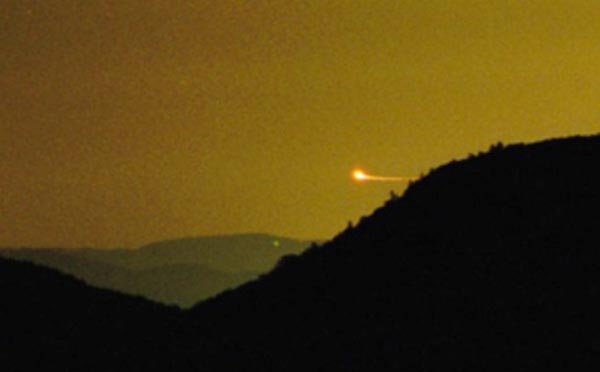
Come with us now to the Appalachian Mountains in North Carolina, about 110 kilometers northwest of Charlotte. Within the Pisgah National Forest are rocky gorges, streams, and green everywhere you look. Hikers and backpackers abound. Some of the lucky night time visitors — or perhaps the unlucky, depending on your perspective — may get more than they bargain for. For the region is home to one of the world's infamous ghost lights, the Brown Mountain Lights.

We've covered "ghost lights" on Skeptoid before; specifically the Marfa Lights in Texas and the Min Min Light in Australia. In both cases, those lights were conclusively found to be superior mirages of actual lights below the horizon. The terrain in those places are similar; both are deeply cleft with gulleys which trap hot air from the day which is then overlaid with cold night air, forming perfect conditions to reflect light down from over the horizon. When the weather's within a certain range, the lights appear; and at both locations, researchers have reliably and repeatably correlated appearance of the lights with control lights placed below the horizon. There are many such lights around the world.

At first glance, the Brown Mountain Lights have a lot of the same characteristics, and our first reaction might well be to classify it along with the others. But upon closer inspection, we have to say "Not so fast." For it seems that there are two distinct and very different manifestations of the Brown Mountain Lights.

To understand this, let's take a look at Brown Mountain itself. The main thing you'll notice is that it's hardly a mountain at all. It's in a region of foothills of the Appalachians, cleft by canyons and streams. The highest elevations in the area are hardly more than 850 meters, and one hill is hardly distinct from another. Brown Mountain is one such ridge. If it wasn't already named, it would scarcely occur to you to name it.

Moreover, Brown Mountain itself seems to have little direct relevance to the Lights. There are three most-often cited vantage points for viewing the Lights. The most popular is called Wiseman's View, about 13 kilometers west of Brown Mountain. Another is the Lost Cove Overlook, about 16 kilometers northwest of the mountain. Between the two is a Forest Service overlook about 8 kilometers away. From each of these vantage points, you look toward Brown Mountain, and it's hardly more than a smokey-colored smudge on the horizon. If you're lucky, somewhere in that intervening distance, you'll see the Lights. Brown Mountain itself is not the place to go to see them, nor does it appear to be the place where the Lights appear.

This brings us to what the lights look like and how they appear. To learn this, we'll go to Wiseman's View. Highway 105 runs along a ridge, quite a bit higher in elevation than Brown Mountain, and there's a scenic viewpoint turnoff with a parking lot. The lot overlooks the rocky Linville Gorge. Continue on foot down a paved path to a precarious overlook hanging over the gorge. Looking east across the gorge there's a dip in the opposite side, and through that dip you can see the far away ridge of Brown Mountain, and beyond that, the distant city lights of Winston-Salem. Historically, the lights were described as is printed on this United States Forest Service sign:

The long, even-crested mtn. in the distance is Brown Mtn. From early times people have observed weird, wavering lights rise above this mtn., then dwindle and fade away.

If you tried to observe a hovering light above Brown Mountain from Wiseman's View, it would be lost in the city lights. Modern reports of the lights from Wiseman's View are, as mentioned earlier, a very different manifestation. People point their video cameras instead directly at the face of the hills across the gorge, looking not into the sky above the ridge, but straight at the hills. They report flickering lights under the trees, like people waving flashlights around. What's over there?

The right side of that dip looking across Linville Gorge is Table Rock, the most popular rock climbing destination in North Carolina. It's a dramatic rocky outcrop atop the hill across from Wiseman's View. Table Rock has its own parking lot only a couple hundred meters away, so it's not necessary for climbers to camp out on the slopes with their lanterns and flashlights. Nevertheless, it is approximately along the prominent hiking trails around Table Rock where the appearance of lights seem to be reported from Wiseman's View.

One explanation that's been offered, but not well received, is that these lights appearing on the face of the hills are reflections off of illegal moonshine stills, of the moon or other lights, or even the fires from the stills themselves. This is something that could be easily verified, but never has been. In any case, around the slopes of the state's most popular rock climbing destination, in plain view of the most famous overlook in the state, would not be a very clever hiding place for the shrewd distiller.

This type of light — a flicker directly visible on the hillside, as opposed to a probable refraction apparently hovering above the ridge — also contradicts local legend about the Lights' origin. According to modern locals, the Cherokee natives of the region believed 800 years ago that bereaved wives wandered the skies above the hills with lanterns, looking for the souls of their brave warrior husbands killed in battle. I say "supposedly" because I was unable to find any reference to such a belief outside of publications about the Brown Mountain Lights. That doesn't mean the Cherokee did not actually have such a legend; it only means I couldn't find it. I don't, however, recall the ancient Cherokee having lantern technology. Perhaps they meant torches, I don't know. But the retellings of this legend that I did find are unanimous in that the Brown Mountain Lights are specifically the type that appear in the sky above ridges, not flickering through the trees on the face of the hill.

This is also supported by one of the early "scientific" explanations of the Brown Mountain Lights. In 1771, the most prolific cartographer in Colonial America was the Dutchman John William Gerard de Brahm. He was appointed Surveyor General by the British and traveled throughout the Colonies constructing fortifications and bridges. He was also something of an amateur mystic. While in the southern United States, de Brahm is said to have published the following hypothesis (more on this in a moment):

"The mountains emit nitrous vapors which are borne by the wind and when laden winds meet each other the niter inflames, sulphurates and deteriorates."

This is essentially the same "swamp gas" explanation used today to answer everything from ghost lights to UFOs, and which we looked at in detail in the episode on the Naga Fireballs in Thailand. As a serious theory, it falls short of credible. Swamp gas never been found to spontaneously ignite in nature, as it would require a highly improbably mixture of gases in critical proportions. When these conditions have been created artificially in the lab, the gas burns bright bluish-green with a sudden pop, producing black smoke. Under no conditions does it burn slowly, or hover, or in any way resemble the reports of the Brown Mountain Lights. Although it sounds scientific and convincing, the swamp gas hypothesis is almost certainly not the explanation.

By studying the oldest literature, we find that the Lights have been at least partially explained. Often cited as one of the earliest print references to the Brown Mountain Lights is a 1913 article from the Charlotte Observer entitled "No Explanation" that described how the light appears regularly at 9:30 or 10pm nearly every night. In 1922, the US Geological Survey produced a special report based on an exhaustive investigation of the Lights, and found that since 1909 a regularly scheduled locomotive on the plains beyond had been casting its headlight in precisely that direction every night at that same time. In fact it was due at a stop along there at 9:53pm every night. The locomotive's headlight was visible in a direct line of sight from a hill six miles beyond Brown Mountain, and certainly would have been from other locations as well. If it was not the source of the light described in the 1913 article, it would have been in direct competition with it; but witnesses reported one light, not two. Moreover, back in 1909 the USGS had actually made an earlier report in response to sightings of the Brown Mountain Light, and the investigator found that the sightings were all of this same train.

One member of the 1922 USGS team, a Mr. H. C. Martin, initially found geographic conditions in the region to be completely unsuitable to produce superior mirages of the sort that could refract distant lights from over the horizon and make them appear to hover in the air. But upon further investigation, he found that such refraction was taking place, nearly every night, above the basin now occupied by Lake James, and around which were numerous settlements with plenty of electric nights. From all observing stations, these lights were routinely seen above the horizon. The report noted:

"As the basin and its atmospheric conditions antedate the earliest settlement of the region, it is possible that even among the first settlers some favorably situated light may have attracted attention by seeming to flare and then diminish or go out."

This fits well with modern reports from Wiseman's View and the other overlooks that if you move up or down the mountainside, the lights vanish. Martin noted a narrow 3-4° angle in which such refracted lights would be visible.

The USGS also included historical research that found that it was not until 1910, when a Reverend C. E. Gregory moved into the area and began making reports, that the Lights became generally known. Even the belief that the Cherokee and Catawba natives had legends did not appear until about this time. Sightings that predate this period seem to all be apocryphal, with no actual print references known to exist. Even the often-cited 1771 report from de Brahm is suspect. It's always given out of context, and is, in fact, misquoted. De Brahm was not talking about any lights at all, he was giving his mystical and somewhat alchemy-centric opinions on how thunderstorms work and why the air is so clear in the Great Smoky Mountains. Here's what he actually said, and it was in his undated Report of the General Survey in the Southern District of North America:

"Although these Mountains transpire through their Tops sulphurueaous and arsenical Sublimations, yet they are too light, as to precipitate so near their Sublimitories, but are carried away by the Winds to distant Regions. In a heavy Atmosphere, the nitrous Vapours are swallowed up through the Spiraculs of the Mountains, and thus the Country is cleared from their Corrosion; when the Atmosphere is light, these nitrous Vapours rise up to the arsenical and sulphureous (subliming through the Expiraculs of the Mountains), and when they meet with each other in Contact, the Niter inflames, vulgurates and detonates, whence the frequent Thunders, in which a most votalized Spirit of Niter ascends to purify and inspire the upper Air, and a phlogiston Regeneratum (the metallic Seed) descends to impregnate the Bowels of the Earth; and as all these Mountains form so many warm Athanors which draw and absorb, especially in foggy Seasons, all corrosive Effluvia along with the heavy Air through the Registers (Spiracles) and thus cease not from that Perpetual Circulation of the Air, corroding Vapours are no sooner raised, than that they are immediately disposed of, consequently the Air in the Appalachian Mountains in extreamely pure and healthy."

Taken in context, it's clear that de Brahm's quote has nothing whatsoever to do with the Brown Mountain Lights. This leaves us with no documentary evidence that the Lights existed at all prior to the arrival of electric lights and people in the area in the early 1900's.

$2/mo $5/mo $10/mo One time

So let's wrap up what we've learned about the two different manifestations of the Brown Mountain Lights. Regarding those that appear in the sky above a ridge, it's apparent that the 1922 USGS report solved it as described in the following conclusion. Today, nearly 90 years later, the lights are coming from different sources but this analysis probably still holds up:

"In summary it may be said that the Brown Mountain lights are clearly not of unusual nature or origin. About 47 percent of the lights that the writer was able to study instrumentally were due to automobile headlights, 33 percent to locomotive headlights, 10 percent to stationary lights, and 10 percent to brush fires."

As for the lights appearing on the faces of the hills, we find there are no historical references to such a thing, and only a few recent YouTube videos and modern claims reporting it, in this age of LED flashlights, lanterns, headlamps, and iPhone screens. So I'm confident calling this one unexplained, but also not especially interesting or surprising.

It is all too often that we eagerly accept wild and sensational phenomena, which causes us to shut out the real science behind what's going on. I find real wonder in mirage refractions, and I find great excitement in such perfect solutions as the correlation of the locomotive with the 1909 Lights reports. This wonder and excitement are lost to those who replace science with sensationalism.

Follow me on Twitter @BrianDunning.

Brian Dunning

© 2010 Skeptoid Media, Inc. Copyright information

References & Further Reading

Caton, D. "See the Lights." The Brown Mountain Lights. Appalachian State University, 15 Mar. 2005. Web. 30 Sep. 2010. <http://www.brownmountainlights.org/>

De Brahm, J. Report of the general survey in the Southern District of North America. Columbia: University of South Carolina Press, 1971.

Editors. "No Explanation." Charlotte Observer. 24 Sep. 1913, Newspaper: 2.

Johnson, R. Hiking North Carolina: A Guide to Nearly 500 of North Carolina's Greatest Hiking Trails. New York: Globe Pequot, 2007. 149-150.

Mansfield, G. Origin of the Brown Mountain Light in North Carolina. Washington: United States Geological Survey, 1971.

Norman, M. Haunted Homeland: A Definitive Collection of North American Ghost Stories. New York: Macmillan, 2008. 308-310.

Sceurman, M., Moran, M. Weird U.S.: Your Travel Guide to America's Local Legends and Best Kept Secrets. New York: Sterling Publishing Company, Inc., 2009. 103.

Toomey, M. Tennessee Encyclopedia of History and Culture. Nashville: Tennessee Historical Society, 1998.

Reference this article:
Dunning, B. "The Brown Mountain Lights." Skeptoid Podcast. Skeptoid Media, Inc., 5 Oct 2010. Web. 19 May 2013. <http://skeptoid.com/episodes/4226>

Discuss!

10 most recent comments | Show all 37 comments

I love the very scientific style of this article.
It does not assume that people are crazy or making things up for attention......it looks for a valid explanation for the lights...period!!
I was swept up in a non-fiction viewpoint and tale worthy of the very best scientific publications.
Congratulations on being a journalist and scientist who looks for facts and studies ALL the angles including geography, topology and weather in this article.
I'll be back for more !!!!!!!!

Jim King, Carmichael, CA
February 26, 2012 9:29am

I was a longtime resident of the area near the Brown Mountain Lights. I am familiar with the area and have seen the lights on at least five occasions, and have been out at night hunting the lights on at least 20 occasions.

The writer of this article has some facts confused. He states that, standing at Wiseman's View and looking across Linville Gorge - we don't call them canyons in the East - that one can see the lights of Winston-Salem in the far distance. A check of any reliable map will show this to be impossible. From that angle, the lights of Winston-Salem, if they were visible, would be 30 to 45 degrees north of that line of sight, which would place them well to the left of Hawksbill Mountain and away from the Brown Mountain Lights. He also mentions that there are no solid reports of the lights before 1910. If this is true, there were too few electric lights in use in that part of NC in 1910 to have been of consequence. 1910 in western NC was more like 1890 compared with the rest of the US. Too often, skeptics are too quick to dismiss any fact that they find inconvenient. Has the writer ever seen the lights himself? That said, I believe that the BML are of natural vs. supernatural origin. It's definitely worth a try, but not an expedition, to see the BML if you're in that part of the world.

J. Polk, Jacksonville, FL
April 29, 2012 1:41pm

I have a slightly different perspective I would love to see investigated. A trustworthy friend returned from camping in this area last weekend. I don't know the number in the group, but it was an extended family, children to adults, with a number of dogs. They saw lights not across a distance but in their campsite. The lights were bright enough to wake some; others saw them when rising to answer nature's call. My friend describes standing outside her tent and blinking they were so bright, thinking at first someone was shining a flashlight in her eyes. But this was not the case. Also, they were not from passing people with flashlights because they shone in the air as isolated phenomenon, not against things which were then illuminated by the beam. They appeared to be their own source. They hovered, then moved at different speeds around the campground, changing direction in a way which would have been impossible if from a distant source. They came and went during the night over a period of time, in varying intensity but each lasting minutes and not seconds, belying the idea of ball lightening. They were an extremely localised phenomenon observed close up. At first the dogs were disturbed but after a bit got used to them and settled down. The campers spoke with each other and ascertained it was not a prank. I can't explain it, but her description was unlike anything I've heard before. Sure, maybe she made it up.But why bother? There is no motive between us to tell me such a story

M. Crane, Charlotte, NC
May 18, 2012 4:25am

why cant anyone travel close to the source of the light or set up night vision cameras in the area? Just saw 'brown mountain lights' on the t.v show 'weird or what'. Very interesting. Will anyone really figure it out?

pulsar, australia
June 13, 2012 9:57pm

I had a whole mountain side light up on me about 15 years ago. Similar to the story above, I was in the middle of it. The forest lit up like day at 11 at night. We ran. We were near the chimneys on the other side of the border.

Josh, lansing
July 11, 2012 11:33pm

I went to see the lights for the first time to night and from what i hear we got really lucky because we were only there for about an hour or two and we got to see them but from what i can tell its not a reflection... i cant say for sure that its not but i have never know a reflection to dip in and out of the trees and to cast light out around it in all directions. we watched the light move down the hill first then back up the other side and around the top of a hill father away. It eventually popped back up in the first spot we had seen it only to sit still and blink on and off randomly then start moving back down the hill following the orignal path but slowly. it picked up speed and moved lower than before and blinked on and off randomly then dipped into the trees where we watched its glow light up the trees as it moved back out of veiw. It look ass if it started above the trees then dipped down into them and it did light things up like a car would but was moving far to fast to be a car on that mountain and i do not believe a reflection could have dipped in and out of the trees or could have cast light all around while it did so

Reina, Cocke County, TN
September 26, 2012 4:15am

This note is to M. Crane of Charlotte. I am a member of a multidisciplinary group of scientists, naturalists, and historians, currently investigating the lights. If you would be so kind as to contact me about your friends' experience, we would be glad to follow up on this.

C. Holler
Marion, N.C.

C. Holler, Marion, N.C.
January 02, 2013 7:44am

Brian, thanks for your thoughtful review of the Brown Mountain Lights. I though you & your followers might like to keep up on the latest trully scientific research on the phenomenon. MyBrown Mountain Lights Blog presents daily test results like photography, staged light tests, geological investigations, literature review, live camera streaming, and more. As a skeptical geologist with a large team of volunteers, I try to bring only logical, factual, and verifiable information to the discussion. Check it out & leave your comments at:

http://brownmountainlights.blogspot.com

Thanks.....Ed

Ed Speer, Marion, NC
February 12, 2013 3:02pm

Responding To:
J. Polk, Jacksonville, FL
April 29, 2012 1:41pm

I checked my software map program Delorme Topo 8 and drew a straight line from the center of Winston Salem to the Wisemans View overlook and it went straight through the sadle between Hawks Bill and Table Rock and directly over a high point on Brown Mountain so I think the angle is correctly stated. I don,t however believe the distance is a concern of conflicting lights.

I also have been to the area several times hoping to get lucky enough to see them and had no luck at all. While camping on top of Table Rock we watched for 4 hours or more and never saw anything but 4 wheelers on the mountain. We did see, while looking west a Green tower light that was doing an impressive dance and the light strayed some distance from the tower and returned. This didn't match any story I ever heard of BML, but does show some light bending due to air currents between Table Rock and the tower.
I still want to see them and will try as often as possible. How great to actually see something no one can explain. I have heard when the mountain is really active with lights it is a very impressive show with hundreds of them. This was not described to me to be scary at all just really pretty and quite bewildering. I would love to see it. I do believe it has been going on for lots and lots of years. The stories of floating globes of light that appear to be moving around are the ones that really interest me. Wow!

Ed Rhett, Charleston,WV
April 29, 2013 11:53am

Love to see lights??

We all love to see lights for no reason..

Mud, Sin City
May 02, 2013 9:11am

Make a comment about this episode of Skeptoid (please try to keep it brief & to the point). Anyone can post:

Your Name:
City/Location:
Comment:
characters left. Discuss the issues - personal attacks against other commenters, posts containing advertisements or links to commercial services, nonsense, and other useless posts will be deleted.
Answer 1 + 1 =

You can also discuss this episode in the Skeptoid Forum, hosted by the James Randi Educational Foundation, or join the Skeptalk email discussion list.

What's the most important thing about Skeptoid?

Support Skeptoid
 
Skeptoid host, Brian Dunning
Skeptoid is hosted
and produced by
Brian Dunning


Newest
Polybius: Video Game of Death
Skeptoid #362, May 14 2013
Read | Listen (11:27)
 
The 16 Personalities of Sybil
Skeptoid #361, May 7 2013
Read | Listen (11:50)
 
Lincoln Kennedy Myths
Skeptoid #360, Apr 30 2013
Read | Listen (11:07)
 
Cupping for the Cure
Skeptoid #359, Apr 23 2013
Read | Listen (10:38)
 
Listener Feedback: Aliens and UFOs
Skeptoid #358, Apr 16 2013
Read | Listen (10:02)
 
Newest
#1 -
8 Spooky Places, and Why They're Like That
Read | Listen
#2 -
Skinwalkers
Read | Listen
#3 -
The Suicide Dogs of Overtoun Bridge
Read | Listen
#4 -
Student Questions: Food Woo and Iron Man at the Airport
Read | Listen
#5 -
Negative Calorie Food Myths
Read | Listen
#6 -
Listener Feedback: That Darned Science
Read | Listen
#7 -
The Loch Ness Monster
Read | Listen
#8 -
Area 51 Facts and Fiction
Read | Listen

Recent Comments...

[Valid RSS]

  Skeptoid PodcastSkeptoid on Facebook   Skeptoid on Twitter   Brian Dunning on Google+   Skeptoid RSS  


"Are We Alone?"
inFact with Brian Dunning


Support Skeptoid
Join today and become
a part of this.