 |
      
|
 |
More Medical MythsMore myths about the human body that you've always heard, and probably believe. Skeptoid Podcast
#174 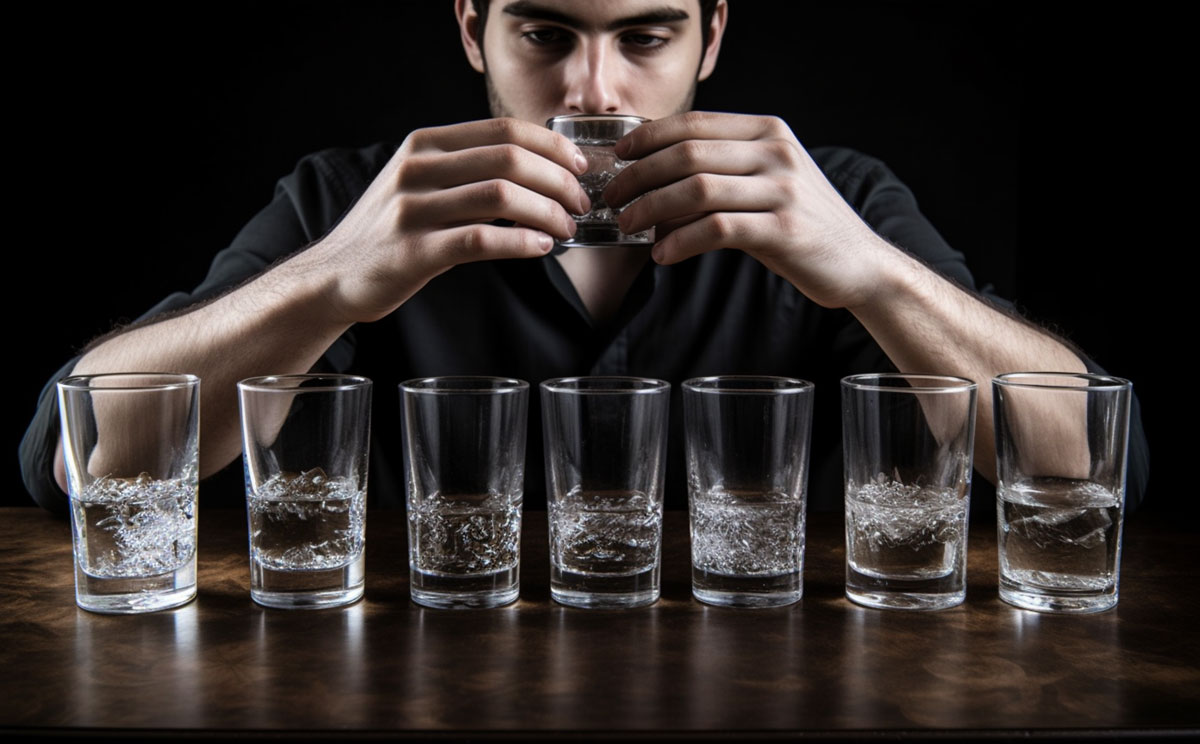 Once before we looked at medical myths perpetuated by movies and pop culture, but the sheer volume of misinformation can hardly be contained within a single episode. So today we're going to pick it up again, and look at some more stories about the human body that you've always heard and probably believe. We'll begin with the age-old advice that you should drink at least eight glasses of water a day, or about two liters. If you're backpacking or bicycle racing, that's not really all that much. But for most people, who, like me, sit around watching TV and scratching their belly, this would merely lead to superfluous trips to the bathroom. The problem is that the advice is not only unsupported, it's also misrepresented. The original recommendation seems to come from the Food and Nutrition Board of the National Research Council, which, way back in 1945, said that you should do this. But what seems to have been forgotten is that the report added "Most of this quantity is contained in prepared foods." Omit that, and it appears that you're supposed to stand at the sink and fill your glass eight times a day; which, it turns out, nobody ever recommended in the first place. Whatever you drink normally, in the form of coffee, juice, soft drinks, whatever, probably satisfies most people's water requirements. The evidence for this is that we don't see suited businesspeople lying around on the sidewalks of New York City dying of thirst, stretching out their hands in appeal to passersby. Just don't take this advice to the extreme. My dad and some friends once came home from college in the UK by buying a boat and sailing across the Atlantic, and they needed to stock up on drinking water. But they reasoned that any liquid was just as good, so they bought a couple kegs of wine instead of water. The wine quickly spoiled in the tropical doldrums and had to be discarded, leaving them stranded in the middle of the Atlantic with nothing to drink, and by the time they reached the New World they were practically dead. Moderation in all things is always better than complete reliance on anything. Dying from thirst is just one thing that can be frightening. They say Marie Antoinette's and Sir Thomas More's hair turned white from terror the nights before they were executed. It also happened in Shakespeare, and it even happened to Jobeth Williams in Poltergeist, giving her some Cruella de Ville streaks of white overnight. Can a terrible shock turn your hair white? More to the point, can anything make existing hair strands change color? Discounting artificial coloring or sun bleaching, the answer is no. Hair is dead tissue, there is no metabolism or mechanism that could alter its pigmentation and change its color, no matter how big of a shock you receive. However there is a condition called alopecia areata, in which all your pigmented hair falls out, sometimes quite rapidly, leaving only any unpigmented hair you might have. On a person with salt and pepper hair, this could indeed have the apparent effect of turning your hair white overnight. But although the causes of alopecia areata are unknown (though it's suspected to be an immune disorder), attempts to link it to stressful events have been post-hoc rationalizations, and there is no good evidence that it can be caused by fright or stress. But what about new hair growth? Can some frightening event change something in your body that changes the color of your new hair? People often talk about stressful relationships or projects giving them gray hairs; does this actually happen? Not really, no. The color of your hair, and the age at which it goes gray, is determined by your genes. However, the process is not completely uninterruptible. Certain chemotherapies and certain diseases can temporarily change the color of your new hair growth, but your color will return to normal after the episode. Ionizing radiation has been shown to bring on premature graying in mice due to genetic damage. But so far, no good evidence supports the idea that a sudden fright, or even years of stressful living, can prematurely cause your hair to start growing gray or white, or cause hair loss. And what man wants to be bald or gray when he's trying to pick up women? We've all heard that men think about sex every eight seconds. Or seven seconds, or nine seconds, or whatever the number. They think about it a lot. And if you're a man, you've probably heard this, felt ashamed and less of a man, and concluded you need to get your game on and think about sex a lot more often just to keep up with your peers. This is the kind of thing that sounds like it must have come out of some study done in the 1970's. The fact is nobody's really sure where or how this claim got started. Researching the question usually yields the same source: A study published in 1994, The Social Organization of Sexuality: Sexual Practices in the United States. They conducted a large survey, and although the results depended on self-reported data by men, they found that 54% of men think about sex at least once a day, 43% at least once a month, and 4% less than once a month. Hundreds of times a day does not seem to be supported by any real data. So relax, your hormones are probably OK. So since you're not obligated to think about sex all day long, you'll need to find some other way to get knocked out. In movies it's really easy to knock someone out. If you're Bones McCoy, a couple quick karate chops to the shoulder and abdomen will do it; for anyone else, a solid punch or a sharp crack to the back of the head with a pistol will instantly drop your adversary to dreamland. 20 minutes later, they come to, perhaps feeling a bit bruised, but otherwise uninjured. Do people really have such an easily accessed and inconsequential on/off switch? The actual injury needed to knock someone out is called a mild traumatic brain injury, or MTBI, more commonly called a concussion. Concussions are not caused simply by any blow to the head, though such a trauma can certainly cause other injuries. Concussions are produced by rapid brain acceleration, deceleration or rotation, anything that rapidly gives your brain a good squish. Grade I and Grade II concussions produce confusion and/or amnesia for up to 24 hours, but it takes a Grade III concussion to actually lose consciousness, and this rarely lasts more than five minutes. Symptoms sure to follow include headache, dizziness, confusion, nausea, slurred speech, lack of reasoning ability, amnesia and disorientation. In most patients, the symptoms resolve themselves within a matter of weeks. Rarely, surgery may be needed to relieve pressure or fix an intracranial hemhorrage. So if you're looking for that quick on/off switch for your movie plot, you need to invent your own imaginary clinical reactions. But once you're unconscious, won't you get fat if you've recently eaten? Sumo wrestlers famously maintain their large bulk by napping after their meals. The idea is that food you eat before sleeping doesn't get as thoroughly metabolized as food you digest while being active, and so if you want to get fat, shift your meals toward bedtime. Lots of people try to avoid eating after dinnertime to stay skinny, but does this really do any good? Sadly for those looking for easy answers to the weight gain problem, this particular solution has been studied a lot, and found to be just another myth. There's certainly a correlation between people who eat late at night and obesity, but this is simply because people who eat at night are more likely to be those who overeat throughout the day. Similarly, those who skip breakfast are more likely to be those who power away too big of a lunch. Turns out it doesn't matter when you eat your calories, it just matters how many calories you eat in total. People who eat small meals spaced throughout the day are less likely to overeat at any given meal. So relax and don't shy away from that late-night snack, just be aware during your other meals that more calories are coming later. But while you're snacking in bed, is it safe to pick up a book? Mom always used to warn me "Don't read in the dark, you'll ruin your eyes." And so, like most people, I've tried to avoid this. But then an opthalmologist friend assured me "You can't hurt your eyes by using them." Which do you trust, medical science or Mom wisdom? Can reading in dim light damage your visual acuity? There are two lines of evidence that support this: First, that using your eyes in difficult conditions can cause discomfort in the form of eye strain. That's a fact. Second, that smart people tend to wear glasses, presumably meaning that people who read a lot to achieve academic stature damaged their eyes in the process. That one? Not so much of a fact. Again, there may be an actual correlation: People who need to read a lot in their profession may be more likely to have gotten glasses to facilitate their reading, but there's no good evidence that one causes the other. Eye strain is not cumulative, and once you stop reading, the strain goes away and your eyes return to normal. It should be noted, however, that when you research this, you will find articles that do support the claim. But they are very much in the minority. It doesn't make them wrong, it just means that the experimental data has led the majority consensus of researchers to the opposite conclusion. I say take your snack to bed with you, and read in the dark. If thinking about sex doesn't put you to sleep, a few sudden well-placed brain decelerations from smacking your head on the wall should do the trick. If it doesn't, then you should have known better than to listen to me or to anyone else. Always think for yourself, and never blindly accept what pop culture tells you.
Cite this article:
©2024 Skeptoid Media, Inc. All Rights Reserved. |