 |
      
|
 |
MonaVie and Other "Superfruit" JuicesSuperfruit juices are nothing more than super ripoffs. Don't waste your money. Skeptoid Podcast
#86 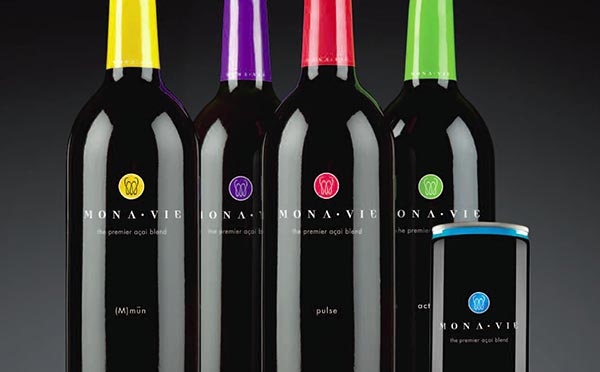 Have a seat and pour yourself a glass of the newest anti-aging megafad, superfruit juice. What is it? What does it claim to do for your body? How does it work? Is it really worth up to $50 per one-week supply? One day I was logged into my Facebook account and noticed one of my friends had blogged on her page that she was sick, and she was "sure the reason was because she had run out of MonaVie". You can probably guess that this caught my skeptical eye. After all, these superfruit juices have only been available for a few years, and it's not like everybody was always sick throughout human history until they came on the market. Plus this was right around the new year, the height of the cold and flu season, and lots of people were sick. I wanted to know if it was really true that simply changing your morning beverage was the miracle cure to the common cold. There are many of these superfruit juices for sale, and lots of them (like MonaVie) are sold through Amway-style multilevel marketing schemes. You've probably heard the question asked if you can make a better hamburger than McDonald's. Yes, of course you can. But: Can you build a better business than McDonald's? No. It's not about the hamburgers. McDonald's is not in the food business; they are in the real estate business. This same concept, at least at face value, appears to apply to MonaVie and its ilk. They are not in the fruit juice business; they are in the multilevel marketing business. Their product, like the Big Mac, is secondary to their business model. But let us not make a leap of logic and conclude that superfruit juices are the Chicken McNugget of fruit juice. Let's give them the benefit of the doubt, and listen to their specific claims. Superfruit juices all build their claims about their product on the same central idea. They contain large amounts of antioxidants, which fight the free radicals that cause aging. This is Skeptoid, so we're not going to blindly accept that without analysis. First, what really does cause aging? What the heck is a free radical? How is it affected by an antioxidant, and what the heck is an antioxidant? And, significantly: Do superfruit juices really contain beneficial levels of antioxidants? (With apologies to my Facebook friend, I didn't find any claims that these superfruit juices protect you from catching a cold — so save your $40-50/week if that's your goal.) Free radicals are complicated. The 25¢ definition is a molecule with an unpaired electron that allows it to easily form a covalent bond with one of your good molecules, thus oxidizing it. This is one way that cells can be attacked, and this effect can and does lead to a number of age-related diseases. At first glance, this makes the role of antioxidants obvious. Eliminate those oxidizing molecules, and help prevent age-related diseases. Right? Well, I'm sorry to say, not so fast. Human biochemistry is not as simple as the linguistic dichotomy of oxidation vs. antioxidant. It's extraordinarily complex. The oxidation from free radicals also has important benefits to the body: Converting fat into energy and attacking bacteria, just for a start. Fighting disease consumes a huge portion of the scientific and medical budgets in the world, so a tremendous amount of research has been done into antioxidants. What these tests have found, overall, is that a certain amount of antioxidants is good, but too much is bad; but more significantly, the source of the antioxidants seems to have more importance than the amount. The primary phytochemicals that deliver antioxidants to the body are vitamin C, vitamin E, and beta-carotene. For the superfruit juices to fulfill their claims, they must therefore contain large amounts of these vitamins. The American Heart Association evaluated five studies of such superfruit juices for their efficacy in preventing cardiovascular disease, which is the main health claim about antioxidants. Of the five, two showed no effects, and three showed negative effects. Dr. Stephen Barrett sums it up quite aptly in an article about antioxidants (which also lists this and many other clinical trials if you want to see for yourself):
So now let's move on to our final question: Do these superfruit juices really contain significant amounts of antioxidants? They better, because they base their entire marketing campaign around this claim specifically. Choice, the publication of the Australian Consumers Association, undertook a major study to answer this question in 2007. They bought virtually every superfruit juice that's commercially available. In their labs, they tested all of them for their total antioxidant capacity using the oxygen radical absorbance capacity assay test, laying out their methodology in detail — which you'll notice the promoters of these products never do. As a baseline, Choice measured the total antioxidant capacity, or TAC, of a common apple — a Red Delicious Apple, to be precise — and got a reading of 5900. This number was then compared to the TAC measured from a daily serving of each superfruit juice.
Choice also added several more common fruits to the mix. A single navel orange was found to have a TAC of 2,540. A cup of strawberries has 5,938. A cup of raspberries has a TAC of 6,058. And the overall winner was a cup of cultivated blueberries, with a total antioxidant capacity of 9,019. But how can this be? Choice magazine found that the marketing literature says that goji berries have ten times, and açai berries six times, the antioxidant capacity of blueberries. Well, this might well be true. The difference is due to the fact that you're drinking a juice made from the fruit, you're not eating the whole fruit itself. For example, the mangosteen fruit has a huge amount of antioxidants and other nutrients. However, it's all contained within the inedible rind. The edible pulp of the fruit has only a negligible amount of either. This is how it's possible for the marketing claim to be, well, accurate if misleading; but the product itself to be devoid of the claimed benefits. Superfruit juices may be good sources of antioxidants compared to, say, spaghetti or a cheeseburger; but if you want antioxidants, you'll get far more of them for about 1/100th the price by simply eating common fruit from the supermarket. There's one final concern that critical minds should have with these superfruit juices, and with those who recommend them; and that's the conflict of interest inherent in a multi-level marketing scheme. Superfruit juices are available from many alternative practitioners (like chiropractors and naturopaths) who are not bound by any professional ethics, and even from some medical doctors who are. Each of them earns income on these sales through a multi-level marketing pyramid. When you read an article in a wellness newsletter touting the benefits of superfruits, the author makes money if you buy. When your friend recommends MonaVie to you, your friend makes money; and I bet your friend even tried to sell you on becoming a distributor — "because if you do, you can get it at a discount." Even your trusted personal trainer at the gym who makes vague anecdotal claims about superfruit's power is part of the pyramid. Be skeptical. Superfruit juices are a business model first; a salable product second; and a well-evidenced health product a distant third. If you're truly curious about superfruit juices and want the truth, ask a source who has no financial interest in the product. Ask your medical doctor. You may find that he knows nothing about it; products like MonaVie that have no proven health value rarely find their way into medical or nutritional literature. Now the default comment that I'm going to hear is the accusation that I'm on the payroll of Big Pharma, who are mortified that consumers will learn they can replace medical treatment and drugs with these ponzi-pyramid juice drinks. Of course this makes no sense, since $40 a bottle is far more than it costs to buy apples for a week or simply eat a healthy diet like your doctor recommends; and if profit was their motivation, Big Pharma would be the first ones selling superfruit juices. But go ahead and make the comment anyway on the Skeptoid.com website. Difference of opinion is what makes the world go around (this comment not supported by scientific data).
Cite this article:
©2024 Skeptoid Media, Inc. All Rights Reserved. |