




Despicable Vulture Scumbags

My thoughts on a company that sells useless pseudoscientific hardware to an ALS victim.

Filed under Alternative Medicine, Consumer Ripoffs, Health, Logic & Persuasion

Skeptoid #89
February 26, 2008
Podcast transcript | Listen | Subscribe
Bookmark and Share

Today I'm going to depart from the usual format and answer a single email that I received. You get a lot of email when you do a show like this — most of it praise or thanks for helping a friend; a bit of it negative, which is usually both obscene and anonymous; and once in a while something that really gets my attention. The following email was of this latter variety:

I am writing you because I am upset, confused and angry... very, very angry.

My good friend was just diagnosed with amyotrophic lateral sclerosis (ALS) and it is heartbreaking. He has three very young children. I had lunch with my friend today and listened to him tearfully speak of his fear for his wife and children's future, his rapidly deteriorating motor skills and the agony he will shortly endure. He is scared, as anybody would be.

His doctors say that there is little hope for him.

Unfortunately, he has been given the advice, perhaps by someone who wished him well, to undertake homeopathic therapies, specifically some warped device called the Baar Wet Cell Battery. To say that I am angered by this obvious attempt to cash in on my friend's fear and horrible condition is a monumental understatement. The device costs nearly $200 a month and doesn't even include instructions, which are an additional $15.

It's obvious that the $200 would be better spent on his family or even on research to discover a treatment or cure. This device is a crime against humanity, perhaps not physically, but philosophically. The people who perpetrate it should be incarcerated.

I have made the very difficult decision to not try to dissuade my friend from using this device as for now it is the only hope he is clinging to. Perhaps you have some advice you would be willing to give me and others in similar situations? Perhaps you can change my mind and suggest what to do...

Well listener, when I got your email, it really affected me. I could easily imagine myself in your friend's position, and in your position as well. Sadly your position is not unique. There are many such small personal tragedies around the world, and many people asking your same questions.

Amyotrophic lateral sclerosis, or ALS, is better known as Lou Gehrig's disease, and maybe best known these days as Stephen Hawking's disease. The sclerosis is a degenerative hardening of nerve cells in the brain and spinal column, resulting in painless weakness and atrophy of muscles, often leading to complete paralysis. Only one cause is known, a mutation responsible for only a few percent of cases. The average life expectancy is only two to five years after diagnosis, though five percent live 20 years. Stephen Hawking has survived 45 years so far. Over 5,000 people develop ALS in the United States each year, most of them white males over 40. In some cases, the progression stops, and a few cases have even reversed. ALS progresses differently in virtually every patient, and is thus exceedingly difficult to diagnose. There is only one approved treatment, the drug Rilutek, which has been shown to slow the progression of ALS in some cases and prolong life by a few months. No other treatments so far have been found to have any beneficial effect, though a number of clinical trials for other drugs are ongoing.

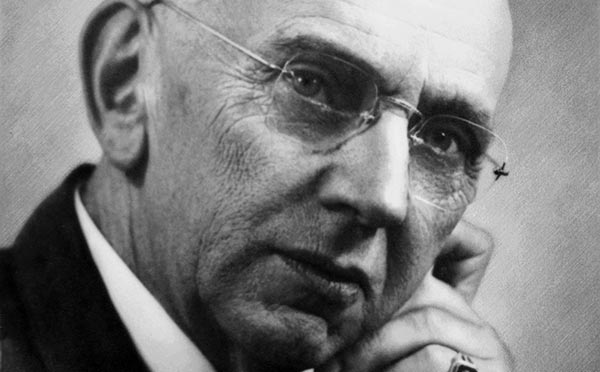
The use of a wet cell battery in New Age healing is the invention of Edgar Cayce, an early American celebrity psychic from the early 20th century. Cayce was best known for giving psychic readings on the sick, and developed a following of believers in psychic healing which still persists to this day. Virginia's Association for Research and Enlightenment, which claims tens of thousands of members, still promotes spiritual and psychic healing through methods developed by Cayce. One of these is the use of a wet cell battery. To use it, you mix chemicals in a bucket to create a weak battery. Next you mix the special "medicines", gold, silver, spirits, or iodine, in a secondary jar. A wire loops through these "medicines" and you apply the electrodes to your spine. You're supposed to do this for 30 minutes a day, and Cayce said months to years of daily application is required to get results. The claimed mechanism is "to introduce energy and medicinal vibrations directly into the body". There is no hypothesis behind the device suggesting how or why it might be useful.

The battery kit itself is $200 from this company Baar, but then there's a gigantic list of accessories and chemicals that you'll need a steady stream of, and these appear to account for the ongoing costs mentioned in the email.

The term "medicinal vibrations" is linguistic nonsense with no scientific or medical counterpart, so it was difficult to search for any research on this. I was not able to find any clinical trials or any research of any kind on a reputable source such as PubMed, into the efficacy of wet cell batteries for either wellness or treating disease. The Cayce web page for the battery makes no claims about its powers, although there is a long list of personal testimonials from customers of the Baar wet cell battery for all kinds of diverse conditions like fatigue, inner harmony, repolarization, and cold hands. Oddly, the authors of these testimonials managed to realize their positive results in far less than the "months to years" that Cayce said was required, often just days. Baar does point out that the device is not intended to diagnose, treat, cure or prevent any disease, and makes no claims about its usefulness. Apparently they leave that to people like whoever it was who recommended this product to your friend. Nevertheless, if Baar is knowingly selling this device to someone who believes it may treat ALS, they are indeed despicable vulture scumbags.

I'd like to read you the response of Dr. Stephen Barrett, who runs Quackwatch, to one of his frequently asked questions: "Isn't it better to at least try an unproven alternative therapy, than to simply give up, roll over and die?" Dr. Barrett says:

"I recommend taking whatever steps are needed to determine the accuracy of the 'terminally ill' prognosis. If it is correct, I would recommend spending the remaining time in the most productive way. In my own case, I would place my affairs in order, and continue to write about the topics I believe are most important. I would not waste 10 cents or 10 minutes looking for something that does not exist."

There's one thing that I would add to Dr. Barrett's suggestion, and it's a matter of personal choice. I'd probably participate in clinical trials, though I'd do it with the understanding that they are rarely successful, and with an awareness of potential side effects. Future ALS sufferers may benefit from my participation. Clinical trials are always free to the participants, and that's another important distinction between proper medical trials and quack treatments. The purveyors of quack nonsense like the wet cell battery always, always charge money. The ALS Association web site maintains a large list of clinical trials in which your friend might choose to participate. At best, he may find relief if one of these treatments pans out. At worst, his participation will further our knowledge of ALS and get us a step closer to the day when it's treatable.

ALS is no picnic, but it's also not the end of the world. Your friend has three small children who are always going to look up to him as their guiding light. He has their youth sports leagues to watch, their high school graduations, their first dates, their first broken hearts, their weddings. He has friends like you watching out for him, hanging out with him, taking him to the movies. How much of that will he be around to enjoy? Nobody knows. But then, you or I might get hit by a bus tomorrow. In that sense we all have the same concerns, and we can't all stop living our lives just because we don't know what tomorrow brings.

It is the nature of human beings to come and go. Passing on is neither unnatural nor unexpected. It's the way the world works. Death is not the culprit. The obscenity here is that someone is getting $200 a month richer off of your friend's tragedy. Someone who never went to medical school. Someone who probably couldn't tell you anything about the mechanisms of ALS. Someone who, I promise you, has never successfully treated ALS, and who has no plausible chance of ever doing so.

You've said you're reluctant to dash your friend's hopes. But hope does not come in the form of a worthless piece of pseudoscience. Hope comes from a realistic chance, no matter how small — get him into a clinical trial if he wants to work the problem. The demonstrably false hope sold by Baar and other Edgar Cayce followers is a ripoff and a lie. Your friend, and everyone like him who needs a chance and a break and some hope, deserves better.

You asked my advice, so I'll give it, controversial though it may be. Having ALS doesn't give your friend any special dispensation to cause additional grief to his family and friends. He still has obligations to them, he's not above being wrong, and he's not the only person affected by this. Tell him he's making a bad situation worse for those close to him. Make sure he has the tools to make an informed decision. Share your thoughts with his other family and friends. Be part of the solution and don't enable the problem.

You should follow me on twitter here.

Brian Dunning
Brian Dunning

© 2008 Skeptoid Media, Inc. Copyright information

References & Further Reading

ALS Association. "About ALS." ALS Association. ALS Association, 1 Sep. 2008. Web. 6 Dec. 2009. <http://www.alsa.org/>

Brown, R., Meininger, V., Swash, M. Amyotrophic Lateral Sclerosis. London: Martin Dunitz Ltd, 2000. 405-422.

Guion, Lee. Respiratory Management of ALS: Amyotrophic Lateral Sclerosis. Sudbury: Jones and Bartlett Publishers, 2010. 12-15.

Miller, Robert G., Gelinas, Deborah, O'Connor, Patricia. Amyotrophic Lateral Sclerosis. New York: Demos Medical Publishing, 2005.

Singh, S., Ernst, E. Trick or Treatment, The undeniable facts about alternative medicine. New York: Bantam Press, 2008.

Reference this article:
Dunning, Brian. "Despicable Vulture Scumbags." Skeptoid Podcast. Skeptoid Media, Inc., 26 Feb 2008. Web. 10 Sep 2010. <http://skeptoid.com/episodes/4089>

Discuss!

Remember, you should always read with skepticism the comments of anyone too lame to put their real name & city.

When it comes to the people that sell devices like these "wet cell batteries" I almost don't know what would be worse: Someone who knows full well their hocus-pocus wont do anything, and sells it to a sick person anyway, or someone stupid/ignorant enough to actually think their "treatments" do have medical benefits masquerading as a medical professional, of sorts.

vita10gy, Eau Claire, WI
February 26, 2008 8:56am

Brian,

This was a powerful episode of Skeptoid. Well done. Seriously... well done. Keep up the excellent work.

Cheers,

Justin

P.S. It was a pleasure meeting you at TAM 5.5.

Justin Clement, Williamsburg, VA
February 26, 2008 11:15am

Brian,

I wholeheartedly agree with your view. As difficult and wrenching as it may be, telling a sick loved one the truth is your best bet. When my mother had less than 3 months to live and was considering buying long-term (!) care insurance, it fell to me to advise her that what was important was focusing on her current condition and learning as much as possible about it. Maybe your email correspondent is the only one who can be that informed person in that situation. Often the patient and his family are so overwhelmed by the devastating news that they fall easy prey to the vultures of pseudo-medicine, magical thinking, or denial. He should take his friend aside, or the wife, and explain the options. Depending on how close he is to the patient, maybe accompanying him to doctor visits with a list of questions would be a good plan.

When your days or months become clearly measured, it behooves you to spend them wisely. I imagine that those kids would rather have dad sit and talk with them than wonder why he's strapping himself to a battery.

Thank you for your work.

Kat

Kat, Bellingham, WA
February 26, 2008 1:32pm

Hope is a powerful thing, as is the will to live. The US Army has found that people in dire survival situations who maintained a strong will to live tended to survive, even when they did many things wrong.

I think well intentioned actions that destroy hope may not be in the friend's best interest.

Chris Moyer, Decatur, GA
February 26, 2008 2:10pm

Real medical trials will provide hope AND potential results.

You'd still get all the placebo effect benefits with the added bonus that there's an outside chance it actually effects something outside the realm of what a carrying around a lighter wallet can alleviate.

vita10gy, Eau Claire, WI
February 26, 2008 3:36pm

Chris - Just so I don't misunderstand, are you suggesting that a patient is actually better off with a useless quack device that gives him hope, than he would be getting that same hope from a clinical trial of an evidence-based treatment?

Eric Shultheiss, Corona, CA
February 26, 2008 8:33pm

So, no strong feelings on the subject Brian? Don't be afraid to hold back!

Marius vanderLubbe, Nullabour Plain, Australia
February 27, 2008 1:17am

When my mother was terminally ill, I had a well meaning religious friend offer to "lay hands" on her. He said he'd use some religious oils and such and say some healing words that would help her. He was a nice older man and I'm sure he didn't have anything in mind other than trying to be of help, but I of course declined. I was angered at first over the whole thing. To me, it seemed like he was offering help that I knew wouldn't do any good whatsoever. Why would he get my hopes up like that? Didn't he realize that he couldn't help her? After a while, I realized he DIDN'T know he couldn't help her. He truly believed he could help. He was a nice guy but he was a bit off if he thought he could actually heal people.

Chris J., Charleston, SC
February 27, 2008 12:28pm

That's a little bit different though, assuming this man didn't intend on billing you for his time and it wasn't a "let's spend 2 hours a day doing this" type situation.

False hope is one thing, making money on false hope that wastes a significant about of a dying persons remaining time is another.

vita10gy, Eau Claire, WI
February 27, 2008 1:55pm

Yes, it's definitely different. He wasn't looking to profit from anything, but it does lie in the "false hope via quack cure" spectrum.

Chris J., Charleston, SC
February 27, 2008 2:36pm

I just lisend to this episode. I commend you, Brian, for both your sensitivity and courage in advising the writer. There is nothing more cruel than false hope, and reminding those who suffer from terrible circumstances that life, indeed, goes on is both tough and kind (tough love?) Anyway, the writer would be well served to follow your advice. My thanks for reminding me of what's most important as we journey through life!

Kevin Smith, Palm Springs
February 28, 2008 6:28pm

I just listened to this episode - that was the best episode yet. Very touching. Thanks Brian.

Chris Doms, Tauranga, New Zealand
March 01, 2008 12:24pm

I agree with Chris.. best episode yet.. thankyou Brian

jon, Australia
March 02, 2008 3:41pm

I liked the comment about setting a good example for the children. My maternal grandmother died of breast cancer about 45 years ago. She was convinced that she could be cured by miracle vegetable juices. The result was that she spent a small fortune on snake oil and "herbal healing consultants", and died a painful death from the untreated cancer. 45 years later my mother is still angry and resentful not only at the quacks who killed her mother, but also at her mother for falling for such nonsense.

Brian, Modjeska Canyon, CA
March 02, 2008 10:17pm

Brian, this episode was very touching . I totally agree with everything you saied and I hope many people will learn from this episode as much as I learned.

Luci, Tel-Aviv
March 03, 2008 2:11am

I've been a long time listener of Skeptoid.

I was astonished to hear the contents of Despicable Vulture Scumbags as it raises concerns that hit me right at home.

My brother was diagnosed with ALS in the spring of 2007.

He is taking the one drug shown to be effective in slowing, by about 6 months, the 'normal' course of the disease. He lives in a large city and is looking at clinical trials.

But he's also taking a lot of vitamins and nutritional supplements. And I worry that he may go searching through all the crap that it is out there.

This is especially tempting for ALS patients because there is so little that is effective out there and the course of the disease varies a lot person by person.

I'll send him and my other siblings your podcast. I agree with it all the way down the line. You've said things that I've been hesitant to say.

Thank you.

Initials and location entered to protect my brother's privacy.

SS, City, Province
March 11, 2008 4:36pm

Brian I have been a listener to multiple podcasts for several years covering various categories including medical,technical,literary and personal. This is the first time a podcast has ever left me both angry and uplifted to the point of tears. This is not easily accomplished given that I am a somewhat callous ER physician and medical examiner. Thank you for doing what you do.

John-Paul Jones MD (real name ,real doctor), Lynchburg ,VA
March 20, 2008 10:52am

Great advice Brian, on a sad story- there is no limit to the lengths that scared and desperate patients will go to and the number of wicked profiteers out there ready to prey on them.

Dr Mike Clemons, UK
March 31, 2008 2:07am

I love this episode, even though it makes me sad and angry to hear about yet another complete charlatan device/treatment taking money from people who are sick.

I really liked the end part about the sick person not being above being wrong. It's so, so hard when someone you care about is suffering to stand up to them and tell them they're about to do something dumb...it makes you feel like a total heel, but being sick doesn't make you the queen of the universe who isn't responsible for the damage your decisions cause. It feels very validating to hear someone else express their sentiment, which I share and that many people are too afraid to express, for fear of seeming mean or callous, when it's really about showing equal compassion for the people around the sick person, and not reserving all your compassion for the sick person themselves.

Sarah, Connecticut
April 21, 2008 12:59am

My mother has had sarcoma for over 30 years, 10 years ago the cancer came back and the doctors could no longer do anything for her. I bought the violet ray from the baar and started using it on her. Within a month her tumors had reduced a great deal. She has been pallative for the last 2 years. The past year I have also added the wet cell battery. I don't care what anyone says the medical community gave up on her long ago. They had nothing else to offer. No one wants to doctor themselves, but for 8 years you could not even tell she had cancer, she worked and lived her life. I am glad that there are places that you can still buy the things that Edgar Cayce advised.
Only the brave will try something different if they wish to survive;sure there are a lot of quacks our there but Edgar Cayce was not one of them. No one forces anyone to do anything, but if the medical doctors have nothing left to help you then you have to help yourself.
Good luck to anyone out there with cancer.
Also don't judge anyone if you haven't walked a mile in their
shoes. For myself I have had my mother with me a few extra years. One day there will be a cure for cancer.
Oh and about the cost of the wet cell battery, chemo costs a hell of a lot more and also give no guarantees.

linda pinto, toronto/canada
May 24, 2008 8:36pm

Well, Linda, I am happy that your mother is so much better.

As you may be aware, there's a low percentage chance of cancer retreating on its own. Thus, even if your doctor tells you that the your mothers chances are very low, they are never really zero.

And, of course, this has absolutely nothing to do with some junk from some people who are either idiots or greedy bastards.

Oh, and (as I happen to know from first-hand experience) chemo therapy gives you an excellent chance. No, of course not 100%. But certainly very much better than some quack rubbish.

Klaus, Germany
June 26, 2008 12:43am

If the wet cell battery or any number of quack devices really worked... medical doctors would use them!

Correlation is not causation!

As for the episode... this situation clearly illustrates the problem in quackery, oops, I mean Supplements, Complimentary and Alternative Medicine (S.C.A.M.).

Joe Garavito, Monterrey, Mexico
July 04, 2008 3:51pm

I notice LInda is Canadian. I thought ourt perfect health care system would solve all!

The fact is, our wonderful health care system shorts people on real treatment and pays for quackery (Chinese medicine, alternative medicine)

So if your mom played Russian Roulette twice and lived, according to your 'study' she is immune to bullets!

I think a better way to live is "the race may not always go to the swift nor the battle to the strong - but that is sure as hell the way to bet!"

Modern medicine has increased your odds against cancer almost exponentially. Do you know how? By rigourous study - not by ridiculous claims and non-existent energies!

GW Crawford, Toronto, ON
December 11, 2008 1:06pm

I've been catching up with all the past episodes of Skeptoid and enjoy them heartily - yet I am troubled by one recurring implication, one that appears in episodes about "cures" such as MonaVie, chiropractic, and homeopathic treatments, and reappears in this episode in a very poignant manner.

My issue is the conflation of the effects of a placebo and no effect at all. My understanding is that scientific methodolgy accepts a statistically significant difference between people offered no treatment, and those offered a placebo. The placebo effect sometimes can have extraordinary or dramatic benefits, beyond what medical science can presently neatly explain, yet inescapably affecting the results.

I personally am certain that MonaVie and other products with unsupported health claims, yet which are accompanied by anecodtal (which doesn't equate to false or fraudulent) evidence, generally provide a similar level of health benefits as a placebo, as long as the placebo substance is not in other ways harmful.

It's my opinion that the power of the placebo effect is what generates the huge diversity of "alternative cures", I think it much more likely that there are more folks who honestly believe in their cures and have confused their results with placebo effects.

Perhaps you would consider an episode on the difference between the placebo effect and no treatment, or at least be more careful in dashing hopes when a placebo (in whatever form) is not equal to no hope at all.

Jonathan, California
December 17, 2008 11:43am

"...or at least be more careful in dashing hopes when a placebo (in whatever form) is not equal to no hope at all."

But, the placebo effect isn't worth the outrageous price tag of many of the "alternative cures."
A local pharmacy (yes, pharmacy) sells Kinoki pads for about $20 for 14 pads. Figuring one each foot, that's about a week's worth. Calculate that by 52, and that's more than a $1000 a year for overpriced Band-Aids. A couple bucks for a bag of apples vs. $308 for eight bottles of Monavie.
$12.50 for 4 oz. bottle of wheatgrass juice powder?
A vague ill-defined "wellness" isn't worth that kind of money.
If you need placebos that bad, get some generic chewable vitamins for a couple bucks.

Lewayne, Near Des Moines
December 17, 2008 8:03pm

My aviation doctor told me during a recent check-up that his teenage son has a terminal illness (he explained the mechanics of it but I forget the name). He also said that his son spends a lot of time researching remedies, scientific and otherwise. When I asked whether he is concerned about false hope raised by bogus claims, he simply said: “There is no such thing as ‘false hope’. Hope is hope”. This guy is a) a scientist with no room for voodoo beliefs and b) a father with no question about his motives.
I spent a lot of time thinking about this and I am not sure whether he may be right. Thank God I do not have to make the call. As to those who make a living out of these desperately sad situations; If the father is correct, one can see these scavengers as despicable yet necessary part of nature’s plan, dispensing false hope while gorging themselves. I guess that is why we call them vultures. As a human being however, I retain my right to be disgusted.

Hans, Malvern PA
March 22, 2009 9:12pm

To Linda in Toronto. I notice you are Canadian. No one in Canada ever has a cause to pay for chemo, it will be provided to anyone who needs it.

I have a family member who died from cancer at a young age. While she couldn't be cured, the effort the doctors went to was exceptional and no expense was spared. And no only that but other services were provided, include in home care visits for treatment, counselling and even help to take care of small children. There was no cost for any of this.

This was a terrible tragedy, but the help she got made me extremely proud of my country and the services we have. And fortunately no one tried to sell her any quack stuff.

Chris, Toronto
September 01, 2009 5:59pm

Hi Brian. While slowly listening to your back catalogue of podcasts, this one compelled me to leave a note.

My mother is a developmental pediatrician and spends far too much of her time playing catch-up with patients the second time around, after having left the first time because "western medicine was letting them down." Her main focus is autism, and as you know there's no shortage of people making amazing claims about amazing cures for amazing monthly fees. Jenny McCarthy is just a branch on a really scary and depressing tree.

People are desperate for a coffee when they're tired, and I understand that kind of panic multiplied by a million if you're sick. It's important that people (like you as well as everyone else) allow them to not feel guilty to not take every opportunity offered to them just in case.

This was a fantastic, thoughtful, no-punches-pulled episode. Great, great work.

Mike, new york
October 14, 2009 8:20am

One thing that frustrates me greatly is the fact that few writers ever discuss ALS life-extending therapies, such as mechanical ventilation. They can extend ALS patients' lives for many years, even indefinitely. And despite their limitations, most report having a good quality of life.

Mike Roach, Montana
November 22, 2009 9:37pm

Being 45 years of age and through more than my fair share of life's hard lessons, I consider myself too gruff to admit it, but this episode on ALS brought a few tears to my eyes.

I watched for nearly 2 1/2 years while my mother suffered from ALS, finally passing from its effects. All along she allowed herself, bravely, to be used for new research and to be studied. It is extremely rare for her condition to effect the body from the lungs outward, so since this happened to her, she was more than open to proper treatment and science.

If only the local Hungarian Catholic Church had kept their greedy vulture fingers from her failing will, her passing would have been much easier on us.

Because of her willingness to allow herself to be studied for the future benefit of ALS sufferers, I may not believe in ghod, but I almost believe she was an angel. At least one which gave a life lesson to our family.

Thank you, Brian, for your insight which touched me deeply.

Sincerely,
Paul R Pearson

Paul Pearson, Redford Twp, MI (for 8 more days!)
March 22, 2010 8:38am

Make a comment about this episode of Skeptoid (please try to keep it brief & to the point). Anyone can post:

Your Name:
City/Location:
Comment:
characters left. Discuss the issues - personal attacks, posts containing advertisements or links to commercial services, nonsense, and other useless posts will be deleted.
Answer 5 + 7 =

You can also discuss this episode in the Skeptoid Forum, hosted by the James Randi Educational Foundation.

Join the Skeptalk email discussion list.

What's the most important thing about Skeptoid?

Support Skeptoid
Support Skeptoid
 
Skeptoid host, Brian Dunning
Skeptoid is hosted and produced
by Brian Dunning


Newest
Toil and Trouble: The Curse of Macbeth
Skeptoid #222, Sep 7 2010
Read | Listen (11:31)
 
The Myers-Briggs Personality Test
Skeptoid #221, Aug 31 2010
Read | Listen (13:10)
 
Yonaguni Monument: The Japanese Atlantis
Skeptoid #220, Aug 24 2010
Read | Listen (11:53)
 
Stalin's Human-Ape Hybrids
Skeptoid #219, Aug 17 2010
Read | Listen (13:14)
 
The Astronauts and the Aliens
Skeptoid #218, Aug 10 2010
Read | Listen (12:53)
 
Newest
#1 -
How to Debate a Young Earth Creationist
Read | Listen
#2 -
The Real Philadelphia Experiment
Read | Listen
#3 -
Medical Myths in Movies and Culture
Read | Listen
#4 -
MonaVie and Other "Superfruit" Juices
Read | Listen
#5 -
Religion as a Moral Center
Read | Listen
#6 -
HAARP Myths
Read | Listen
#7 -
Apocalypse 2012
Read | Listen
#8 -
The Detoxification Myth
Read | Listen

Recent Comments...

[Valid RSS]

ZIP Code Database

Skeptoid Podcast Skeptoid on Facebook   Skeptoid on Twitter


"Ghost Hunting"
inFact with Brian Dunning

Skeptoid is not responsible for the content of the ads below. Often they are great illustrations of what this episode is examining critically, so feel free to take a look.