5.20.2013

Some Other Famous Rothschilds

I trust no one with the name Rothschild, sorry…

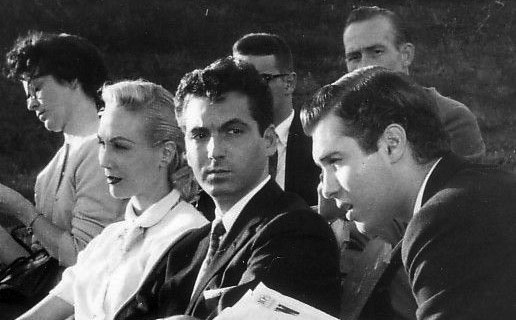
A comment from reader Justin Kies on my piece on false flags gave me food for thought. While it’s a common enough belief that the Rothschild banking family exerts almost limitless power in shaping world events, it seems unlikely that every person named Rothschild is either a member of this family or has any role in ultra-elite level decisions. / read more…

Belgian hype around mindfulness

Last Thursday there was a documentary on the public television network (Dutch) here in my country about Mindfulness. In an hour-long documentary, this hyped phenomenon was presented in a rather nuanced way, with both the advantages and risks associated with this psychotherapy. Luckily there still are investigative journalists delivering this quality programming, because I had never heard of it.

Mindfulness is a technique developed originally to help people cope with chronic pain. It now has evolved into a big hype worldwide and is also proposed for depression, hyperactive children, and stressed-out managers. It is based on a meditation technique used in Buddhism, and has been made popular in Belgium by Edel Maex, psychiatrist.

And actually, meditation is exactly what it seems to be. We see Johan Braeckman of the Belgian Skeptics (SKEPP) following such a session, where one “has to let go”, listen to little bells ringing, etc. I got reminded of an episode of Penn & Teller’s Bulls-hit, where Penn Jillette doesn’t stop yelling “stretching” when someone explains the assumed benefits of yoga. Relaxing can help, and I don’t mind.

There is also a segment with kids (they don’t really seem hyperactive, just busy) where they have to blow soap bubbles and sit on a balloon. This is coupled with anecdotes from some known Belgians who have used this technique to overcome depression. At the end of the program, Braeckman is allowed the last word, indicating that indeed some studies suggest it may work on depressions, but it is far from being established science. Kudos to the journalists for allowing this skeptical viewpoint.

So a perfect therapy, right? Well, it seems great, but there was more. The journalist went undercover to a “psychotherapist” (not a legally protected title in Belgium) with a faked depression where he got weird advice relating to his genitalia. The psychotherapist indicated even that she would also touch them next time. That is an absolute scandal in a medical profession, but there is nothing that can be done. Indeed, the professional organisation of psychologists (BFP-PFB) in Belgium has already reacted, saying that there is, now more than ever, a need for a strict legal definition of psychotherapist  with strict quality controls. Given the experience of the journalist, that seems rather correct.

However, there is something missing. Science. This technique gets touted in bestselling books and blogs on the internet, people flock to it in group sessions and children get subjected to it. But the science is very thin. Even though it is promising (see the references on the Wikipedia), there are only preliminary results. I find the Wikipedia a bit biased, but even there it is indicated that there are methodological issues with the research. I find it appalling that a technique, no matter how promising it looks, is rolled out like that without some decent and large-scale studies. If you have a new psychiatric drug, you have to pass multiple and long, extensive stages of strict testing. The same should apply to this therapy. It seems to me that proponents of this theory seem to “feel” that it works and apply it to everyone, without waiting for more research. This is in contrast to for instance fecal transplants, on which I blogged earlier.

Because this lack of scientific basis is where the professional organisation for psychologists goes wrong, too. They insist on having a legal solution but forget to indicate or request scientific research. Belgium has (almost) a system to recognize homeopaths, but the fact of having a legalized and restricted title, doesn’t make it scientific per sé.

It is probably too much to request this from a documentary on television to point this out in full. But the fact is that, apart from a mention from Braeckman, science seems ignored in this topic. And in the end, that’s where we all lose.

Thanks to my friend Helmut for the topic and some interesting links.

Note: an earlier version of this post had the remark that the “science is very thin”. That is a factually incorrect statement that has been pointed out to me, and I barred it in the text. There is a lot of science going on, also in the context of Cognitive Behaviour Therapy (linked to relaxation). In a follow-up post later on I might discuss in more detail these scientific findings, but for now I still stand behind my remark that it remains preliminary.

5.17.2013

MercolaWatch:Dangerous reasoning about the chickenpox vaccine

In an April article, “Despite Doctor’s Order, School Bans Girl for Not Getting Chickenpox Vaccine”, Mercola is at it again with strange logic which seems to directly contradict the available facts. It seems that like many who are anti-vaccine, the idea of risk vs reward is lost on Joe Mercola. He would rather have a near-universal viral infection with frequent hospitalization and, sometimes, death than a low risk vaccine which has proven itself in the almost 10 years since it was introduced.

/ read more…

5.17.2013

How Solar Flares Will Leave The Earth And Its Inhabitants Mostly Unharmed

Since we are in the peak (solar maximum) of the Sun’s 11 year cycle, we are seeing much more solar activity than we have in the past few years. It may seem scary to some, but the sun has been operating in this way for way longer than we have been able to observe it and longer than we can even conceive. Increased solar activity means more sunspots, solar flares, coronal mass ejections and coronal holes. From our vantage point, it also means more gorgeous auroras! The news feeds have been steadily buzzing about the four x-class solar flares that erupted from the Sun starting on Monday, May 13th. These flares are typical to the solar maximum, but they have still managed to set off many people in fear and trembling. Fortunately, since the Earth evolved in a highly radioactive environment, it has a protective magnetosphere, ionosphere and atmosphere to keep it (and its inhabitants) safe from solar weather. This doesn’t mean that solar activity will not affect us down here under the protective layers, though; our satellites and the International Space Station (ISS) are in orbit high enough that they are susceptible to damage from charged particles or waves from the electromagnetic spectrum (such as x-rays and gamma rays).

/ read more…

5.16.2013

Sigmund Freud and Cocaine: A Love Story?

Sigmund Freud’s cocaine use is old news.  Freud provided extensive documentation himself, including letters, academic publications, and autobiographical material. He even left behind a small sample of his drug of choice, which was recovered from an envelope in the Library of Congress Reading Room in 1995 among his colleague’s papers. Freud was not shy about describing his cocaine use because at the time, physicians were not widely aware of the adverse effects of the drug, and because it was common for medical researchers to test chemicals on their own bodies. / read more…

5.16.2013

I Predict the Mother of All Comebacks

The Republic of Ireland is facing deep financial crisis, as these robots will explain:


/ read more…

5.16.2013

The Consumer Effects Of ‘Infotainment’ Science Reporting

Now this is the kind of journalism I like to see. Earlier today, the Guardian published “The need for critical science journalism” by Dr. Jalees Rehman, a well-aimed jab at the way most media outlets handle science reporting. Labeling the typical mainstream science reporting approach as “infotainment,” Rehman rightly criticizes journalists for hyping science story over science fact, and for “[operating] under the assumption that if a scientific paper has been peer-reviewed and published by conscientious scientists, the results and conclusions are valid.” He goes on to describe and champion a more critical approach to science reporting.

Where Rehman stops, however, is in discussing the larger negative consequences of bad science reporting — misinformed readers who form uncritical views or make poorly informed decisions based on the science hype.

/ read more…

5.15.2013

More Evolutionary Evidence

Creationists often point to gaps, or anomalies in the fossil record as evidence that evolutionary theory is incorrect. They fail to acknowledge that the fossil record heavily supports common ancestry and evolution. Creationist often point to “sudden appearance” as evidence for a “guiding hand”. A god of the gaps argument. Often progressing to the illogical conclusion that weakness in evolution theory equals strength for creationism. Recently more evidence has appeared indicating that human evolution is even less complex than we currently think. At least when it comes to the evolution of the ambulatory hip. / read more…

5.14.2013

Miniature Skeleton: Not an alien

I saw this report last week. The buzz was up about Ata, a tiny (12cm) skeleton found about 10 years ago in the Atacama desert in Chile. The story of Ata has come to light with a recent UFO documentary, Sirius. The skeleton is quite bizarre looking, I must say. Happily for us, Stanford scientist Garry Nolan has examined the evidence and offers the facts. Spoiler: not an alien.

  / read more…

5.13.2013

Crisis Actor? What Crisis Actor?

Like “false flag”, the term “crisis actor” has recently become a concept that conspiracy theorists love to throw around when trying to prove that some atrocity is actually a fake, planned by the government as an excuse to strip us of our rights. / read more…