 |
      
|
 |
Top 10 Best Pro-Science CelebritiesA list of ten Hollywood celebrities who have leveraged their fame into the promotion of science. Skeptoid Podcast
#349 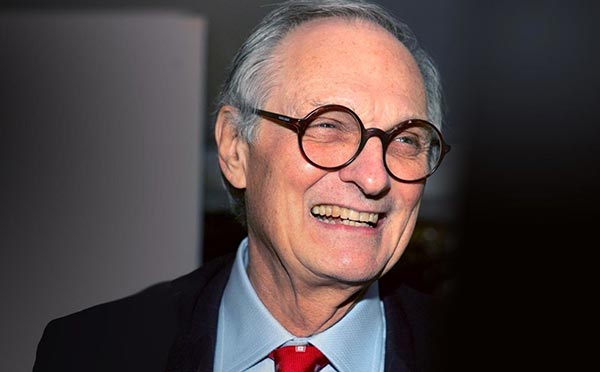 Today we're going to point the skeptical eye at Hollywood celebrities — but through a filter that leaves us with only the tiny remaining number who leverage their fame to promote science and critical thinking. Although initially this project seemed doomed to failure, it turns out that every group of people includes all sorts of people; and even in the landfill of Hollywood intellect, buried gems of rationality can be found. Note that I chose not to include people whose profession is science or who are otherwise famous because of their work in that area. I also didn't include celebrities who simply go out and support some existing cause or charity, or who later went back and completed a science degree and said "Yay, I support science," or who serve as spokespeople for existing pro-science organizations. Those are all well and good, but I wanted to instead focus on the those who built reputations in the entertainment industry, but then chose to proactively become movers and shakers by creating resources and truly challenging the public on their own terms. Let's get started with: 10. Tim MinchinThis list begins and ends with celebrities whose contribution to science advocacy is through a side door. Basic critical thinking skills are a prerequisite, and this starts with questioning the nonsense that's hurled at us all day every day. Comedian and musician Tim Minchin is a brilliant performer well deserving of the success he's found, and some might argue that this success has been due in part to the tremendous amount of criticism in his art directed at popular pseudoscience. His 2011 video Storm criticized many popular New Age beliefs. He refers to it as a gateway to skepticism and rationalism; entertaining people while sneaking in a pro-science message without their really realizing it. In a 2011 interview with New Scientist, Tim said "In the absence of my own knowledge of a particular thing, I am going to find the best authority I can. Science as a tool allows us to try and generate a really good authority... it is the only system that even bothers to try to minimise bias." 9. They Might Be GiantsThe goal of virtually every pop musical group is to make it big — or at least to make it big enough. They Might Be Giants has produced some 15 studio albums to date over their 30 years together. In recent years they've taken a page from The Wiggles' playbook and concentrated more on music for children; but not just any music for children, science-specific music for children. In 2009 they released an album Here Comes Science which consists of twenty songs, each one about some scientific subject. Notably, the founding members John Flansburgh and John Linnell have little scientific background, just an appreciation for its value. They actually hired a science consultant for Here Comes Science. And when they learned that the lyrics of one of the songs was inaccurate, they added another song to the album correcting it. They had covered the song "Why Does the Sun Shine?" which described the sun as being made of gas; and then issued the new song "Why Does the Sun Really Shine?" explaining that it's actually made of plasma. 8. Danica McKellarThis actress best known for playing Winnie on The Wonder Years in the late 80s and early 90s could have easily gone the route of those who complete their academic degree in obscurity and then do nothing with it, but Danica McKellar chose proactivity. After getting an advanced degree in mathematics from UCLA, she went on to leverage her notoriety to write a whole series of books encouraging other young women to study math. Her latest book so far is Girls Get Curves: Geometry Takes Shape. There's been a marvelous push in recent years to inspire girls to enter STEM fields (science, technology, engineering, and math), and Danica's books are the perfect representative of that trend. Danica is also noteworthy for being one of only a few dozen people with an Erdös-Bacon number, which combines the degrees of separation from Kevin Bacon with shared acting credits, and from mathematician Paul Erdös in academic paper co-authorship. Her Erdös-Bacon number is an impressive 6. Ladies, that's your target number. Beat it. 7. Trey Parker and Matt StoneThe creators of South Park have openly and blatantly made fun of just about every paranormal TV show, goofy alternative medicine scheme, weirdo celebrity, ghost story and conspiracy theory that exists. It's another case of inspiring critical thinking among an audience who showed up just for the entertainment: the next time a South Park fan watches Ghost Hunters he's much more likely to question its authenticity. Trey and Matt create viewers who are primed to accept good information and to reject pop tripe. 6. Stephen ColbertThis late-night mock conservative pundit has established a strong track record of inviting guests who are advocates of science and skepticism, thus introducing them to the world. He also regularly announces, with his typical satirical bent, real science news stories that many television viewers might not otherwise hear about. One of his most popular bits was failing to get NASA to name a new space station module after him, but they did name the astronauts' new treadmill the C.O.L.B.E.R.T. (Combined Operational Load Bearing External Resistance Treadmill). Notable mention, and a shared spot at #6, for talk show hosts Jon Stewart and Craig Ferguson, for doing an equally good job of promoting good science and intelligence rather than typical television codswallop. 5. Alan AldaThe actor's efforts at communicating science are best known through his hosting of the Scientific American Frontiers television series, but he does so much more to promote science on his own. He loves to work directly with the scientists, in such projects as his course "Improvising Science", developed as a Visiting Professor through Stony Brook University's Center for Communicating Science (which he helped create), in which he teaches improvisational skills to scientists to help them become better live presenters to lay audiences. Alan's latest project is The Flame Challenge, in which scientists give their best answer to the question "What is a flame?" The twist is that the contest is judged not by other scientists, but by thousands of 11-year-olds in schools all across the country. I can think of no better measure for whether your science communication is engaging to the general public. 4. will.i.amWill.i.am found great success as a member of the Black Eyed Peas hip hop group. He does a lot of philanthropy, particularly in community development, but the reason he makes this list is his science advocacy. He held a robotics competition called "i.am.FIRST - Science is Rock and Roll" with Segway's Dean Kamen in 2011. He premiered a song "Reach for the Stars" by having the Mars rover Curiosity beam it to Earth as an MP3 file in 2012. More recently he's been trying to develop a TV show like American Idol but for young inventors and technology innovators. He says "We need creative people working with broadcasters, making smart content to inspire people to be geniuses." 3. James RandiMagician and escape artist The Amazing Randi used to do things like hang from a helicopter upside down in a strait jacket and tour with Alice Cooper, but he made perhaps the biggest shift of anyone from the history of the entertainment industry when he dedicated himself full time to the James Randi Educational Foundation. Randi fights against pseudoscience, the enemy of intellect, that's so popularly promoted in the mass media. Paranormal abilities, worthless alternative medicine schemes, and psychic predators who take advantage of the gullible are all in Randi's crosshairs. His Million Dollar Challenge remains open to anyone who can prove any sort of paranormal ability. Even after several decades, it remains unclaimed. Note: Since James Randi's retirement, the Million Dollar Challenge is no longer accepting applications. 2. Seth MacFarlaneThe creator of Family Guy has put his lifelong interest in science to very good use, in particular his interest in the work of Carl Sagan. He popped up on the radar of many scientists as a potential ally in 2008 when he was announced as a member of the advisory board of the Science and Entertainment Exchange, a nonprofit run by the National Academy of Sciences to provide science consulting services to the entertainment industry (in case any of them want it). Seth's science boosting has not disappointed. In 2012, he made a large donation — of an undisclosed amount — that covered the costs of donating all of Carl Sagan's personal papers (some 800 file drawers worth) to the Library of Congress, making them permanently accessible to the public. And of perhaps greater impact is the project to follow: A reboot of Sagan's famous Cosmos television series, which Seth is co-producing with Sagan's wife Ann Druyan and Steven Soter, to be hosted by Neil deGrasse Tyson. 1. Penn & TellerThe number one spot on this list can only go to perhaps the loudest, most visible, and most active of all the celebrities who promote science and skepticism: magicians Penn & Teller. They talk about it during every single performance of their Las Vegas magic show. Their Showtime series Penn & Teller: Bullshit! was probably the most outspoken program in history encouraging people to think critically and learn the way the world really works. The lesson you learn coming out of the most popular and successful magic show in the world is that you are easy to fool, and that there are lots of people looking to take advantage of that. Science advocacy only takes you so far if people are unable to distinguish good science from bad. The critical thinking skills that Penn & Teller hammer home with every one of their shows are fundamental to being able to do good science and make the world a better place, and for that, in addition to being loud and in everyone's face and everywhere you look, they win the top spot. In conclusion....I had a lot of help forming this list. I got many, many suggestions, and I whittled it down based on the criteria I gave at the beginning. I was sad to see that I was left with a list including exactly one non-male and exactly one non-white. Diversity in science advocacy remains a serious problem, and it's a problem that is self-exponential (if that's a phrase). Celebrity fan bases often match their own demographics; and as long as celebrities are role models (which will probably be forever) we will need more celebrities following the example of those listed here, or the problem will multiply. Plus one points for sticking it out to Danica McKellar and will.i.am, and to all our other non-white-male colleagues who carry the torch for science.
Cite this article:
©2024 Skeptoid Media, Inc. All Rights Reserved. |