 |
      
|
 |
Is She Real, or Is She Fictional?See if you can tell which of these famous women from history are real, and which are fictional. Skeptoid Podcast
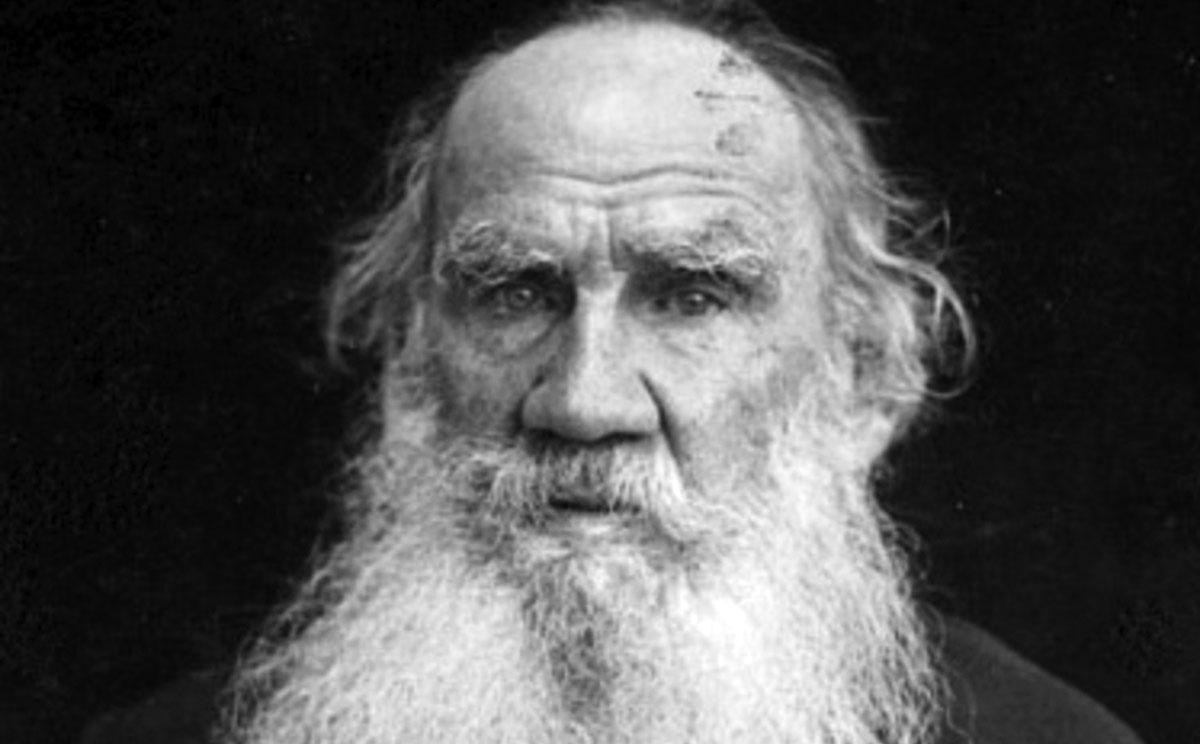
#329 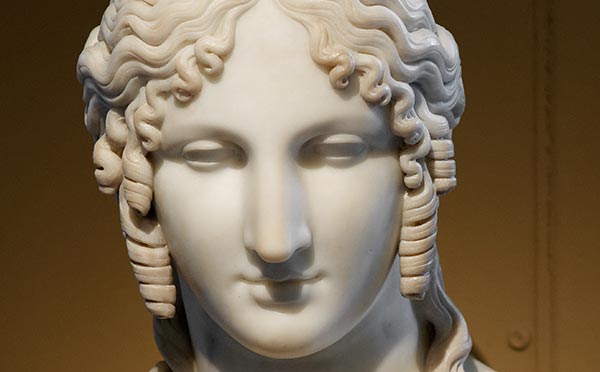 Once again we're going to put pop culture to the test. Today we've got a list of twenty four women, nearly all of whom you've probably heard of, and some of whom you're probably not sure if they are real people from history or fictional characters. You may know most of them, but I guarantee every listener that one or more will surprise you. Let's begin with perhaps the most famous woman from all of history: Helen of TroyThe face that launched a thousand ships Fictional. Although there is some scholarly support for the claim that the Trojan War may have actually happened in some form (probably around the 12th century BCE), almost of of its details — the Trojan Horse and the beautiful Helen whose abduction triggered the war — are purely literary inventions from classic Greek mythology. Although her earliest appearances in print are from Homer's Iliad and Odyssey, we think Homer drew her from oral legends dating back from more than a thousand years before the Trojan War. Molly PitcherBattlefield assistant Real. During the American Revolutionary War, Mary "Molly" McCauley was one of many women who attended George Washington's army, cooking, washing, and caring for the sick. During battles they would fetch pitchers of water to the artillerymen, both for drinking and for cooling the cannon. When her husband was injured during the Battle of Monmouth, Molly took over his post loading and swabbing a cannon. For her service, General Washington made her a sergeant. GuinevereKing Arthur's queen Fictional. Arthurian legend goes back at least a thousand years, and neither Arthur, Camelot, nor any of the other characters are believed to have been real people, despite centuries of scholarly speculation. Surprisingly, in the older tellings of the canon, Guinevere is usually portrayed as a temptress, her name meaning the White Enchantress, and it is the source of the modern girl's name Jennifer. ScheherazadePersian storyteller Fictional. This narrator of the ancient classic One Thousand and One Nights began as just another of the king's virgins, one of whom he married each day and executed the next. She kept saved herself by telling him the first half of a story each night, persuading him to let her see each new dawn so that he could hear the other half. By the time she told all thousand and one tales, the king had fallen in love with her and ceased his cruelty. Jane EyreEnglish feminist Fictional. She was the title character of Charlotte Brontë's novel of a woman growing up in a male-dominated culture, and with the exception of a number of parallels to Brontë's own life, is fictitious. The cover of an 1898 edition was illustrated with Wycoller Hall, near where Brontë grew up, and was occupied by an Elizabeth Eyre. SalomeAncient seductress Probably real. Although she's best known only from Bible stories for bearing the head of John the Baptist back from his execution, and for her provocative dance known to modern fiction as the Dance of the Seven Veils, the Roman historian Josephus does describe her as a granddaughter of King Herod the Great. Whatever dancing she may have done didn't make it into Josephus' records. Annie OakleyCrack sharpshooter Real. As a small girl she supported her mother and siblings by hunting game for food and to sell, and got so good that by age 15 she went up against a traveling exhibition shooter, and beat him. They soon married and her career was established, leading her to 15 years with Buffalo Bill's Wild West Show. She once shot a cigarette held by Kaiser Wilhelm; after World War I broke out, she wrote him and requested a second shot. Calamity JaneAmerican frontierswoman Real. Martha Jane Canary was a drunken, brawling heroine in the best pulp fiction tradition, well known and well liked for her hard work and good deeds. Many of her most storied exploits, such as Indian fighting and scouting for the Army, have come under suspicion of fabrication. She's best known for her relationship with Wild Bill Hickok, a relationship which was probably entirely one-sided; and so upon her death, friends of Bill's played one last joke upon him by burying Jane right next to him. CleopatraEgyptian queen Real. Although she's been swamped with fiction, the real Cleopatra was the last pharaoh of Egypt. She was of the Ptolemaic dynasty of Greek pharaohs who reigned Egypt after it was conquered by Alexander the Great. She had relationships with both Julius Caesar and Mark Antony, with whom she sided after Caesar's assassination. The combined fleets of Antony and Cleopatra lost a decisive naval battle to Caesar's successor Octavius, and both Antony and Cleopatra committed ritual suicide, Cleopatra choosing snakebite. Moll Flanders18th century con artist Fictional. She was the title character of Daniel DeFoe's famous novel, and was entirely fictitious. So fictitious, in fact, that most modern adaptations for the screen bear almost no resemblance to the original book. Be skeptical of film adaptations. Harriet TubmanSlave underground conductor Real. Born a slave between 1820 and 1825, she escaped as a young woman and made at least thirteen secret journeys from Philadelphia back into Maryland, first to rescue the members of her family, and then to rescue at least 70 others. She worked as a guide for the Union army during the Civil War and rescued hundreds more. She did all this while suffering from temporal lobe epilepsy, acquired as a young girl as the result of a beating. The AmazonsRace of lady warriors Probably fictional. Although they're frequently mentioned in ancient history texts fighting Greeks and Romans, they're even more frequently mentioned in classical mythology and no firm evidence has ever shown that their kingdom actually existed. Their homeland was always given as somewhere far away, sometimes Asia, sometimes Scythia, sometimes Turkey. Stories say their mothers cauterized one breast at birth so that it never developed; sometimes the left to facilitate archery, sometimes the right intending to strengthen the sword arm. BoudicaRoman-repelling British queen Real. In the first century, Boudica's husband the King of Iceni died, and Rome annexed the kingdom. After being flogged and driven from her home, Boudica rallied the Britons and led them in several victories against the occupying forces, but ultimately fell to the Roman soldiers' skill and superior weapons despite their greater numbers. Accounts are unreliable, but probably tens of thousands of Boudica's Britons died compared to only a few hundred Romans. Anna KareninaRussian 19th century aristocrat Fictional. She is the title character of Leo Tolstoy's great novel, which is a work of pure fiction, not based on any actual person. Her being mistaken for a real figure from history is perhaps due to so many authors and critics who consider Anna Karenina the greatest novel ever written. Personally, I couldn't get through Part I. Rosie the RiveterWord War II manufacturing icon Fictional, though representative of the unknown millions of actual American women who worked in factories to support the war effort. Their nickname came from the title of a popular song released in 1942 in celebration of their contribution. Lizzie BordenSuspected patricidal murderer Real. Although she was acquitted of killing her father and stepmother with an axe in 1892, Lizzie never escaped the stigma of being the suspected killer. She and her sister Emma inherited their father's considerable fortune and lived out their lives in luxury. BrünnhildeNorse shieldmaiden Fictional. She was a character in the Saga of the Völsungs, of which the earliest surviving depictions come from about the year 1000, relating a tale probably centuries older, of a condemned princess. The character's name was probably inspired by the actual Visigothic princess Brunhilda of Austrasia. Only in newer adaptations of the saga, most notably the Wagner operas, did Brünnhilde also become a Valkyrie, a sort of minor goddess who decided who lives and who dies in battles. Tokyo RoseWord War II propaganda radio host Fictional, though used collectively to refer to all such broadcasters. One front of the Japanese war on American marines was over the radio, attracting them with popular American music and sultry English-speaking female DJs, to spread demoralizing messages and encourage surrender. It wasn't too effective; the men generally found it hilarious and loved to listen. Queen of ShebaAncient ruler Probably real, although it's not known for sure where Sheba was. It may have been the southern tip of the Arabian peninsula, now Yemen. There's sufficient documentary evidence to support her authenticity, though precious thin archaeological evidence. Through a synthesis of both scriptural and secular histories, we can deduce that she probably ruled about 1000 BCE. MulanChinese soldier, star of the Disney film who took her father's place Probably real, though not certain. She probably lived during the Northern Wei dynasty around the fifth century, fighting for the Khan, as northern China was not under Imperial rule. After twelve years of distinguished service, her comrades accompanied her home. In an early poetic account, that was the first moment her comrades realized she was a girl. Lady GodivaNude equestrian Real. We're fairly certain which of the several possible 11th century Lady Godivas she was, the wife of a wealthy benefactor. The legend is less clear. She rode either naked or wearing plain rather than noble clothing, either in solidarity with the poor or in protest of her husband's high taxes. Later versions of the story added Peeping Tom, who violated her proclamation that nobody should look and took a peep, and was blinded for the crime. Typhoid MaryDisease vector Real. Mary Mallon was a cook in New York City in the early 1900s, and was an asymptomatic carrier of typhoid fever. The law required carriers to be imprisoned in isolation wards, which Mary was twice, changing her name and moving around and resuming her work as a cook, insisting that she was disease free. The law finally caught up with her and she eventually died in isolation, a minor celebrity. Between three and fifty people are believed to have died from her infected meals. Mata HariExotic dancer and super spy Real. Notorious for her provocative photographs and social climbing, Dutch citizen Margreet Zelle (stage name Mata Hari) traveled Europe throughout World War I. She was arrested in France, accused of spying for Germany, and executed by firing squad in 1917 at the age of 41. She refused a blindfold. Documents unsealed in 1970 proved that she truly was employed by Germany, and further documents scheduled to be unsealed in 2017 should settle the long-standing rumor that she was a double agent also employed by France. Maid MarianRobin Hood's love interest Fictional, but via a different path than her equally fictional outlaw. Marian did not appear in the earliest versions of Robin Hood lore, but was a separate character in her own right associated with the May Games festivities around Whitsunday, as early as the 1200s. As Robin Hood began to also be celebrated during the May Games, the two were naturally brought together in the folklore sometime in the 1500s. Note that the further back you go into history, the fuzzier the facts become; and although the preceding answers represent our best estimations, it's possible — even probable if not certain — that one or more of these is wrong. That's where the real excitement of research comes from: the knowledge that some of what we think we know is wrong. Some of these ladies who we think contributed to our history actually did nothing but garnish the pages of fiction, and vice versa. We should all heed the advice of Indiana Jones' nemesis Belloq: "Who knows, in a thousand years, even you may be worth something."
Cite this article:
©2024 Skeptoid Media, Inc. All Rights Reserved. |