




Student Questions: The Montauk Monster and Bee Sting Therapy
Skeptoid answers some more questions sent in by students, on a variety of short topics.
Filed under Feedback & Questions
| Skeptoid #178 November 03, 2009 Podcast transcript | Listen | Subscribe |
|
This week we answer some questions sent in by students. Today we're going to cover the Montauk Monster, the efficacy of skin moisturizer, bee sting therapy, aluminum antiperspirants as a cause for breast cancer, inexpensive gasoline, and the lifespans of homosexuals. If you're a student, please feel free to come to Skeptoid.com and submit your question for a future episode. Let's get started with a creepy monster story:
Hello Brian, this is Liam Heiland, and I'll be attending Hartwick College next year. I was wondering what your opinion on the Montauk Monster is.
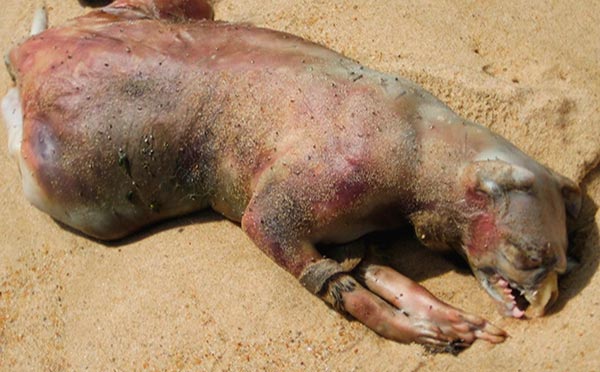
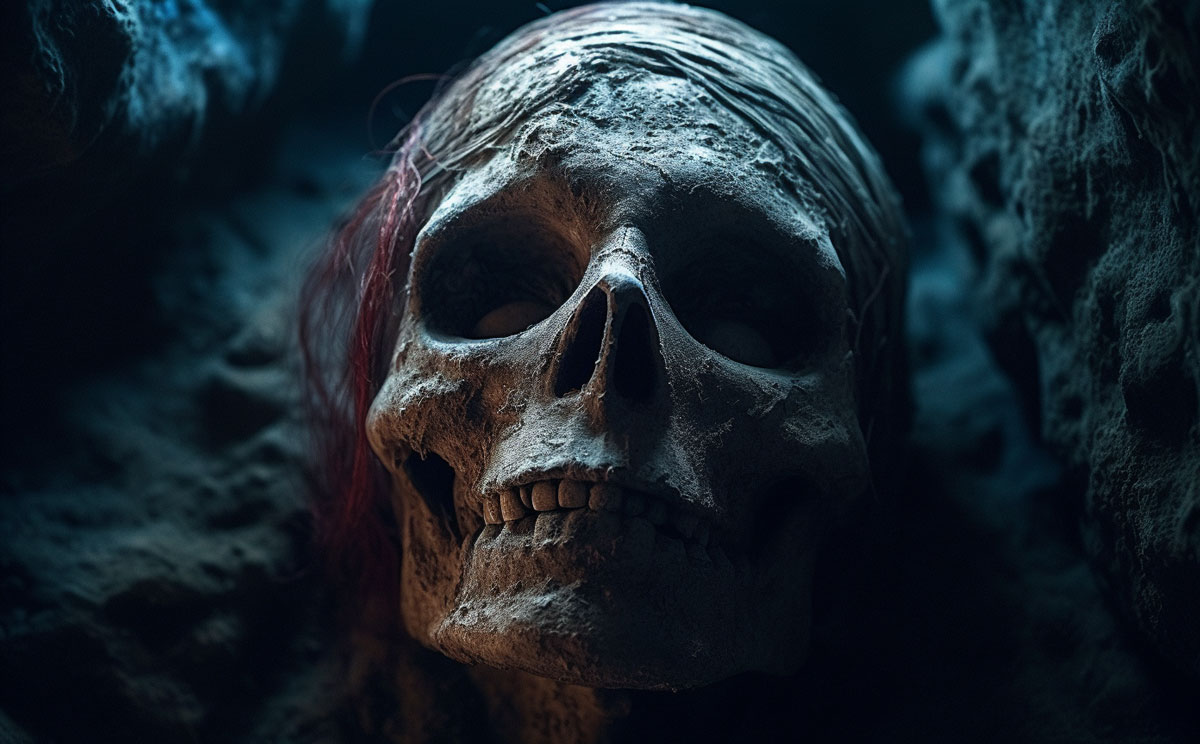
The Montauk Monster was the name given to a strange dead animal that washed up in Montauk, New York in 2008. For some time, there was all kinds of speculation in the media as to what it might be. It was hairless, discolored, bloated, and partially decomposed, making identification impossible for the layperson. Some conspiracy theorists even claimed it was an escaped genetic abomination from the Plum Island Animal Disease Center, a Department of Agriculture facility located offshore for the safe study of hoof and mouth disease.
In fact the Montauk Monster was simply a dead raccoon. Dead animals in water lose their fur rather quickly, leaving a hairless body. For some reason the Montauk Monster's nose was missing, either due to predation or decomposition or both, exposing the front part of its skull. It was also missing its top canines and top front teeth. In photos, you can see the holes in the upper jaw where these teeth were. If you do a Google image search for "Montauk raccoon" you'll find a comparison of an actual raccoon skull with a closeup photo of the Montauk Monster's head, including the exposed bone and tooth sockets, and the match is clear. But it sure was fun wondering whether it was some weird monster from Plum Island...
Hello Brian, I find myself perpetually confused by the pseudo-scientific claims of the beauty industry. I am 33 years old. Have I caused myself irreversible skin damage by never using moisturizer on my face?
You're certainly right to be skeptical of beauty industry claims. Reading any ad for a cosmetic product makes me gag: The all-natural fallacy abounds, as well as endless made-up statements about recharging, nourishment, regulatory molecules, rebalancing, and of course detoxification. I like to keep in mind that until relatively recently in human history, nobody ever used moisturizer; and even today, the majority of the world's population (including nearly all men) have never used a moisturizer. So all around you is good evidence that any benefit moisturizer may have for healthy people is not that big of a deal.
Moisturizer is, however, an effective treatment for a number of skin conditions. Retinol-containing lotions have been shown to improve the appearance of sun damaged skin. Another study found that moisturizer can reduce the symptoms of rosacea. Patients with atopic dermatitis also get some relief with moisturizer. But as far as long-term benefits for people who have healthy skin, I could find no studies either supporting or refuting this.
Sunscreen is, of course, another matter. Apply sunscreen whenever you go outside, and you'll end up far ahead. You'll have less sun damage and be far less likely to get skin cancer.
Hey Brian. My name is Drew, I'm a student at the University of Southern California, and I was wondering what your opinions were on Honeybee Sting Therapy.
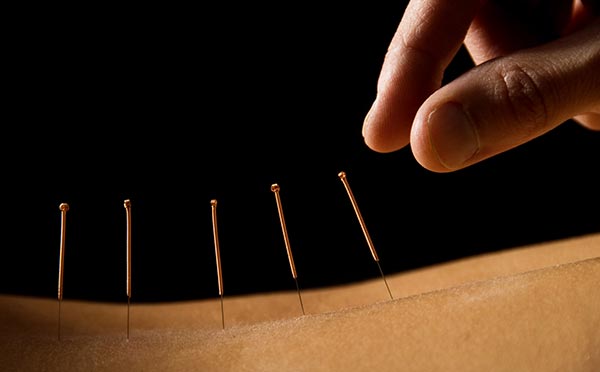
Yeeeaahhh... I actually hadn't even heard of this until I got this question. Apparently some people are marketing bee stings as an alternative therapy to treat a staggering array of conditions, including orthopedic injuries, cancers, multiple sclerosis, arthritis, eczema, chronic fatigue... I found one page where a guy gives you live bees to sting you and lists 35 different diseases he claims it will cure. Of course, for people who are allergic to bee stings, this "treatment" can easily be fatal; and for the rest, it amounts to little more than what we in the brotherhood call a "wallet extraction".
I found no research whatsoever supporting any kind of therapeutic use for honeybee venom, except in allergy shots for people who are at risk of dying from bee stings. This is called hymenoptera venom immunotherapy. Calibrated doses are carefully given (much less than you'd get from an actual sting), and this can confer a tolerance to the allergen. But even this is not guaranteed.
As far as the use of bee venom as an alternative therapy, this has all the signs of being just another excuse for quacks with no medical training to charge money for some useless trick that can be disguised as a medical therapy. But this is one case where I can absolutely guarantee you that if you give your money to one of these people, you will get stung.
Hi Brian, excellent show- this is Jim Van Dusen from Red River College in Winnipeg - I've heard and read that anti-perspirant has aluminum chloride in it that plugs pours and is a contributing factor in breast cancer! Please aim your skeptical eye (or nose) on this - thanks!
Aluminum is the active ingredient in antiperspirants, and it works by temporarily clogging sweat ducts. Some scientists have suggested that the aluminum can be absorbed by the skin where it can mimic the activity of estrogen in the cells. And since estrogen promotes the growth of breast cancer cells, a few scientists have connected the dots and suggested that antiperspirants can contribute to breast cancer.
This is one of those complicated medical questions that's hard to research because there is no clear consensus when you look at the studies that have been done. One survey of breast cancer survivors found that those who had used antiperspirants and shaved their armpits more frequently tended to have been diagnosed at a younger age. However nobody has been able to show that aluminum and related compounds are able to cause the genetic damage that leads to breast cancer. So far we have some correlations, and other studies finding no correlation, and no definitive causations. If there is a breast cancer danger from aluminum, the effect has been so small that we've not been able to clearly see it. So although the danger might be there, the evidence so far shows that it's probably not going to have an appreciable effect on whether or not you get breast cancer.
Either way, never take medical advice from any bonehead podcaster, any more than you should take it from any of a thousand web sites trumpeting the Big Pharma conspiracy to spread breast cancer through carcinogenic antiperspirants. Ask a medical doctor.
Hello Brian, I am Alessandro, and I would like to know if Arco gas is bad for your car.
ARCO is a discounted gasoline brand. Doesn't all gas come from the same commodities market? Is there ever a reason to buy expensive gas when the station next door offers the same octane level at a cheaper price? To get a truly authoritative answer, I consulted with Dennis Simanaitis, the longtime engineering editor for Road & Track. Dennis has forgotten more than most automotive engineers will ever know, and he always brings a rational, skeptical perspective to questions like this one.
According to Dennis, the more expensive name brands are more expensive for a reason: They're the ones doing all the R&D in the industry to improve the product and develop better additive packages. This means cleaner fuel injectors, longer lasting fuel lines, and hopefully more efficient combustion. Truthfully, it's unlikely that most people would notice any real-world difference between name brand and discount gasolines. Any benefit is likely to be cumulative over a long period. Whether you're getting 10 cents a gallon's worth of improvement is certainly debatable (and dubious), but it should be noted that the price difference is justified, at least to some degree, by more more work having gone into the product.
Hello, this is Trinity Sean Melvin from Northwest Florida State College, and I'd like to ask: what do you think about the claim that homosexuals have significantly reduced lifespans as compared to heterosexuals.
This is one of those rumors that's happily proclaimed by political groups, in this case the anti-gay lobby. But that doesn't make it false. In 2008, Danish researchers published a study in which they compared the mortality rates of over 8,000 people who married a same-sex partner. Interestingly, there was indeed a significant increase in mortality. The largest increase came from men who married before 1995, the period when AIDS was primarily in the gay male population and before effective AIDS therapies were available. For women during that period, and for men and women ever since, mortality among Danes with a same-sex partner is still 34% higher than for the general population, but only within the period of 1 to 3 years after marriage. The authors attributed this to people getting married to enjoy their final months together after a terminal AIDS diagnosis.
Another study from the Canadian Journal of Public Health confirmed that gay men are living longer now than they were prior to 1995. Because gays are one community in which AIDS incidence is higher than in the general population, gays overall do indeed have a shorter average life expectancy, though this has diminished as antiretroviral therapies have improved. But if you discount AIDS, then the difference in life expectancy disappears. Homosexuals without AIDS have the same life expectancy as heterosexuals. Thus, making the generalization "Homosexuals have reduced lifespans"is a bit like saying "Civil war veterans had poor manual dexterity" without happening to mention that the reason was that more of them were amputees.
You should follow me on twitter here.
© 2009 Skeptoid Media, Inc. Copyright information
References & Further Reading
Darbre P.D,. "Aluminium, antiperspirants and breast cancer." Journal of Inorganic Biochemistry. 1 Jan. 2005, Volume 99(9): 1912-1919.
Frisch, M, Brønnum-Hansen, H. "Mortality among men and women in same-sex marriage: a national cohort study of 8333 Danes." American Journal of Public Health. 1 Jan. 2009, Volume 99, number 1: 133-137.
McGrath K.G. "An earlier age of breast cancer diagnosis related to more frequent use of antiperspirants/deodorants and underarm shaving." European Journal of Cancer. 1 Jan. 2003, Volume 12(6): 479-485.
MS Society. "No beneficial effect of bee venom in study using animal model for MS." MS Multiple Sclerosis Society of Canada. MS Society, 2 Jun. 1998. Web. 23 Dec. 2009. <http://www.mssociety.ca/en/research/CAT980602.htm>
Tucker-Samaras, S., Zedayko, T., Cole, C., Miller, D., Wallo, W., Leyden, J.J. "A stabilized 0.1% retinol facial moisturizer improves the appearance of photodamaged skin in an eight-week, double-blind, vehicle-controlled study." Journal of Drugs in Dermatology. 1 Oct. 2009, volume 8 Number 10: 932-936.
Wallo, W., Nebus, J., Leyden, J.J. "Efficacy of a soy moisturizer in photoaging: a double-blind, vehicle-controlled, 12-week study." Journal of Drugs in Dermatology. 6 Sep. 2007, Volume 6 Number 9: 917-922.
Wood, E., Low-Beer, S., Bartholomew, K., Landolt, M., Oram, D., O'Shaughnessy, M.V., Hogg, R.S. "Modern antiretroviral therapy improves life expectancy of gay and bisexual males in Vancouver's West End." Canadian Journal of Public Health. 1 Mar. 2000, Volume 91, number 2: 125-128.
Reference this article:
Dunning, Brian.
"Student Questions: The Montauk Monster and Bee Sting Therapy." Skeptoid Podcast. Skeptoid Media, Inc.,
3 Nov 2009. Web.
6 Sep 2010. <http://skeptoid.com/episodes/4178>
Discuss!
Remember, you should always read with skepticism the comments of anyone too lame to put their real name & city.
"Apply sunscreen whenever you go outside, and you'll end up far ahead. You'll have less sun damage and be far less likely to get skin cancer."
Or you'll be more likely to get melanoma, the aggressive skin cancer.
http://en.wikipedia.org/wiki/Sunscreen_controversy
"Dead animals in water lose their fur rather quickly, leaving a hairless body."
Dead animals receiving a "Viking funeral" lose their fur even more quickly. Google "Montauk monster" and "Viking".
Max, Boston, MA
November 03, 2009 4:32pm
I have to laugh--while reading about keeping a sceptical eye on the claims of the beauty industry, right next to the paragraph was an ad for a miracle moisturizer that would revitalize skin (although a celebrity is involved, so it must be true). Good ol' targeted ads.
Sean, Eastend SK
November 04, 2009 9:45am
Brian, great episode as always. I think your dismissal of moisturizer as a treatment for anything other than skin conditions was a little off the mark. You say that
"until relatively recently in human history, nobody ever used moisturizer;"
Until relatively recently in human history we havent done a lot of things, like wash our faces and bodies with soap or swim in clorinated pools. If I get covered in dirt or oil at work and wash my face with soap it gets dry and cracks. If I go swimming and do laps for a few hours I get dry skin.
Your assesment of the beauty industries claims about their products seemed accurate to me but you missed the point of moisturiser. Ive got a $5 1L bottle that I use, when I have dry skin.
Alex Benn, Perth, Western Australia
November 04, 2009 5:14pm
What do you mean by recent history? If you mean hundreds of years that may be incorrect. According to a show on the History channel the ancient egypitans were using perfumes (of course not made by modern assembly methods). They also had a form of birth control using aligator dung.
Robert Mcbride, Columbia, MD
November 05, 2009 10:31am
I think recent history in this context should be taken to mean recent in evolutionary history. Ie Modern Humans did not evolve using modern soap or moisturiser specifically.
We have evolved to not require cosmetics to reproduce effectively. It is not therfore surprising that we are not evolved to use modern soap on the skin, or to swim in clorinated pools.
Alex Benn, Perth, Western Australia
November 06, 2009 1:04am
"It is not therfore surprising that we are not evolved to use modern soap on the skin, or to swim in clorinated pools."
Yeah, that sounded weird coming from Brian, who has no problem with GMOs, aspartame, synthetic pesticides, etc.
Besides, Brian undermined his own argument by recommending sunscreen.
Max, Boston, MA
November 06, 2009 1:46am
Alex, that's why I asked.
Max why was recomending sunscreen a bad move? Are you suggesting that sunscreen preventing skin cancer is a hoax?
Robert Mcbride, Columbia, MD
November 06, 2009 10:06am
I couldn't find anywhere to just say thanks for including my question about Honeybee Sting Therapy, so... Thanks! The friend of mine who first suggested looking into it as potential assistance for my neurological pain in my legs also says thanks - while I was indeed skeptical at first, you absolutely convinced a person who may have been on the fence about it. So... Thanks!
Mangraa, Los Angeles
November 06, 2009 10:31am
Robert,
Recommending sunscreen undermined the argument that we don't need recent inventions. If this argument applies to moisturizer, then why not sunscreen?
That said, my first post in this thread links to the sunscreen controversy.
Here it is again
http://en.wikipedia.org/wiki/Sunscreen_controversy
The theory is that sunscreen prevents the less dangerous skin cancers, but INCREASES the risk of deadly melanoma.
Different reasons are hypothesized. Perhaps sunscreen inhibits vitamin D production in the skin. Or people don't apply enough sunscreen. Or some brands only block UVB but not the more harmful UVA. Or sunscreen itself is carcinogenic.
Max, Boston, MA
November 06, 2009 9:49pm
I think this line of comments about whether or not brian undermined his argument is missing the point a bit. Its not an argument about that we don't need recent inventions; compare the life expectancy of pre-soap civilization to post-soap civilization, for example. As for sunscreen, its absorbing energetic photons and preventing them from interacting with molecules in the skin. For moisturizer, no moisturizer has ever touched my babyface, and I'm as silkysmooth at 29 as I was when I was 14... enough that people ask if I'm a freshman at the university where I am finishing my phD. Brian is railing against the detox and nutrients myths perpetuated by the industry to get more women smearing eucalyptus oils on their foreheads.
Nate, Los Angeles
November 07, 2009 5:38pm
Max,
Followed the link to that wiki and though I'm not an expert on the subject it seems that the people who hold the view sunscreen as dangerous rely on anecdotal evidence or meta studies. Even if this contraversy has merit that isn't a good reason to be against advancement of technology.
Robert Mcbride, Columbia, MD
November 09, 2009 10:18am
My grandfather suffered from rheumatism; he also was a hobby beekeeper. He died before I was born, but according to my mother when his rheumatism flared up he used to stick his arm into a bee hive to get himself stung.
I don't know whether the bee venom brought him actual relief or whether the pain from the bee stings temporarily masked the other pain. Or, perhaps, someone made him believe that it would help and it was just a placebo effect.
The bee stings didn't cure him, but apparently they did help with the symptoms.
Hermann, St. Catharines
November 23, 2009 1:12pm
Brian, what do you know about Chevron's techron? I heard it was techroline, it's the stuff left over after the gas is made. It's very corrosive and toxic and expensive to dispose of. So they made cleaner burning gas and added it as a valve cleaner. Conspiracy, or 'people do'?!?
tim, oakland
January 04, 2010 11:40am
Actually, bee venom and wasp venom contain a diversity of active components. The glands are related to mammalian salivary glands that have anti-microbial factors and different kinds of peptides. While bee venom in its raw form obviously has activity, when extracts of bee venom are prepared, or the peptides (for example, kinins) are purified, they can cause a rapid drop in blood pressure. This fact has been used for devising some therapeutic agents (used in hospitals), where the enzyme that degrades the kinin is blocked by the inhibitor called Trasylol (Aprotinin). My PhD supervisor contributed to the field of kinins, and occasionally talked about his early research at University College London, in the 1950s where he housed a wasp nest in the laboratory. Personally, I never studied the activity of raw bee sting venom; however, the extracts and the purified peptides have definite medical and pharmacological properties.
Glen, Victoria, BC
January 13, 2010 8:46pm
When it comes to moisturizer, I say, "If it is dry, then you must apply." If your face feels tight after washing it, or in the winter, or whenever, or if you notice any flaking or chapped skin, employ the lotion stat if you want your skin to be as comfortable and healthy-looking as it can be. I put an emphasis on healthy-looking because except in the case of severely chapped and raw skin, your skin will more than likely be able to provide enough oil to keep you skin from coming apart at the seams. On the other hand, I doubt there is an amount of lotion that could be harmful (other than creating unsightly clogged pores) so there is no reason not to slather some on. Fun fact! Some people with darker complexions moisturize often to ward off "ashiness", which is dry skin that is deemed unattractive. This is often true for both sexes. However, people of all skin colors are susceptible to becoming "ashy". I know I am, and my makeup color is about as close to Edward Cullen as you can get while still retaining a well functioning circulatory system. If more people could see just how "ashy" they get without regular applications of moisturizer, I predict more people of both genders would have more incentive to keep their skin well moisturized. If you skin is uncomfortable, try a squirt of lotion. This PSA has been brought to you by the "Its winter and your hands are chapped so use some lotion (and also try some chapstick)" foundation.
Steph, Columbus OH
January 24, 2010 12:30am
Make a comment about this episode of Skeptoid (please try to keep it brief & to the point). Anyone can post:
You can also discuss this episode in the Skeptoid Forum, hosted by the James Randi Educational Foundation.
Join the Skeptalk email discussion list.
What's the most important thing about Skeptoid?


First.
I also heard that aluminum in deodorant could give you alzheimers. Whuzzup Widdat?
Edward Wezenski, New Haven CT
November 03, 2009 9:19am