




Who Is Closed Minded, the Skeptic or the Believer?
Skeptics and believers both tend to accuse each other of similar faults in their thinking.
Filed under Logic & Persuasion
| Skeptoid #134 December 30, 2008 Podcast transcript | Listen | Subscribe |
|
The tagline for this podcast, buried somewhere in the RSS feed that nobody ever sees, is "The truth always hurts someone." This axiom is reproven every week when my Google Alerts show me new references on the web to Skeptoid, usually in somebody's blog, usually lambasting me as a paid stooge for the government or at best, "just another closed-minded debunker". If I don't accept every shred of anecdotal whimsey as absolute proof of the supernatural, I'm "closed minded". If I have not been sufficiently impressed by evidence to move from the null hypothesis, I'm "trying to justify my preconceived notions". If I am moved by the results of well-performed studies that have passed peer review and contribute to a scientific consensus, I've "taken the red pill and gone down the rabbit hole to become a true believer in the lies of Big Science".
Now, take a moment to reflect. Are those not the same things skeptics say about believers? They are, exactly. Skeptics and believers tend to follow the same thought processes, and come to conclusions that validate their own methods and beliefs, and invalidate those of their opponent. More than once, I've had a conversation with a well read, intelligent, articulate true believer, who charged me with the same flaws in my logic that I found glaring in his. I've watched debates between the top names in science and pseudoscience, and seen these conversations deterioriate into little more than "Takes one to know one", "Nuh-uh", and "I know you are, but what am I?"
To be an effective skeptic, it's critical to understand that your opponent is not simply a lunatic. Maybe some are, but the majority are as intelligent and thoughtful as you. Dismissing your opponent as crazy is a weakness in you. When a skeptic talks with a believer, he often finds the believer to be closed minded, in that the believer is not open to any evidence that challenges his belief. The fact is that the believer also finds the skeptic to be closed minded, in that he does not accept the evidence that supports the belief. From the perspective of each, each is right. And that's really important to understand.
Being closed-minded is only one crime of which skeptics and believers accuse each other. Both also accuse each other of being believers, and consider themselves skeptics. For example, a 9/11 Truther honestly believes that what everyone observed on 9/11 is not what happened, and that the consensus of what witnesses, victims, law enforcement, and emergency services experienced on that day is merely a government fabrication. They are skeptical of that fabrication, and thus consider themselves skeptics. They consider those of who accept what was reported on that day to be believers, as if we deliberately close our minds to their hypothesis and instead uncritically accept the "official story".
Similarly, proponents of non-scientific alternatives to healthcare, like reflexology or straight chiropractic or reiki, honestly consider their mistrust of evidence-based medicine to be well-founded skepticism. They consider those of use who "blindly accept what doctors and pharmaceutical companies tell us" to be uncritical believers. From their perspective, that's a reasonable evaluation.
People who watch and believe the ghost hunting shows on television consider what they see to be scientific evidence of ghosts, and that skepticism of the claim that ghosts don't exist is more than justified. They honestly consider those of us who don't buy into those shows to be turning a blind eye to the evidence, and insisting on a stubborn belief that ghosts have never been shown to exist. From their perspective, we are the ones who are closing our minds to the evidence and not being scientific.
I'm not even sure what being "closed minded" is. I guess it means that you won't give a chance to any evidence of any quality. If that's true, then closed minded is probably not a term that genuinely applies to either skeptics or believers. The first step is to be selective about what evidence we turn away at the door, and this is where the real difference is. We all turn away some of the evidence at the door. We have to. It would be impossible to get through your day if you had to devote a full-fledged investigation into every minute suggestion or claim or anecdote that comes along.
And here's an important point. This is a charge that I think we are nearly all guilty of, to some degree: In their process of selecting which evidence to turn away at the door and to which to give further attention, skeptics and believers both tend to select evidence they are likely to be predisposed to accept. Everyone does this. Whether you know anything about the scientific method or not, whether you believe in Bigfoot or not, whether you're trying to justify a preconceived notion or not, and whether you're a skeptic or a believer, we all have our own individual standards by which we select evidence to consider.
This filtering is usually done with a bias, because most people don't happen to be following a formal research protocol every minute of every day. Here's the way this evidence filtering usually plays out in everyday life:
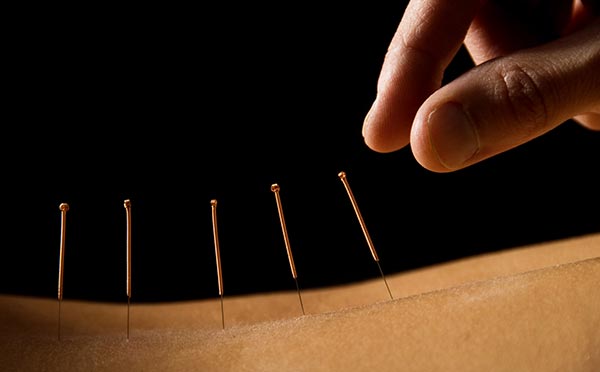
I say: My dad's diabetes was cured with acupuncture.
The skeptic says: We already know there's no plausible connection between the two, I'm not interested in that anecdote.
The believer says: I'm very interested in what acupuncture can do, this is one more piece of evidence of its effectiveness.I say: Pfizer just announced its new cancer drug has been approved and found to be safe and effective.
The skeptic says: That system's not perfect but it's the best we have, glad to hear we have a new effective option.
The believer says: I'm not interested in any claims made by a for-profit pharmaceutical company.I say: Bob saw a UFO and he could see aliens waving through the window.
The skeptic says: A fun story, but hardly useful as evidence of anything.
The believer says: Taken by itself, this story may not be great evidence, but it adds to the mountain of evidence of alien visitation.
Even though both of these people follow the same thought process, the skeptic is going to be right more often than the believer. Why? He's no more or less closed minded or biased in the way he shuts out information. The only reason his decisions are usually going to be better is that he has a better general science background. He has a general understanding of what's clinically known about acupuncture, rather than what's in newspaper advertisements. He has a general knowledge of the drug research and approval process. He has a general understanding about quality of evidence and the value of anecdotal evidence.
Here's a real life example. I had a recent email exchange with Stanton Friedman, probably the biggest promoter of alien visitation. He's best known for his promotion of the Roswell mythology, following the National Enquirer's 1978 reprinting of the original 31-year-old uncorrected article from the Roswell Daily Record. In our emails, Friedman accused me of closing my mind to all the evidence out there. Fair enough; I do filter out evidence that's purely anecdotal, ambiguous, irrelevant, or otherwise useless. So I asked him if he could provide a single piece of useful, unambiguous evidence of alien visitation. He replied in part:
I certainly don’t have a piece of a saucer. There are about 4,000 physical trace cases from about 90 countries... Having a fingerprint doesn’t provide the finger, but proves one was there... We are dealing with intelligently controlled ET spacecraft.
Friedman is absolutely right that a fingerprint proves a finger was there. A fingerprint is unambiguous and has no other explanation. But what are these 4,000 physical traces? We'd have to look at each one individually and evaluate it; we don't just say "Well 4,000 is a big number, some of them must be real." If any are conclusively and unambiguously parts of an alien spaceship, with no other possible explanation, then we'd have something worth looking at. What we don't ever do is credit 4,000 pieces of poor evidence in the aggregate as one piece of good evidence. If Friedman followed a responsible research protocol, he would refuse to draw a conclusion from 4,000 useless items of unknown origin. I look at it and see 4,000 arguments that no good evidence has been found. Friedman looks at the same thing and says, quote, "We are dealing with intelligently controlled ET spacecraft."
So what is the real difference between skeptics and believers? It's disingenuous to claim that either is more closed-minded than the other; everyone sits somewhere along that spectrum, nobody is immune. It's disingenuous to say that either is more of a stubborn believer than the other, or that either tends to support their preconceived notions more than the other. Probably all of us are more guilty of these than we like to admit, especially in less formal environments. The real difference between skeptics and believers is that skeptics have a useful foundation of scientific knowledge and an aptitude for following the scientific method. These tools allow us to distinguish poor quality evidence from good quality evidence. And, importantly, they help restrain us from drawing poorly supported conclusions from the evidence that we do accept, no matter how strongly we want those conclusions to be justified.
So don't focus on buzzword labels like "closed minded" or "true believer". You can be both of those things and still be able to properly analyze evidence and draw a supported conclusion. You can also be guilty of neither fault, and yet be unable to distinguish a well-supported conclusion from mountains of poor evidence. Focus on the method behind the conclusion. Focus on the quality of evidence that supports the conclusion. The ad-hominem attack of "He's closed minded" says nothing at all about the quality of evidence.
You should follow me on twitter here.
© 2008 Skeptoid Media, Inc. Copyright information
References & Further Reading
Achinstein, P. Scientific evidence: Philosophical theories & applications. Baltimore, MD.: The Johns Hopkins University Press, 2005.
Burton, Robert. On Being Certain: Believing You Are Right Even When You're Not. New York: St. Martin’s Press, 2008.
Kruglanski, A.W. The psychology of closed mindedness. New York: Psychology Press, 2004.
Shamoo, A., Resnik, D. Responsible Conduct of Research. Oxford: Oxford University Press, Inc, 2009.
Shermer, M. How We Believe: Science, Skepticism, and the Search for God. New York: Henry Holt and Company, LLC, 2000.
Reference this article:
Dunning, Brian.
"Who Is Closed Minded, the Skeptic or the Believer?" Skeptoid Podcast. Skeptoid Media, Inc.,
30 Dec 2008. Web.
6 Sep 2010. <http://skeptoid.com/episodes/4134>
Discuss!
Remember, you should always read with skepticism the comments of anyone too lame to put their real name & city.
Simple definition anytime you hear these terms. Closed minded is anyone who disagrees with me. Open minded is anyone who agrees with me.
Landon, Charlotte, NC
December 30, 2008 11:25am
(Nihilists/closed-minded) Wow, name-calling. Yes ladies and gentlemen we have lowered the rules of oratory and rhetoric to "I know you are but what am I" standards.
Extraordinary claims require extraordinary evidence. Having an open mind does not mean being empty-headed.
We are inundated with sensationalism from the media, frauds from con-men, charlatans, politicians and religious figures and we are expected to except them at face value. If you expect someone to believe in your lucky astrology mood watch you better bring something more than blurry photos and youtube videos.
Jerry York, Jacksonville Florida
December 30, 2008 3:48pm
I feel like that last one was directed at me, if so, I hope no one thinks I am calling Nihilists "True Believers", not at all.
I was referring to those who claim to be skeptical but are really so interested in debunking claims that they are no more interested in finding the Truth than a person who believes every conspiracy story they hear. There should be open-mindedness on both sides of the discussion.
Adam D. Jones, Dallas, TX
December 30, 2008 4:56pm
I have a hard time dividing people into skeptics and believers -- probably because, as Brian suggests, it's a lot more complicated than that. But I do think that there are people who value evidence as a way to learn and reach conclusions about the world. And there are also people who really have no interest in evidence at all, but pretend they do because they want to persuade others to take their views seriously, and they think that professing to value evidence is the best way.
I see Friedman in the latter camp. He starts at the desired conclusion, then adds window dressing and calls it evidence. The quality of the evidence is not a part of the equation because its only value is cosmetic.
In a side note, a fingerprint does show that the finger exists, but it's possible to make a cast of a finger that can leave fingerprints in places where the finger has never been. Such methods have been used to hack print-based biometric security measures. See http://www.schneier.com/crypto-gram-0205.html#5
Mark Smith, Lansing, KS
December 30, 2008 5:46pm
The test, to me, of the degree of openmindedness has always been, how likely is a person to chnage their minds given new evidence.
Skeptics are more likely to do that in my opinion, because they respect the scientific method in determining what's true and what isn't.
Skeptics also tend to have this respect for science in place of biases and ideologies that cause people to abandon rationality and reason.
Fred Lunjevich, Auckland, New Zealand
December 30, 2008 9:03pm
Skeptics are on solid ground. They have nothing to loose. They have nothing said and done wrong. The article seems to be only for fanatics to come forward and think a little bit.
Edward Palav, Wahington DC
December 30, 2008 9:34pm
Thanks, Brian! You nailed it in this one. What seperates skeptics from the believers is evidence and good working knowledge of the scientific method. We know what constitutes strong evidence and weak evidence. I highly recommend Joe Nickell's books and interviews. He equally criticizes believers and skeptics for not wanting to get to the truth. He calls it humanistic skepticism. Take what believers have to say seriously, listen to them, investigate their claims(if you can), and get to the truth behind their claims. Believers will believe you and they will love you for it. According to Joe Nickell. That sounds like a better approach than saying, "That's bullshit!" or "You're full of shit!"
Josh Hunt, Cleveland, OH
December 31, 2008 9:26am
Brian,
I enjoyed this particular podcast a lot.
Perhaps, its for another podcast or perhaps it was looked over for this one. But I would have liked to have hear a further contrast between skepticism and denialism (as opposed to this constrast between skepticism and beleiving).
I think its a symptom of exactly the same thing, poor skills in evaluating what is good evidence and what is bad.
Other than that, still greatly enjoying your show.
Techskeptic, Troy, NY
December 31, 2008 11:31am
This is easily one of my favorite episodes! I've thought about this a lot myself, glad to have it all cleared up.
Also,this probably isn't the proper place to do this, but I can't think of any place else--might I suggest an episode on the whole Beatles "Paul is Dead" conspiracy?
Spencer, Los Angeles, CA
January 01, 2009 4:05pm
ah!, the everlasting feud: sceptics vs. believers.
I must admit I am a sceptic myself (facts are facts, opinions are biased), but then I also am a bit of a 'devil's advocate'.
I mean, how can you prove something is real or not - particularly if based on perception? How can you prove colour to a colour blind (I got this one from a ghost-believer friend, and been pondering on it since)?
...but the debate is fascinating.
Rosa, Porto
January 02, 2009 7:34am
I really enjoy the more "meta-skeptic" episodes like this one, and your "how to talk to a non-skeptic" episode.
I think addressing the issues of communicating helpfully and honestly with "believers" does more to serve the goal of expanding critical thinking and evidence based reasoning than the usual debunking of particular phenomena.
I also feel there could be more important topics addressed than the usual debunking of UFO/New Age Healing /Ghost Story type of thing.
Why not topics such as "Will the bailout of wall street/ Detroit help any individuals?" or "is climate change man made?" or" is clean coal really possible?" etc...
These questions are much more important to more people than weather or not bigfoot exists, IMHO.
As always, keep up the good work.
Logan, Seattle WA
January 02, 2009 8:53am
This podcast reminds me of the tagline to The X-Files TV show, "I want to believe." Is wishing for something going to make you more or less skeptical? Can you see a UFO and say it's just something unidentified or take the leap and say it's "intelligently controlled ET spacecraft". Maybe it depends on whether or not your selling a book.
Mike S, Chatham, ON Canada
January 02, 2009 11:49am
Brain, great podcast!
To Rosa: You could show them the signature of the color detected by an instrument that CAN see the color. If something is real we should be able to observe it objectively, at least by indirect means (such as a black hole).
John Draeger, Madison, WI
January 02, 2009 7:28pm
I think you missed the biggest difference between sceptics vs. believers.
As a sceptic we know we could be wrong and will say that. You can never get a believer to say they might be wrong.
Let's look at the UFO issue. How cool would it to be wrong about UFO's? There is nothing to say we are...I don't get joy out of saying that's a street light not a UFO.
Ed, Redlands
January 03, 2009 9:59am
This (the subject of the podcast and a lot of Brian's conclusion) is called "confirmation bias", and it's a well-known phenomenon -- one is more accepting of evidence that fits one's existing beliefs.
I take issue with this statement of Brian's: "The real difference between skeptics and believers is that skeptics have a useful foundation of scientific knowledge and an aptitude for following the scientific method."
Stanton Friedman has training as a scientist. He has (or had) enough aptitude to get a master's degree in physics. This can't be the differentiating factor between believers and skeptics.
Rather, I think it has to do with one's emotional response to chaos -- in particular, the sense that life is bigger than us and out of control. The believer needs a big theory that ties everything together (a conspiracy, aliens, whatever), to impose an (imaginary) order onto the chaos. Skeptics don't have that need, or perhaps less flatteringly, their need is to contain the chaos by recognizing it as such. Or perhaps in extreme cases, their need is to feel that everything can be reduced to existing knowledge.
Paul, Walnut Creek, CA
January 03, 2009 10:17pm
I think the truth is that the believer is lazy. They want this insight into the inner workings of the universe but they don't want to go through the effort to get it. Astro and particle physics, micro biology and molecular genetics, these are hard things to learn but they give you the insight into how life and the universe work. Belief is a cheap short cut.
Stan Friedman wants to be able to answer the all important question, "are we alone", but can't be bothered to do the real work to get there. He's settling for a cheap, fake substitute instead of hard earned knowledge. Sure, he works at defending and spreading his schtick but ask him to do the late shift at SETI or look for signs of water on planets orbiting stars hundreds of light years from Earth, forget it.
Creationists probably do this too. It's hard to learn about the origins of life but it's easy and comfortable to read a Bronze age Myth and call yourself superior to everyone engaged in long difficult inquiry.
The difference between belief and skepticism is between the cheap and easy and the hard and valuable.
Craig, Washington DC
January 04, 2009 10:46am
One consequence of confirmation bias is that juror biases outweigh the evidence presented in a trial.
http://www.yournextjury.com/jt0106.htm
http://www.yournextjury.com/PreDecisional.pdf
"We have found that only 12.4% of jurors change their verdicts
between the conclusion of opening statements and the end of trial."
Jurors quickly make up their minds which side is credible. For example, if a juror is predisposed to trusting doctors, he will reject all evidence that points to medical malpractice. Evidence only becomes important during jury deliberation, when jurors have to reach a unanimous verdict. At that point, they may use evidence to persuade each other.
Rosa, the way to prove color to a colorblind person is to draw a red square and a green circle, and have a bunch of people identify which shape is green. Most will point to the circle.
Psychic powers could be tested in a similar way.
Max, Boston, MA
January 04, 2009 11:30am
While your comments on believers versus skeptics are interesting, they are not always on the mark. One of the comments regards education and foundation in scientific methods. Many professed skeptics have no such background and base their beliefs on statements of supposedly learned people and not on any evidence for or against a subject. You yourself have chosen to discount any of the tools of the Ghost Hunters in their attempt to gather evidence. Just because you don't understand how a non-material entities might effect the electromagnetic spectrum or cause pockets of hot or cold spots is no reason to discount the information. Likewise witnesses of UFOs are not just uneducated people as some skeptics tend to want to believe, but include Air Force personnel, Police officers and NASA Scientists.
Likewise the testing protocols for new drugs tend to not be so impressive, I have on numerous occasions looked at the detail of the new drugs to see "success" rates of only slightly larger than the placebo group. How many of these drugs have had to later be recalled as they resulted in organ failures or death in spite of the supposed safety of the medication as determined by the tests. Not everything is as it seems, we cannot always take the "Educated" opinion as the truth.
Paul Confer, Denver Colorado
January 04, 2009 2:47pm
Paul,
The "null hypothesis" is the scientific consensus. The more an alternative hypothesis deviates from the null hypothesis, the more evidence it takes to reject the null hypothesis.
Skeptics would say that the argument that Air Force officers make better UFO witnesses is an appeal to false authority. They might be less confused by airplanes, but they could still be confused by celestial bodies and optical illusions.
What unsafe ineffective medicines do you have in mind? Like when the FDA advised against giving children cough syrup because of the risk of serious side effects?
Max, Boston, MA
January 04, 2009 5:01pm
personally I think the believer thends to tie many assumptions into facts based on ignorance of supporting facts, and sometimes even close to the dishonest or presumptive argument that becomes a fallacy.
a person that has a master in physics can be dishonest.
a skeptic tends to have a more honest and objective approach than a believer, the believer in him/herself has a necessity or an unexplained result or unsupported conclusion, hence the "connecting of the dots" tends to be more flawed.
alexin007, california
January 05, 2009 12:15am
Brian,
There are two problems with your approach. One of them is logical in nature: from the premise that everybody is 'closed-minded' to some degree, does not follow that all people are equally closed-minded, and that the difference does not reside in being more/less closed-minded.
The other problem is that there have been cases of 'mad scientists,' such as Linus Pauling or 2-3 creationists, who became true believers in spite of the fact that they understood precisely what is evidence and what not.
The problem with them seems to be that they are emotionally attached or opposed to a belief. Their emotions interfere with their judgment. Otherwise, it would be pretty easy for many of them to see that they have been deluding themselves.
delta, atopia
January 06, 2009 3:01pm
Paul,
Ghost Hunters need to provide evidence that there are ghosts manipulating their equipment. You just saying "non-material entities" might effect EM doesn't mean anything. So far the idea that a "non-material entity" manipulates the EM spectrum is just something some guy made up.
This would partially prove my previous point. You want some deeper understanding of an important question: "Do we survive death". Instead of doing the years of work studying near death experiences, the biological process of dying or anything else, you get a meter, see a spike and whamo there's a ghost. Now you have this deeper understanding without all that pesky hard work to get there.
Craig, Washington DC
January 07, 2009 10:44am
Delta,
A scientist, whether or not they KNOW a lot, is still bound to follow the scientific method. If they don't, their stauts as 'beleivers' or 'wackos' or whatever we call them is based on whatever NEW standards they apply to their thinking, not on any degrees they've earned. Also, a fifteen year old girl can apply critical evidence-based thinking without earning any degree. It's about method.
"Emotions" or being "close minded" should not be an issue, if things are being judged soley on the quality of evidence.
Frankly, I'd love proof of an afterlife. I miss my grandma. But some guys on basic cable saying 'graphs on these machines are behaving in ways we can't explain' is not exactly compelling evidence for anything, let alone the existence of ghosts.
Morgan, Tracy, CA
January 07, 2009 11:28am
Here's a whole bunch of scientists and writers answering the question, "What have you changed your mind about?"
http://www.edge.org/q2008/q08_1.html
Newsweek's Sharon Begley criticized them for talking about values and ethics without budging on scientific theories they're invested in.
http://www.newsweek.com/id/177740
But it looks like she's just upset that nobody talked about the subjects of her past columns: hormone replacement therapy, cause of Alzheimer's, and dinosaur extinction.
It's an awesome read that's hard to put down. Check it out.
Max, Boston, MA
January 11, 2009 9:12pm
I like that you spoke about the quality of evidence in this podcast. I will definitely refer some people I know back to this page when we get into the types of debates you have listed.
Being a good sceptic requires a lot of research and it is not always easy to find the correct research. Fortunately, if you are at a university (as I am) it is possible to get access to many journal articles online.
Skeptoid also makes for a great starting point when doing some research. Thanks for the hard work Brian!
Frank, Stellenbosch, South Africa
January 13, 2009 8:02am
Question for skeptics: What would it take for you to reject the scientific consensus on a subject? Glaring logical fallacies? High-profile scientific misconduct? Scientific hubris? Consensus positions that contradict personal experience?
If someone comes along with an alternate theory, how do you tell if he's right? Does it help if he is a prestigious scientist, maybe even a Nobel Laureate? Consider Linus Pauling, Barry Marshall, Roger Penrose, and Robert Bussard.
Max, Boston, MA
January 14, 2009 3:55pm
Repeatable results.
Craig, Washington DC
January 16, 2009 2:27pm
A well-thought-out paper detailing the evidence.
For a perfect example of what it takes to convince scientists that the consensus is wrong, check out Alvarez's work on the K/T mass extinction. Not really earth-shattering, but it was very well documented, the question well-defined, and the conclusions logically followed from the data.
Gregoyr, Alabama
January 18, 2009 1:48pm
Max, Boston, MA
Examles of recalled Drugs:
Baycol: Statin, caused 31 deaths from rhabdomyolysis
Duract: painkiller, sever liver damage
Propulside: heartburn, 80 deaths from heart problemes
Raxar: antibiotic caused potentialy fatal heart arithmia
Rezuline: diabetes drug, Liver failure
Serzone: depression, Liver failure
Paul Confer, Denver Colorado
January 18, 2009 2:12pm
Paul,
I think he said it better than I can:
"A large part of science involves learning how to make things better. Do we stop all scientific research in every field because learning how to make things better also teaches us what makes them worse? What a ridiculous objection."
-Brian Dunning Episode #1128/5/08
John Jackson, Portland Oregon
January 18, 2009 4:14pm
Brian,
I am a big fan and just finished this episode. I found this particularly interesting as a working scientist who is often confronted by pseudoscientific beliefs.
I think your statement about each group selecting evidence they are predisposed to accept contains a logical fallacy of equivalence in the of "evidence" for both groups. This is often exploited by believers, and I'll give an example.
It's not so much the skeptic has a better science background, but rather that evidence supporting the scientific position is testable. I have been accused by believers of "believing in" Einstein's theory or heliocentricity because I take the word of someone else (an authority, they snarkily claim) that it's true, just like a believer; the difference is that I can, if I choose, make the measurements myself and confirm the evidence. This is the beauty of science. At some point us scientists have to rely on past evidence to establish claims so we can work on something new! "Believers" in pseudo- and unscientific claims can do no such thing with their "evidence". I think a lot of skeptics don't always grasp this and get flustered in these sorts of discussions because the standard for what constitutes evidence to a scientist is far different than evidence for a believer.
Paul M., Austin, TX
January 18, 2009 9:52pm
Well said Paul M.
The problems that believers face is that the theories cannot be tested in a laboratory.
I to appreciate Brian's work, but unlike Brian I do believe there are things that cannot be proven in the laboratory. Brian's explanation about the Marfa Lights for example took real research in the field to figure out what was happening. In the case of those things classified as paranormal, the effort to research is not there beyond the efforts of amateurs. The efforts of SciFi's Ghost hunters is a service, They have indicated that 80% of the cases they investigated that there were mundane explanations. The fact that they go in with an attitude of debunking claims seems to have eluded Brian.
In the rest of the cases they document the paranormal activity, things that are not explainable by the mundane. Is it proof of ghosts? No, but it shows that the people are not crazy or imagining things happening. The fact that the skeptics consider the believers as crazy or liars is a disservice to all. Something is happening, it needs to be researched and explained, if scientist won't do the foot work it is left to the amateurs.
Paul Confer, Denver Colorado
January 19, 2009 2:18pm
I think this is good example of close minded (not religion related):
http://www.youtube.com/watch?v=F45luUVZaAo
At end, she don't even wan't to hear any evidence or even discuss anymore. That is close minded.
But yes, term "close minded" has suffered inflation!
Jussi, Helsinki
January 21, 2009 7:21am
I'm often confronted by theists that view atheists as simply blind science worshippers. As if confidence in the scientific method is equal to a faith based belief in super natural agents. They are critical of the scientific method then watch preachers on television tell them about "godless scientists." So they don't support the scientific method, but they will use the technology created by this method to sermonize their followers. Is that considered irony, hypocrasy or just being oblivious?
Sean Webb, Hamilton, Ontario
January 24, 2009 12:19pm
Everyone wants to believe in a God that loves them and that they will be rewarded in a eternal heaven where everything is perfect. The evidence just isn't there to support such a claim. Iron age religions have no place in todays society and should be removed like a cancer would be, before it destroys our species.
Believers believe without the need for evidence and a skeptic requires evidence. If evidence was provided then the skeptic would believe what the religious believer believes. However if you present evidence to a religious believer proving them incorrect they simply refuse to believe and choose blind faith because their minds have shut down and have become completely closed off from reality. That is the difference and that is why we as skeptics will never be closed minded, all we need is evidence our mind forever remains open to possibilities we however choose the scientific method that has been proved effective.
I will believe just show me evidence!
Thomas Zychowski, Winnipeg, Canada
January 28, 2009 10:14pm
Very well written. I'm on the fence with skepticism and belief. Alien wise, I believe the universe is too large to have just this planet inhabited, but I'm not going to run to the next person and tell them vehemently that aliens exist until there is solid, absolute, undeniable evidence, that I can read, see, touch, etc. Anecdotal isn't worth a whole lot but the chance that maybe, just maybe, at least one is worth anything, but that's still not solid. Skepticism is a very good thing, maybe not to an extreme point where non belief is key and all others are moronic, but certainly a good thing.
To Thomas Zychowski and Paul Confer, very well written sir.
Kyra P., Colorado Springs, Colorado
April 04, 2009 3:48am
We are all both skeptics and believers at one time or anothe. It depends on the subject under discussion. For example, i believe in Creationism but I don't dis-allow the possibility of aliens and alien intervention.I believe in God but I also believe in science. Both skeptics (of whatever) and believers (in whatever) look at the same science. Facts are facts no matter who looks at them.
I like the definition of skepticism that says: "an attitude of doubt or a disposition to incredulity either in general or toward a particular object."
Against that, we have Belief. Beliefs are assumptions, convictions and even traditions we possess internally, not necessarily with evidences. How true it has been said that "the concept of belief presumes a subject (the believer) and an object of belief (the proposition)". So then, beliefs really are how we perceive things to be to the best of our knowledge. They address the questions: What is knowledge? How is knowledge acquired? What do people know? How do we know what we know? Why do we know what we know?
As the epistemologists say, "much of the debate in this field has focused on analyzing the nature of knowledge and how it relates to similar notions such as truth, belief, and justification. It also deals with the means of production of knowledge, as well as skepticism about different knowledge claims."
Faith is described as "the evidence of things unseen". We have faith because we trust others who know more about it. We're human.
Joe Boudreault, Hanover, Ontario, Canada
April 28, 2009 12:56pm
I look down on "believers" not because of their belief but because of the dumb logic they use in supporting and "proving" it.
They believe what suits them. It makes them feel good - why question it.
This tendency to believe stuff just because it suits you explains why things like slavery and the holocaust happened, and will no doubt occur again.
Humans have a capacity to suspend logic and reason if they wish.
Unfortunately the majority of people appear to do that, regardless of how successfull or intelligent in other spheres of life.
As a side note I think that people who deny the possible existence of any sort of "God" are just as dumb as the believers themselves.
Many people refuse to distinguish between fact and speculation / opinion or personal point of view.
I have realised this stems from laziness - its harder to admit that there are many things we do not know, and many issues are multi-facted and complex. It is also hard to recognise your own subjectivity and bias.
Belief simplifies everything.
mike, london
May 29, 2009 1:39pm
Mike, I have to agree with you.
Human are so fallible. Suspension of logic and reason are wide-spread. I'm sometimes guilty of that.
But in my last sentence (above) I was referring to the idea that we cannot always, all of the time, know enough to make sound judgement calls on everything we want to do. We rely and trust others a lot. That's our constant vulnerability.
I am glad that God sees us like He does. If He is truly our Creator, then we are in capable hands, in spite of ourselves. The Bible claims that we were created in His image and likeness - that is, we have the capacity to know and chose Right from wrong, we are aware of our mortality, we can conceive of eternity and infinity. People have to stop trying to bring God down to the same playing field. We are not barred from chosing wrong from right, good from evil - but we are warned of the consequences. The Bible is arguably (among many other things) the most honest teacher of psychology and societal norms and behaviors that exists anywhere.
Belief should not be blind. It should, however, be willing to trust God, even though we canmnot "see" Him. The rewards for doing this are enormous.
Joe Boudreault, Hanover, On, Canada
May 29, 2009 8:12pm
Joe, the last part of your post is completely contradictory.
Belief should not be blind - but how else can you proclaim true faith in a supreme being? Faith is 100% blind or it can no longer be defined as faith.
This is where Science and religion can never reconcile. Science is the absence of faith and the preponderance of evidence. Religion is the absence of evidence and the preponderance of faith.
John, New York
June 17, 2009 8:21pm
John:
"Now faith is the substance of things hoped for, the evidence of things not seen." (Hebrews 11:1)
Note the words substance and evidence. I have mentioned elsewhere about unseen parts of our world, things that are very real nevertheless. Ie metaphysics - very real... John, if you live your entire life only by the five common senses, you only live a half-life. So sad! God can actually be proved (and hence so can Jesus) by the structure and the formation and the wonder of the worlds around us. I would not want to live if all I had were the five common senses. That's the animal realm; we are the human realm. Try C.S. Lewis, "Mere Christianity".
A person blind from birth does not deny color. A person deaf from birth does not deny sound. They trust others for the reality of those things. God is real and the evidence of millions of dramatically changed lives is good enough for me.
Even a small child who can ask a parent "Who made God?" is aware of the supernatural. Belief is open-mindedness; unbelief is close-mindedness.
Joe Boudreault, Hanover, On, Canada
June 22, 2009 4:59am
C.S. Lewis is known to be quite zealous (and I had enough of his writings with the Chronicles of Narnia books, tyvm), so I'll pass on reading his literature.
See, here's the thing, Joe. In my opinion, you fail to see the true beauty of the world around you - the beauty that randomness can yield such astonishing wonders. That's the "religion" of many of your so-called religious scientists.
As far as existence of a tree (or mountain, or creature, etc) being evidence of a creator...try again. That's an incredibly circular argument - and you should know by now that such a routine hardly cuts it with me.
And why does that child pose the question? You're making a (very broad) assumption that all children will naturally wonder who made your god - without even paying attention to the fact that many religions have multiple gods... Ethnocentricity is unbecoming, Joe.
John, New York
June 22, 2009 6:08am
Joe pronounces from upon high;
"Belief is open-mindedness; unbelief is close-mindedness."
Well, I find that the most closed minds are the ones who are the first to use "close minded" as a derogatory epithet.
Marius vanderlubbe, Nullabour plain, Australia
June 22, 2009 7:19am
The human brain coming about from a random event or series of events? That's beautiful? No, that's impossible, John. Beauty is in the eye of the beholder, and the wonder and beauty of the brain, the eye, the flower blossom, bumblebee navigation, the natural world is not a happenstance to me. Yet they are incredibly beautiful to me. You fail to give me credit for observing and knowing my world, John. You stand guilty of the logical fallacy of Pleading From Ignorance.
Broad assumptions are fine - evolutionary theory does it all the time (and I have no problem with that so long as they recognize it as such: assumptions). And in case you missed it: I do not have multiple gods - that in itself is the greatest of logical fallacies.
Marius: show me where I have used closed-mindedness as a derogatory thing, and I will apologize. I have noticed that apologies of any kind rarely come from your camp.
Joe Boudreault, Hanover, On, Canada
July 07, 2009 8:59am
Wow, Brian, I am reading your site from newest to oldest. Up till now, I had agreed with you almost completely, but this post...
Really, are you actually that naive?
The examples you give that use the "I", "Skeptic" and "Believer, are ludicrous. You could easily (as you state) put believer or skeptic in front of any of those.
Yikes.
And to some of the commenters: faith is a huge component for lay persons when accepting science. EG: Unless you know how to decipher DNA sequences, the vast majority of us, even if we hold multiple degrees in science, can only take DNA evidence on 'faith'. I have to trust that the evidence is sound. Believe that the researchers are honest and competent. It may not be blind faith like in a God, but it is faith nonetheless. Sure this may be a semantic argument, but it is one effects and affects everything we do.
Shad, Ottawa, Canada
July 09, 2009 3:01pm
Ironic that as much as you accuse others of fallacious arguments would throw out an argument from ignorance: "No, that's impossible, John." Really? How so? Because you can't imagine it? That doesn't mean it's impossible, just that you don't understand how it could happen. Contrary to your own beliefs about the creation of the human brain, decades of research has lent credence to the continuing evolution of the human brain.
John, New York
July 10, 2009 10:28pm
Actually, evidence, science, testimonials, experience, common sense and the ability to connect dots are on the Paranormalists side. The pseudoskeptics have been debunked time and time again. They ignore evidence that refutes their position and refuse to accept it. All they do is deny deny deny. See my site for full explanations and examples.
http://www.debunkingskeptics.com
SCEPCOP is the answer to CSICOP!
Vinstonas, Earth
July 17, 2009 10:17pm
Winston Woo posted:
"The pseudoskeptics have been debunked time and time again."
But Winston you were thoroughly debunked years ago, and yet you ignore and deny the fact, posting your refuted rubbish and trying to make out that your ignorance of fallacies qualifies you to say that you weren't debunked.
Here you go Winston:
http://skepticreport.com/sr/?p=529
Read it and weep.
Shadowjack, London UK
August 02, 2009 11:54am
Let's quote Brian Dunning again here: "...The only reason his (skeptic) decisions are usually going to be better is that he has a better general science background..." That's a generalization, and it isn't always correct. The 'believer' has as much science knowledge as any skeptic, generally speaking. We see this stereotyped description put up against a believer in religion, for example, in which the believer is said to be scientifically ignorant. Not true. It's a bias which should be given the boot.
OR how about: "...He (skeptic) has a general understanding about quality of evidence and the value of anecdotal evidence..." That's very good advice. But again, Dunning leans towards the veracity of the skeptic. You have to wonder why he has pulled most of the Creationist threads from this website. What's up there, Brian? Scared of a believer actually demonstrating science that conflicts with your views?
I find it nearly impossible to get an evolutionist/atheist to stick to science in any debate - they are almost always trying to avoid the topic by using Ad Hominems (the Believer doesn't know science, for example). It's a tiresome thing, trying to show actual science to a skeptic who has already made up her/his mind.
Brian is right in this: "Focus on the quality of evidence that supports the conclusion." I only wish evolutionists and atheist skeptics would follow that advice more closely.
Joe Boudreault, Hanover, Ontario
October 19, 2009 9:15am
Whoo hooo! back on Joe's magic roundabout!
"I find it nearly impossible to get an evolutionist/atheist to stick to science in any debate - they are almost always trying to avoid the topic by using Ad Hominems (the Believer doesn't know science, for example). It's a tiresome thing, trying to show actual science to a skeptic who has already made up her/his mind."
How that should read is as follows;
"I find it nearly impossible to get an evolutionist/atheist to stick to my version of science in any debate - they are almost always trying to avoid the topic by using what I think are Ad Hominems, and I should know, as I used plenty myself.. the Believer doesn't know science, for example. Though I'm sure this can indeed be correct sometimes. It's a tiresome thing, trying to show actual science to a skeptic who has already made up her/his mind. Particularly when they bring up subjects like transitional fossils, which I refuse to discuss,for some reason."
What, science like the Hydroplate
hypothesis?
Fitting in with the biblical flood scenario is not a good selection criteria for any theory I know.
What science is it that makes a snake talk, or a burning bush not be consumed?
You prove it, we'll come running.
Marius vanderLubbe, Nullabour plain, Australia
October 20, 2009 11:02pm
Jeez...The best way is to ask a question, get an answer and think... say "you believe that?" and ask a further question, get another answer and say "you believe that?"... just keep asking questions. Suck every answer in.. they will be pleased that you are interested.
Then attack their posits with a lot more questions until the ground gets very shaky indeed.
Even after they become exasperated, they wont change.
You then go and talk to walls and doors...
Lets face it... you cant be considered closed minded if you haven't made a statement..
Henk van der Gaast, Sydney, Australia
November 02, 2009 9:03am
So skeptics think pharmaceutical/science is better than naturopathy when it comes to things like cancer?
My girlfriend had cancer, wnet through 4 rounds of chemo, enough to destroy most people. But aside from hair loss and some fatigue she kept working, dancing etc.
The doctors were always amazed at great she looked. She told them she was also doing naturopathy. They totally ignored her when she brought it up.
Then they talked her into trying a new drug but she wasn't allowed to use the naturopathic.
Within 2 weeks she looked like a cancer patient, 2 weeks later they canceled the test, and she dies 2 weeks after that.
So much for science.
Todd Sullivan, Orillia, On. Canada
November 28, 2009 9:36am
Also David Hume's insight-believe the lesser miracle- can get one more often to the very elusive truth.
joe, winnipwg
December 07, 2009 8:48am
Todd,
I'd prefer to go to a doctor that will certainly have made a larger investement of time learning from a rigirous body of knowledge. Otherwise it is like taking your car to be repaired by your accountant.
Robert Mcbride, Columbia, MD
December 07, 2009 10:27am
Robert M.
Perhaps, although western doctors training is funded by pharmaceutical companies who cannot own the rights to natural remedies, therefore cannot make their billions from it so they debunk it.
Most doctors have as much knowledge about nutrition as a monthly Cosmopolitan reader. It's just not taught to them as it should be.
Open minded about both modern and natural (which is not new but has been around for centuries)is the best possibility but as I said, western medicine is ignorant.
Despite all this, the problem isn't in the medicine anyway, it's in our diets.
Todd, Orillia
February 15, 2010 9:13am
I like Skeptoid because it reassures me that I'm not the only sane person in the universe.
Thanks for this episode.
Abby, Austin, TX
February 22, 2010 3:24pm
Make a comment about this episode of Skeptoid (please try to keep it brief & to the point). Anyone can post:
You can also discuss this episode in the Skeptoid Forum, hosted by the James Randi Educational Foundation.
Join the Skeptalk email discussion list.
What's the most important thing about Skeptoid?


I would like to see this applied to the self-proclaimed "skeptics" who are really true believers in Nihilism that won't even look into interesting things but immediately take the position of the debunker.
I'm glad Skeptoid.com gives us fair and even handed thoughts.
Adam D. Jones, Dallas, TX
December 30, 2008 10:08am