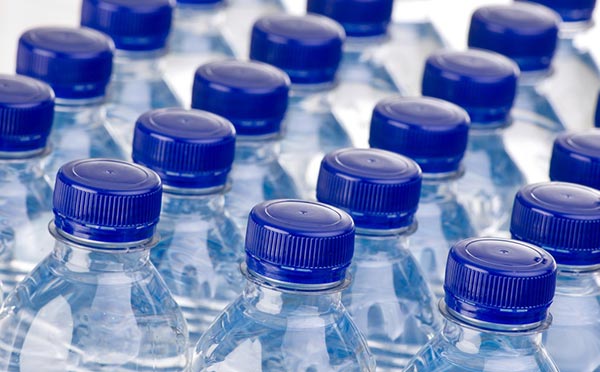





Will Drinking from Plastic Bottles Kill You?
A recent fad states that plastic water bottles leech toxic chemicals. Is it true?
Filed under Conspiracies, Urban Legends
| Skeptoid #60 August 09, 2007 Podcast transcript | Listen | Subscribe |
|
Today we're going to place our plastic water bottle, which has already been used three or four times, in the car on a hot sunny day, and then drink its noxious chemical contents to see if we get sick and die. The idea is that chemicals in the plastic get released into the bottle's contents when the bottle is reused, and especially if it's heated up.
So let's point our skeptical eye at the issue and see whether it has any merit. Do we need to be concerned about this? The only really fair answer is that it's a complicated question. "Plastic" is not a single compound. There are almost as many different types of plastic as there are types of substances contained by them. Some plastics do contain poisonous chemicals. Some plastics do leech chemicals into liquids. In some plastics, this process can be accelerated by heat. The reason for this variety is to provide the product distributor with enough choices that they can select a plastic type that's best for their product. This permits a distributor of drinking water to use a bottle that is absolutely safe to contain water for humans under the whole temperature range that the bottle is likely to be subjected to. But, put gasoline into that same bottle, and you might see that plastic dissolve away. Plastics are designed for their particular application, and misusing a plastic product can produce undesired consequences.
One time, in college, I was moving to a new apartment a block or two away. My brother and I had built a koi pond, and we needed to move the fish and store them long enough to build a new pond at the new place. We went out and bought a cheap plastic kids' wading pool. We put it in the garage and filled it with the hose, treated the water with all the usual fish-friendly chemicals, and walked the koi over in buckets and placed them in their new temporary home. Well, we learned a harsh lesson about chemicals in plastics. After a day or two the koi didn't look so good. Some of them died. Then all of them died. It was pretty horrible, because, and I'll spare you the details, they didn't look very good. We had no idea what the problem was. Was it the shock of being transported? Did we not add enough stuff to kill the chlorine? On a whim I called the manufacturer of the swimming pool and asked if they knew any reason why this would happen. They did. On products like this, they always add a mold inhibitor to the plastic. In this case, they used cyanide. For a children's pool, they add a safe low level of cyanide that's harmless to the children, but is enough to prevent mold from growing that would make the pool gross and unsightly. Evidently, a level of cyanide that's safe for a human is lethal for a fish, since they breathe it directly into their blood through their gills. The guy we spoke to was the company's head scientist, and he seemed to relish this rare opportunity to discuss his work. He went into all sorts of detail about their different products, and how they use the right plastic for each different job. Ever since then, whenever I work on a koi pond, I always call the manufacturer of any plastic products I'm using and talk to their chemists.
Here's the long and the short of it. Whether you're microwaving food in a plastic container, refilling your plastic water bottle, or making a koi pond, use plastic products that are intended for that use. The manufacturers do employ chemists to determine how best to package their products to ensure their safety, this process is strictly policed by the FDA, and this is always going to be more reliable than random information you read on the Internet or receive in a chain email.
And yes, it is our good old friend the Internet that seems to be the basis for this particular fear's place in popular culture. For example, there's one hoax email going around that says Sheryl Crow believes she contracted breast cancer from toxic chemicals by drinking water from a bottle that had been left in a car. Not true. Sheryl Crow doesn't claim this, there are no chemicals in water bottles that have been linked to cancer, and heating a water bottle to car temperatures does not leech anything into the water. There's another chain email that says freezing your water bottle, like so many people do, will leech dioxin into your water. Again, not true. No plastic containers designed for containing food or drinks contain dioxin, and colder temperatures stabilize plastics; it's heat that will accelerate their breakdown.
Most famously, a 2001 study by the University of Idaho found that reuse of plastic water bottles does release risky levels of diethylhexyl adipate (DEHA) into the water, which is potentially carcinogenic. This study was widely reported by the popular media and largely touched off the chain emails and most of the current perceived controversy. But is it true? No. Such a paper was written, but it was not a formal study. It was, in fact, merely the master's thesis of one student. It was not subjected to any peer review, and cannot accurately be characterized as a study performed by the university. It does not represent any position held by the University of Idaho. And unfortunately, it was not well performed research. DEHA is not classified by the FDA as a carcinogen, but more importantly, DEHA is not used in the type of plastic water bottles that the student evaluated. But it is used in many other plastics, and is present in a lab setting. "For this reason", concluded the International Bottled Water Association (which is, granted, not a very objective source), "the student's detection is likely to have been the result of inadvertent lab contamination." The FDA requires a higher level of scrutiny than that applied by the student writing his paper. DEHA is actually approved for food contact applications, but the fact that it's not present in the type of plastic that was studied, discredits the entire paper. But the mass media is often more interested in headlines than facts, so the dangers of reusing water bottles had no trouble becoming a fixture in pop culture.
Some people allege a conspiracy among distributors of bottled water, who know that their products are poisonous but who have analyzed the cost savings against the projected lawsuits from wrongful death and have concluded that it's more profitable to sell dangerous products. I do not find this theory very compelling. First, the products demonstrably do not contain the toxic agents claimed by the theory. Second, like all conspiracy theories, it's just too implausible that something of that magnitude could be kept secret for so long by so many people and so many victims, with nobody ever blowing a whistle or calling a newspaper. If corporate Men in Black were sent out to silence the whistleblowers and families of the victims, this would just multiply the number of reasons for someone to blow the whistle. This conspiracy theory just doesn't hold any water — pun intended.
There are absolutely plastics that are unsafe for containing or heating food. Look what happened to my koi. Or, let's say you sealed some food inside a length of PVC pipe and heated it over a campfire. Is that safe? I don't know, but I wouldn't eat it. Just like everything else in life, use products for their intended purpose, and you will not have any problem. Be assured that intended use of water bottles does include high temperature cycling. You will not get sick from any reasonable use of a water bottle or other food-containing plastic product.
You should follow me on twitter here.
© 2007 Skeptoid Media, Inc. Copyright information
References & Further Reading
ACC. "The Safety of Polythylene Teraphthalate (PET)." PlasticsInfo.Org. American Chemistry Council, 1 Jan. 2007. Web. 13 Nov. 2009. <http://www.plasticsinfo.org/s_plasticsinfo/sec_generic.asp?CID=657&DID=2605>
ACS. "Microwaving Plastic." American Cancer Society. American Cancer Society, 1 Jan. 2007. Web. 13 Nov. 2009. <http://www.cancer.org/docroot/MED/content/MED_6_1x_Microwaving_Plastic.asp?sitearea=MED>
Castle, L., Mayo, A., Crews, C., Gilbert, J. "Migration of poly(ethylene terephthalate) (PET) oligomers from PET plastics into foods during microwave and conventional cooking and into bottled beverages." Journal of Food Protection. 1 May 1989, Volume 52, Number 5: 337-342.
ELSI Europe Packaging Material Task Force. Packaging Materials: Polyethylene Terephthalate (PET) for Food Packaging Applications. Brussels: ILSI Press, 2000.
Mikkelson, B., Mikkelson, D. "Bottle Royale." Snopes. Snopes, 8 Apr. 2009. Web. 5 Oct. 2009. <http://www.snopes.com/medical/toxins/plasticbottles.asp>
Schmid, P., Kohler, M., Meierhofer, R., Luzi, S., Wegelin, M. "Does the reuse of PET bottles during solar water disinfection pose a health risk due to the migration of plasticisers and other chemicals into the water?" Water Research. 4 Sep. 2008, Volume 42, Issue 20: 5054-5060.
Reference this article:
Dunning, Brian.
"Will Drinking from Plastic Bottles Kill You?" Skeptoid Podcast. Skeptoid Media, Inc.,
9 Aug 2007. Web.
2 Sep 2010. <http://skeptoid.com/episodes/4060>
Discuss!
Remember, you should always read with skepticism the comments of anyone too lame to put their real name & city.
the biggest problem with drinking water from plastic bottles is an environmental concern as these cause a tremendous amount of waste. Also, drinking water from plastic might not be bad for your health directly, but if you look at the big picture, the production of these substances are doing a lot of harm to the earth. In addition, water in a plastic bottle that has been left in a hot car tastes horrible, regardless of whether it will kill you or not.
Andrew, Fairfax VA
August 14, 2007 11:12am
Try this experiment: open a bottle of bottled water (most are made from PET I believe) and drink half of it.
Let the other half sit in the sun for a week, then drink it.
From experience I can tell you: it will taste absolutely horrible. Even a dog won't drink it.
Having used a highly sensitive biochemical sensor developed over billions of years (aka, my taste buds) I'm pretty sure plastic breaks down into toxic crap. I'll leave it to researchers to ascertain exactly which chemicals these are.
Johnny, NC
August 14, 2007 12:26pm
Leaving any kind of fluid, in any kind of container, out in the sun for any amount of time is going to make the liquid taste not as it was originally. Good grief.
Leave a full unopened new water in an unopened plastic container for a week, and what is it gonna taste like? Even if you put it in the frig to cool it some.
As to the Dr Pepper, that had what to do with the plastic container? Nothing. That was the carbonation within the liquid.
Hobbes, Here, Not There
August 17, 2007 1:03pm
I drank water from a plastic bottle and got very sick. I guess that I need to quit rinsing out my insecticide bottles, and using them for water. Do you have any idea what diazinon does to you digestive system? ;)
Barry, USA
August 17, 2007 2:37pm
When you consider the amount of time that bottled water has been in storage from the time it is actually bottled to the time it gets into your hands, sitting ten days in a car is nothing.
In addition, the real hazard from reusing a water bottle is that the water used to refill water is not purified, and the bottle has not been sterilized. Your "backwash" is still present regardless of how many times you rinse the bottle and the bacteria you introduce is most likely the cause of any illness you might succumb to.
One last thought, after a long hike on a hot summer day makes even that warm, week old, stale water taste pretty good.
Steve Z, Londonderry, NH
August 21, 2007 1:38pm
"Having said this, there is another group of chemicals, called phthalates that are sometimes added to plastics to make them flexible and less brittle. Phthalates are environmental contaminants that can exhibit hormone-like behavior by acting as endocrine disruptors in humans and animals. If you heat up plastics, you could increase the leaching of phthalates from the containers into water and food."
This is a quote from a johns hopkins scientist in response to the myth about dioxins in plastic. for someone who drinks the recommended 80 ounces of water a day, the possibility of this contaminant is scary. Does anyone know how to find out which companies are using bottles containing pthalates? When I think of those steel semis transporting bottled water through the desert, etc., I can't help but wonder what the actual quality of the water by the time it reaches my home...
susan o., avalon, ca
August 27, 2007 7:13pm
re: "open a bottle of bottled water...Let the other half sit in the sun for a week, then drink it...it will taste absolutely horrible"
Say you leave an apple in the sun for a week then get sick after eating it afterwards, should you get rid of the plate it's on? Should we erradicate apples from the earth?
I'm always amazed at the stupidity and ignorance of people ignore science and stick blindly to their unfounded beliefs!
Thanks to you skeptiod for finally bringing some common sense to this crazy thing called the web.
Roger, toronto
October 26, 2007 12:35pm
Re the "quality" of bottled water: go to youtube, watch Penn & Teller's Bullshit episode about bottled water. Learn. Save your money.
Kat, Bellingham, WA
January 03, 2008 10:47am
I also thought that this issue of plastic leaching chemicals was a myth, but an article in Science News sept 29 2007 vol 172 no. 13 p.202 (http://sciencenews.org/articles/20070929/bob9.asp) made me think that maybe there was a real concern worth investigating esp for pregnant and nursing women.
Paul Raper, Manhattan Beach
January 29, 2008 9:31pm
An emerging issue of concern regarding bottled water is that of Endocrine Disruption. Both pthalates and Bisphenol A (BPA) have been found to leach out of plastic bottles of differing compositions. These chemicals act like hormones, interrupting normal endocrine function.
This will not make you sick. This will not kill you. This will not leave a mark on your forehead that says "Plastic Water Bottles ruined my life."
But the lack of acute symptoms is not proof that chronic symptoms are impossible. Similar endocrine disrupting compounds can lead to seriously nasty consequences including reduced fertility and feminization of males. I will stick with a glass of water, thank you.
Dan, Los Angeles
February 04, 2008 11:58pm
BPA is indeed released by plastic bottles. More so when they are heated repeatedly. This chemical is found in #7 bottles, the number that you typically find within the little recycling symbol on the bottom of bottles. Normal bottles in common use are #2's. Baby bottles tend to be #7's.
Baby bottles should be sanitized (100 degrees C) before each use. Making leeching more prevelant. Being used for babies makes them more susceptible to lower levels of toxins. In addition to them being in development, extra hormone-like substances can have lifetime effects.
In addition, the levels are very low. So why worry, right? Well, baby bottles to start. Then the plastic jars I buy their food in. Then the plastic safety spoons I feed them with. Then the plastic bibs and toys they are always gnawing on and that all get washed periodically. It all adds up. Science typically wants to be able to point a finger at a specific item. Hard to do when so many items contain so many chemicals which have so many effects.
Kevin, Orlando, FL
February 15, 2008 6:50am
"So many effects" - Wow. There must be a huge number of victims worldwide who are very ill. Can you show us one?
Eric Schulman, Corona, CA
February 15, 2008 7:09am
Of my entire post, you question the statement about chemicals having "so many effects" on people AND you take a condescending attitude (not appreciated).
I don't have to search far. How about the "all the effects" of pesticides (chemicals) that occur. Take a look at this Wikipedia entry's references under the heading "Farmers and Workers."
Some highlights:
The WHO estimates that each year, 3 million workers in agriculture experience severe poisoning from pesticides, about 18,000 of whom die. As 25 million workers in developing countries may suffer mild pesticide poisoning yearly.
Sounds like chemicals can have a lot of effects to me.
Kevin, Orlando, FL
February 15, 2008 7:47am
Discussion of pesticides has no relevance to the subject of chemicals leeching from plastic bottles. That is a red herring argument and only weakens your position.
Eric Schulman, Corona, CA
February 15, 2008 8:06am
The missing link, by the way:
http://en.wikipedia.org/wiki/Pesticide#Health_effects
You questioned my statement about chemicals having "so many effects" on people. I responded by bringing up the many effects of chemicals (specifically ones used as pesticides), on people. Sounds like I answered your question pretty directly. If my answer was not relevant, than it is because your question was not relevant.
The point is, chemicals have MANY effects on people. I think that the references in the above Wikipedia entry show this well.
Kevin, Orlando, FL
February 15, 2008 8:21am
You are STILL off the subject, and now you are adding the false straw man argument that I questioned the effects of chemicals on people. As you well know, I said no such absurd thing.
Let's stick with victims of alleged plastic bottles. If plastic bottles are as disastrous to worldwide health as you describe, surely there must be many diagnosed victims (and I do not mean self-diagnosed). Have you found any in the medical literature?
Eric Schulman, Corona, CA
February 15, 2008 8:34am
It's good that you know your argument fallacies, but trying to label every point I make, and doing it inappropriately as well, is going to lose you credibility.
You originally quoted my statement of "So many effects." I made this in the context of chemicals having so many effects on people. Not specifically plastic bottles, not specifically PBA or any other chemical. But chemicals in general. This IS relevant because PBA is the type of chemical that is being discussed. The corrolation is fairly apparent.
Nope. Not even going to try because I don't think there is any out there. But I said that there would be. In fact, I stated the exact opposite:
"Science typically wants to be able to point a finger at a specific item. Hard to do when so many items contain so many chemicals which have so many effects."
With the synergistic effect of chemicals, there probably will not be any capability for us to put our finger on a specific.
Kevin, Orlando, FL
February 15, 2008 8:46am
I agree with Kevin. Though there have been tests on the effects of individual chemicals, and regulations imposed as a result of those individual tests, not much is know about what happens when we ingest and are exposed to a combination of chemicals at varying levels.
Marie, Knoxville, TN
April 12, 2008 3:27pm
While I wouldn't be particularly afraid to drink from a plastic water bottle, I'd question the rhetoric of "you'll always be safe if you use the product for the use intended by the manufacturer." Obviously these rumors are exaggerated and false.
Yet, sometimes manufacturers mess up. Sometimes they hide or minimize problems with their products or are completely unaware of them. There are a good number of well-documented cases in which companies exposed people to health hazards accidentally or in order to minimize costs while maximizing profit. Sometimes they even tried to cover up so as to avoid liability (oh shock!): asbestos, leaded gasoline, cigarettes, serve as obvious examples.
Though these specific issues about water bottles seem fairly groundless, there does seem to be some real research about issues such as bisphenol A's role as an endocrine disruptor and it's effect on fetuses or babies exposed to it and its affect on development.
Water bottles obviously shouldn't be the most major health concern in most people's lives, yet I think real evidence-based investigation by independent parties ought to be encouraged, rather than simply saying "Daddy Knows Best" in response to the company who makes an item and paid for any and all research into its safety.
Scott, Oakland, CA
May 15, 2008 1:30am
That is very scary!!!! :(
rachelle, olympia wa
May 16, 2008 11:06am
i know choe and rachelle we go to the same school. that is so scary i hope i will never be killed by a water bottle
haley, olympia wa
May 16, 2008 11:10am
i will never keep fish in a kiddie pool.......EVER.
chloe, olympia wa
May 16, 2008 4:58pm
THANKS. I just heard the water bottle rumor...nice to know it is false. Appreciate the insight.
I will say, in reusing water bottles: Nalgene bottles are superior in that they do not carry flavors. And Camelbak systems are hard to clean, so plain water is probably best.
Linda Spears, Ocala FL
June 16, 2008 6:59pm
I have been drinking out of Poland Spring water bottles. But of late I have had a metal taste in my mouth. And could not figure it out. Now after reading these articles I feel that keeping the water in my trunk. Is TROUBLE. So I am not going to keep them in there any longer. Thanks
Pat Hubbard, North Berwick, ME
July 08, 2008 1:02pm
no author's name and no citations, so i didn't read it
jeff, SF
July 13, 2008 3:17pm
not sure this guy has all his facts straight and it is more of his opionion then scientific research. Investigate further if you are concerned but don't let this be your conclusive reasearch. Plastic is a chemical by product of oil. Oil and water are not friends. I find this to be a scratch on the surface of the plastic issue we all face! not to mention what it's doing to our planet!
tj, CA
July 15, 2008 5:31pm
TJ - You seem to know what you're talking about. Could you please help us by pointing out some of the opinions Dunning expressed that are counter to established science?
Eric Schulman, Corona, CA
July 15, 2008 5:36pm
I agree with TJ on this one. I don't have data myself, but I have friends at UT Austin that study the effects of many environmental chemicals (including those found in plastics) on mammalian development and there does seem to be quite a disrupting effect to the endocrine system. This will probably not affect adults, but this could have massive ramifications on developing children. OK, so I am sure not all plastics have these chemicals that they study. Also, they study rats and needless to say, humans are not rats (well, most of them anyway). I also doubt that eating or drinking out of heated/microwaved plastics will kill you or make you sick, but I certainly wouldn't want to expose my own developing child unnecessarily if there is even a slight possibility that there may be a developmental problem later on down the line. It may be just a decrease in sperm count or something else relatively benign, but children are already exposed to so many chemicals that we can't control, so why add more? I am not going to throw out all my tupperware, but I do try to use glass when I can. In this instance, it doesn't cost anything to err on the side of caution.
Elaine Ellerton, Austin, TX
July 16, 2008 1:58pm
When the total number of victims is zero, how do you justify your term "massive ramifications"?
Eric Schulman, Corona, CA
July 16, 2008 2:05pm
I justify it by stating that it COULD, not that it does. Also, I am not sure what you mean by "victims", as I seriously doubt anyone has keeled over dead because they drank from a plastic bottle. I would imagine that any negative effect would be a lot more subtle and not happen immediately. Many chemicals are known endocrine disruptors, and some of these are in plastics. Lots more haven't been tested at all for these subtle effects. So, I trust the FDA enough that my water bottle does not contain chemicals that will kill me or make me sick, but I doubt that they test for anything less as this takes years of research and lots of money. My point is, why test it out on your kids?
Elaine Ellerton, Austin, TX
July 16, 2008 3:55pm
So you don't feel that it's ever occurred to anyone to adequately test plastics, and that everyday use of common food containers constitutes a risky and dangerous test on your child.
Eric Schulman, Corona, CA
July 16, 2008 4:01pm
No, it never occurred to me. Thanks for pointing that out. I'll trust the government's adequate testing procedures and tell those that continue to research these chemicals that they should stop. Clearly, we know how all our molecular pathways are affected by every chemical found in plastic. Surely any new pathways discovered, (which, might I add, happens all the time), won't be affected.
Elaine Ellerton, Austin, TX
July 16, 2008 4:46pm
Well...it is true that long-term studies take...a long time. And they can be difficult to fund. And if you want to do a real long-term study you would also have to use humans and human children, which would be expensive, as rats wouldn't be an adequate long-term model. I don't have a solid opinion on this and I don't have kids, but it is interesting to note that longer-term studies on many chemicals are sparse. Recently, many cities began banning a certain type of chemical from baby-bottle plastic, BPA, that is found in some consumer plastic and canned food cans. It was shown to affect endocrine function over time. It was featured on Bill Moyers on PBS, as it was uncovered in part by a journalist who simply did her homework really, really well, and looked at the research that had been done and by whom it had been sponsored and reported. I think this shows that it's important for dedicated journalists and scientists to stick to their jobs, and for us to keep our eyes on the news, but not form weird and broadly generalized ideas about swaths of products without doing a lot of research. It did concern me, though, as I'd RATHER be able to believe that every chemical toxicity claim in our everyday products is just a conspiracy theory. Here's a link: http://www.pbs.org/moyers/journal/05232008/transcript2.html
Beth, Berlin, Germany
August 13, 2008 2:27am
Thank you, Beth.
elaine ellerton, austin, TX
August 13, 2008 1:56pm
OMG!!! I was eating my cereal out of a kiddie pool and got really sick... I later found out that I had a small dose of cyanide in my system. WHy do I eat out of a kiddie pool? Because Im a 400lb american and I need to eat breakfast in order to stay healthy. Remember its the best meal of the day.
Tom Jones, las vegas, nevada
August 16, 2008 10:57am
Unfortunately this episode doesn't mention bisphenol-A (BPA) or phthalates, the two endocrine disruptor present in plastics that have been getting a lot of attention lately. There does seem to be some mixed information about both of these chemicals out there. Camelbak recently removed both of these from their bottles, while Nalgene has put out a statement defending the safety of BPA.
Cedric, Washington state
October 09, 2008 11:47pm
For more on Bisphenol A (BPA) and it's connection to cancers and endocrine disorders, search for it on PubMed. It is used in many types of plastics, including water bottles, canned food linings, baby bottles, medical tubing, and PVC pipes.
Josh Selby, Ohio
November 17, 2008 3:00pm
Most types of bottles made of plastic can be used again few times if you wash them with hot soapy water but some studies have reveled that drinks stored in that bottles can contain a great amount of Bisphenol A (BPA) that is a chemical that interferes with the body’s messaging system.
It is recommended not to reuse bottles made from PET that is used for water, soda and juice most of the times. That bottles made from PET aren’t safe to reuse because another studies indicate that they can cause DEHP (another human carcinogen) when they are not in a perfect condition
priscila(:, mexico
November 17, 2008 7:27pm
Unfortunetly, this author treats the issue as if the question is whether misuse of plastics/ chemical breakdown of plastics will either rapidly kill you or have no effect. I don't think most people buy that reusing the same plastic bottle 1 time or 263 times will kill you-- the concern is actually whether things such as repeated plastic bottle use used heavily for decades could CONTRIBUTE to a decline of health or growth of cancerous cells.
The real issue is that while you can of course drink out of a hot plastic container once and not die--- or 300 times and not die-- will it combined with the billion other *potentially* harmless/very low level toxicity products we use and activities we engage in contribute to the growth of cancer.
These products (ie PET) are probably neither perfectly safe nor incredibly harmful. I think we should 1) avoid plastics when possible, 2) always use plastics for their approved usage only, 3) demand the FDA to sponser long-range testing to understand the nature and effects of plastics.
Mary, Indianapolis
February 17, 2009 1:40am
I think we should take all the "I've got too much time on my hands nosy body" environmentalists and "Chicken Littles" of the world and put them into a time machine and send them back to the stone age....then they’ll have NOTHING that is manmade or developed by innovation and progress over the past 200 years, to kill them.....just watch out for the dinosaurs. Thinking or scaring others into believing that you’ll die by poisoning yourself, or develop cancer, from drinking water out of plastic bottles is INSANE…..It’s this MINORITY of nuts that has won the media’s ears and turning this country into a wasteland of common senselessness…..you can be killed by a car, by lightning or by a massive stroke a lot easier and with greater probability than any danger from plastics…..unless you sniff them…..the problem with people who believe otherwise (the same group who also believe man is responsible for climate change and the current “fad” of global warming) is that they either do not look at the science or twist the science to meet their twisted idea of reality…it’s really a shame because the media has changed from disseminating the truth and accurate reports on matters that affect us all, to preferring tabloid-like sensationalist stories that have little or no basis in fact, and are more “opinion” than accurate.
Bill, Colorado Springs
February 28, 2009 4:07pm
The reasoning that "it's just too implausible that something of this magnitude could be kept secret for so long by so many people and so many victims, with nobody ever blowing a whistle or calling a newspaper" is faulty. What about cigarettes?
J. Wilson, Brownstown Twp, Mi
March 03, 2009 3:19pm
Cigarettes - you mean those things that people have known were toxic and cause cancer for something like 50 years?
Brenton, New Zealand
March 03, 2009 3:50pm
One thing I have learnt from doing research is that it is ALL questionable. This very reasonable, let's even say friendly article proves nothing. I liked the story about the ordinary guy with his fish pond and his brother, a nice touch from a skilled narrator who is certainly not your average man next door. I don't know anything about the science of this particular plastic issue, and am taking no sides on this, but I do know you need to read all of this VERY carefully, from the internet chatter and rumour to this seemingly so reassuring article. Lets look at one part of it: "there are no chemicals in water bottles that have been linked to cancer, and heating a water bottle to car temperatures does not leech anything into the water". What temperatures is it talking about, the sort of temperatures a car can reach in very hot sunshine for hours on end, or normal temperatures, average temperatures? and what about no chemicals linked to cancer - what does that really mean? No one has done the research yet? they researched it for one day/one month/one year? too difficult to research? There is no way to prove the link to cancer?
There are as many "nutters" in the science world, with their blind faith in the scientific method and reliance on "scientific proof" as there are on the internet. Let's us all travel carefully and kindly and listen more to each other with an open mind, it is sometimes the "nutters" who end up with the nobel prize.
Holly, Abu Dhabi
March 24, 2009 8:27am
I really agree that the question is about whether reusing plastic bottles is HURTFUL to our health or not? The question is not about whether it reusing plastic bottles kills!
alex, las vegas
April 03, 2009 10:36am
Something I thought of after listening to the Pacific garbage patch episode: If plastic breaks down under UV radiation while floating out in the ocean, isn't it possible that this could happen to an extent with bottled water? I understand that the plastic that's floating in the ocean has much more time exposed to direct sunlight than the average plastic bottle thrown in the back seat of my car, but isn't it logical to assume that some breakdown occurs, and individual particles of plastic could break free and be floating around in the water? Would individual plastic molecules even be harmful if ingested?
Burn Fx, Camarillo, CA
May 03, 2009 2:21pm
This skeptoid.com article is well written. I was shocked to find out how much incorrect information is floating about the internet on this topic, this was one of the more balanced and credible views I found. But I think you have to be skeptical on both sides of the argument. The "studies" that show bottles are unsafe may not hold up, but showing that such studies are flawed is not the same as producing studies showing a products safety.
I have a lot of insider information on this topic and the only type of bottle I wouldn't use for bottled water is recycling code 3, PVC, but I've never seen the industry use that type of plastic for bottled water (PVC is used for water pipes, but the the pipes are hard so don't contain much plasticizer so those don't worry me) and maybe some 7's (7 is other, so it really depends with on what the 7 is, some may be safer than others).
Gregory, Fullerton CA
May 14, 2009 1:22pm
--------------------------------------------------------------------------------
From:
Sent: Friday, 12 June 2009 2:52 p.m.
ToSubject: BPA plastic contamination
Thought you may be interested in the results of this new study
Bisphenol-a BPA Plastics Update:
The FDA said last year that BPA poses no threat to human health drinking from a polycarbonate water bottle (though looks like data may have been biased)
It now looks like that drinking from polycarbonate bottles for just one week can prove harmful. That's according to a new study out last month by the Harvard School of Public Health.
>
> Harvard scientists invited 77 students to participate in this groundbreaking study, the first to emphasis just how quickly the body begins to absorb BPA from food or beverage containers.
> The students began the study with a 7-day wash-out period. During that time, they only drank from stainless steel containers in order to minimize BPA exposure. The BPA in their urine was then measured and used as a baseline.
> On the 8th day, students began drinking from clear polycarbonate water bottles that were known to contain BPA. The students drank from the containers for just one week. (Polycarbonate bottles are clear, hard, non-breakable, and refillable. They usually have a pop- top or flip-top lid for drinking.) If it's got a recycling #7 on it, you know it's got BPA in it.
>
> The BPA found in the students' urine after just one week of drinking from the plastic containers spiked by 69 percent!
>
> The students did use the water bottles properly. They didn't heat them. They didn't put them in the microwa
peter, christchurch new zealand
June 21, 2009 3:43pm
Quote from peter, christchurch new zealand:
" ...
The BPA found in the students' urine after just one week of drinking from the plastic containers spiked by 69 percent!"
This sounds like one of those email rumors that have a marginal truth to them. They always mention a somewhat legitimate institution such as "Harvard" in order to fool people to think they are real. If I were you I only trust info like this that have some form of source that I can actually look up and read for myself.
Amanda, Georgia
July 07, 2009 7:02pm
Here is a link to the PDF of the study I think the previous poster was referring to
http://www.ehponline.org/members/2009/0900604/0900604.pdf
SkepticalBob, Boston
July 17, 2009 10:02am
The only piece of relevant information missing from this puzzle is "How much BPA is harmful?" I might raise an eyebrow of concern over the Harvard study if it could be reasonably proven that the amount of BPA being taken in is actually harmful to humans. Does anybody have any info?
DrScience, Lander
July 22, 2009 11:59am
Skeptoid,
I generally share you skepticism, but this looks like a case where we should be more careful, and check that our skepticism hasn't become cynicism.
Here's a valid link to the Harvard Report and it look like it was done relatively well to a laymen like myself. Unless you can debunk it scientifically, I think you should heed the warning that something new may have been discovered here.
http://tinyurl.com/n3nnqt
Yes all those professionals are charged with with making things safe. But just like the SEC missed Bernie Maddoff, and the Treasury didn't understand the banks, we can't trust government or industry to always do the right thing.
SkeptKal, Beaverton. OR
September 23, 2009 1:29pm
I think that this is interesting but I really don't see why we need all this plastic?! I mean its useful but it harms the environment and kills animals and even causes cancer!!! You can even go to part of the ocean and just dip you hand at the surface of the water and get a handful of plastic! and you wonder why are world looks like a dump!? This just absolutely disgust me! I bet this is a MAJOR reason why we have all the cancers we have!!! Whoever invented plastic cool but at the same time not so cool! >:( can someone PLEASE! tell me why we have to have plastics???!!!?
Wolfhowl57, North Carolina
November 14, 2009 4:13pm
oh my gosh. wolfhowl. are you trying to be hilarious b/c your answer just made me laugh out loud. Way to represent the other side of the arguement.
anon, Ca
December 06, 2009 11:41pm
Skeptoid, this post was well done but the word is LEACH.
Kim, Philadelphia
December 07, 2009 4:18pm
DrScience - "How much BPA is harmful?"
Here's some info.
http://www.defendingscience.org/case_studies/Battles-Over-Bisphenol-A.cfm
"In the late 1980s, the EPA set the first safety standard, a reference dose, for BPA at 50 µg/kg. This continues to be the safety standard used by the FDA today...
Therefore, the presumption of BPA's safety below 50 µg/kg rests on data from a single high dose study conducted on adult animals, potentially under poor laboratory conditions."
"For decades, industry trade associations and their lawyers staved off the regulation of unsafe products like tobacco, lead and asbestos by arguing that scientific uncertainty precluded government action. Similarly, the plastics and chemical industries seek to deny, delay, and dismiss the low dose research on bisphenol A. First, industry studies failed to replicate low dose effects. When more and more studies found effects on hormone sensitive tissues and systems at doses below the safety standard, the industry argued that the reported physiological changes were irrelevant to human health.
For example, in 2000, the American Plastics Council (APC) contracted with the Harvard Center for Risk Analysis to conduct a 'weight of the evidence' evaluation of bisphenol A..."
Read "Doubt is their Product" some time.
http://www.defendingscience.org/Doubt_is_Their_Product.cfm
Max, Boston, MA
December 15, 2009 6:31am
For years I have been avoiding plastic bottles. Namely I can't stand the taste of plastic. If you can taste it clearly its leeching something a'rather. As human taste isn't extremely sensitive it must be in the parts per million. There is growing evidence of 'micro-dosing' of some chemicals and unexpected binding of these into more dangerous forms. i.e. If you drink from HDPE and PP bottle (hypothetically) some compounds may bind together. Alternatively compounds from other products that may reside in the body could also bind. The fact is, that as you suggest "use products for their intended purpose".
Well, is every plastic company going to follow strict guidelines and test every possible scenario? Could certain chemicals in the food possibly have some subtle reactions with a certain plastic they were not aware of? What the products intended purpose? Let's say their plastic was intended for between 10-40C temperatures. Let's say it was intended for water only. Then let's say, some company starts to use it for a slightly acidic drink which reacts in some mild manner. Do you expect the product to be so thoroughly tested for every iteration?
There is a growing body of evidence that plastics especially PVC (even food grade PVC) and some other plastics do pose a danger. There can be so many compounds used it's impossible to know what they are using. As long as testing costs money, companies will take short-cuts period. Thereby, using outdated results as their basis.
Chadzuka, Aussie
December 16, 2009 9:12pm
"As human taste isn't extremely sensitive it must be in the parts per million."
I think it's more in the parts per billion.
http://ift.confex.com/ift/2003/techprogram/paper_18817.htm
"The plastic off-taste can be associated with the presence of part per billion (ppb) levels of aldehydes, particularly hexanal, heptanal, octanal, nonanal and decanal, whose origin is the polyolefin and performance additive compositions used to manufacture closure liners or threaded closure shells. Disinfecting bottle water with ozone, a common practice in North America, increases the plastic off-taste contaminants."
Max, Boston, MA
December 18, 2009 12:05am
"As human taste isn't extremely sensitive it must be in the parts per million.
I think it's more in the parts per billion."
- Not sure whether this is what you guys are saying, or not, but there would be less contamination if a substance is being measured in parts PER billion than if measured in parts PER million...
James, London, UK
January 30, 2010 6:08am
This episode is great. I've heard the urban legend, and it had me briefly worried, since I reuse plastic water bottles (it's kinder to the environment, ironically). So far, no illness, no cancer ...
Abby, Austin, TX
February 17, 2010 9:04pm
I've been reusing the same mineral water plastic bottle for about 6 months at work, made from PETE and recently when drinking from it I've felt dizzy. Could be a coincidence, but I'll not be reusing bottles again.
Richard, Manchester, UK
March 12, 2010 6:07am
Yes James, concentrations measured in parts per billion tend to be three orders of magnitude more dilute than those measured in parts per million.
Richard,
You only feel dizzy when drinking from plastic water bottles? Really? Right when drinking, or some time afterwards?
Max, Boston, MA
June 05, 2010 8:21pm
It is all very fine, but where do you get those references you base your opinion on...? http://www.plasticsinfo.org from the American Plastic Council... a very objective source I am sure, with no conflict of interest.
Please update by having a look at http://www.hhs.gov/safety/bpa/ and http://www.fda.gov/NewsEvents/PublicHealthFocus/ucm064437.htm
Basically, Bisphenol A can be released by plastics that contain it when heated. And yes, Bisphenol A is most probably harmful to human health.
Yours.
Alex, Tokyo
July 29, 2010 9:01am
BPA is found in plastic type 7, which is not normally used for bottled water in the US at least.
Brandon, Falconer
July 29, 2010 6:18pm
Make a comment about this episode of Skeptoid (please try to keep it brief & to the point). Anyone can post:
You can also discuss this episode in the Skeptoid Forum, hosted by the James Randi Educational Foundation.
Join the Skeptalk email discussion list.
What's the most important thing about Skeptoid?


Yes.
Last summer I placed Dr Pepper into a used water bottle, so that it could fit inside my hotel fridge; to chill it for my day out at Epcot!
When there, I turned the top and it BLEW off and hit me very hard in the head... 2 or 3 inches and I'd have lost an eye.
So you see, those buggers expand under pressure and took an idiot like me by surprise!
Griff... lucky to be alive. As are we all!
neil griffiths, Cardiff uk
August 10, 2007 8:55pm