




Organic Food Myths

Is it a revolution in health and the environment, or a counterproductive fad?

Filed under Consumer Ripoffs, Environment, Health

Skeptoid #19
January 05, 2007
Podcast transcript | Listen | Subscribe
Bookmark and Share

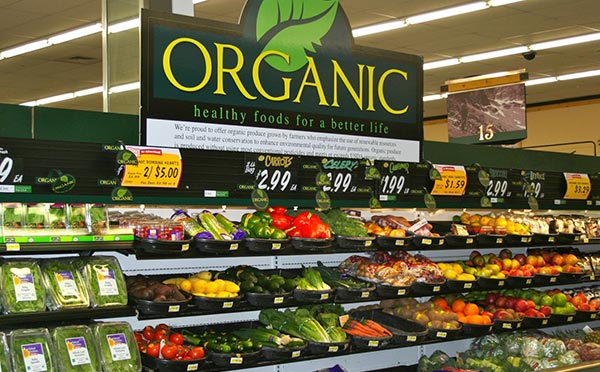
Today we're going to walk into a specialty food market and purchase one of the most trendy, popular, and correspondingly overpriced products on the market today: Organic food.

Organic food is a conventional food crop (genetically exactly the same plant variety as the regular version) but grown according to a different set of standards. In this sense, organic food is really the same thing as kosher food. The food itself is identical, but it's prepared in such a way to conform to different philosophical standards. Just as kosher standards are defined by rabbinical authorities, the USDA's National Organic Program sets the requirements for foods to bear a "certified organic" label. Basically it forbids the use of modern synthetic fertilizers and pesticides in favor of organic equivalents, and for animals it requires that they have not been kept healthy through the use of antibiotics. There are other rules too, and the basic goal is to require the use of only natural products throughout the growth, preparation, and preservation stages.

Organic food is more expensive than conventional food, due not only to its lower crop yields and more expensive organic fertilizers and pesticides in larger quantities, but mainly because it's such a big fad right now and is in such high demand.

Why is that? Is organic food healthier? Does it make an important political statement? The usual arguments boil down to three: that it benefits small farmers rather than big evil companies; that it's somehow healthier to eat; and that the cultivation method is better for the environment. Rather than accepting these emotionally satisfying benefits at face value, let's instead take a skeptical look and see what the data actually show. Let's take these three claimed benefits one at a time.

All right, let's take for granted the position that major food producers deserve to be struck with a blow. I'm sure the starving millions in Africa appreciate the sentiment.

Make no mistake, organic food is big, big business. The days when the organic produce section of the supermarket represented the product of a small local farmer are long gone. California alone produces over $600 million in organic produce, most of it coming from just five farms, who are also the same producers of most non-organic food in the state. 70 percent of all organic milk is controlled by just one major milk producer.

Five or ten years ago, when the major food producers saw that organic food was coming into vogue, what do you think they did? They smelled higher prices charged for less product, and started producing organic crops. Nearly all organic crops in the United States are either grown, distributed, or sold by exactly the same companies who produce conventional crops. They don't care which one you buy. You're not striking a blow at anyone, except at your own pocketbook.

Trader Joe's is a supermarket chain specializing in organic, vegetarian, and alternative foods with hundreds of locations throughout the United States, centered in organic-happy Southern California. Shoppers appreciate its image of healthful food in a small-business family atmosphere. Really? In 2005 alone, Trader Joe's racked up sales estimated at $4.5 billion. The company is owned by a family trust set up by German billionaire Theo Albrecht, ranked the 22nd richest man in the world by Forbes in 2004. He's the co-founder and CEO of German multi-national ALDI, with global revenue in grocery sales at $37 billion. According to Business Week, the decade of the 1990's saw Trader Joe's increase its profits by 1000%. Trader Joe's also compensates its employees aggressively, with starting salaries for supervisors at $40,000. They hire only non-union workers. Now, to any capitalist or business-minded person, there's nothing wrong with any of that (unless you're pro-union or anti-big business). It's a great company, and very successful. Trader Joe's customers are willing to pay their premium prices to get that healthful image. But they should not kid themselves that they're striking a blow at big business and supporting the little guy.

I'm not exactly sure why anticorporatism wound up on the organic food agenda, since it's so counterintuitive. The irony is that the organic food companies supply a smaller amount of food per acre planted, and enjoy dramatically higher profits, which is why anticorporatists hate corporations in the first place.

Did you ever wonder why Chinese drink only hot tea? They boil it to kill the bacteria. Most local Chinese farming uses organic methods, in that the only fertilizers used are human and animal waste: Without being boiled, it's basically a nice cup of E. coli. In the case of China and other poor nations, the reason for organic farming has less to do with ideology and more to do with lack of access to modern farming technology.

The National Review reports that Americans believe organic food is healthier by a 2-1 margin, despite the lack of any evidence supporting this. When you take the exact same strain of a plant and grow it in two different ways, its chemical and genetic makeup remain the same. One may be larger than the other if one growing method was more efficient, but its fundamental makeup and biochemical content is defined by its genes, not by the way it was grown. Consumer Reports found no consistent difference in appearance, flavor, or texture. A blanket statement like "organic cultivation results in a crop with superior nutritional value" has no logical or factual basis.

Some supporters of organic growing claim that the danger of non-organic food lies in the residues of chemical pesticides. This claim is even more ridiculous: Since the organic pesticides and fungicides are less efficient than their modern synthetic counterparts, up to seven times as much of it must be used. Organic pesticides include rotenone, which has been shown to cause the symptoms of Parkinson's Disease and is a natural poison used in hunting by some native tribes; pyrethrum, which is carcinogenic; sabadilla, which is highly toxic to honeybees; and fermented urine, which I don't want on my food whether it causes any diseases or not. Supporters of organics claim that the much larger amounts of chemicals they use is OK because those chemicals are all-natural. But just because something is natural doesn't mean that it's safe or healthy — consider the examples of hemlock, mercury, lead, toadstools, box jellyfish neurotoxin, asbestos — not to mention a nearly infinite number of toxic bacteria and viruses (E. coli, salmonella, bubonic plague, smallpox). When you hear any product claim to be healthy because its ingredients are all natural, be skeptical. By no definition can "all natural" mean that a product is healthful.

Consider the logical absurdity proposed by those who claim conventional growers produce less healthful food. To the organically minded, conventional growers are evil greedy corporations interested only in their profit margin. What's the best way to improve the profit margin? To buy less pesticides and fertilizer. This means they must use far more advanced and efficient products. The idea that pesticides leave dangerous residues is many decades out of date. Food production is among the most regulated and scrutinized of processes, and today's synthetic pesticides and fertilizers are completely biodegradable. They're supported by decades of studies that demonstrate their total safety.

In the United States, 2006 brought two major outbreaks of E. coli, both resulting in deaths and numerous illnesses, ultimately traced to organically grown spinach and lettuce. According to the Center for Global Food Issues, organic foods make up about 1% of all the food sold in the United States, but it accounts for 8% of E. coli cases.

Organic methods require about twice the acreage to produce the same crop, thus directly resulting in the destruction of undeveloped land. During a recent Girl Scout field trip to Tanaka Farms in Irvine, California, one of the owners told us his dirty little secret that contradicts what you'll find on his web site. Market conditions compelled them to switch to organic a few years ago, and he absolutely hates it. The per-acre yield has been slashed. Organic farming produces less food, and requires more acreage.

Many so-called environmentalists generally favor organic farming, at the same time that they protest deforestation to make room for more agriculture. How do they reconcile these directly conflicting views? If you want to feed a growing population, you cannot do both, and soon won't be able to do either. If you support rainforest preservation, logically you should oppose organic farming, particularly in the developing world. On the other hand, if you demand organic soybeans, then you should have the courage to stand up and say that you don't care whether black and brown people around the world have enough to eat or not.

I'm not making this stuff up. For every dreadlocked white kid beating a bongo drum in favor of organics, there is a Ph.D. agriculturist warning about its short sightedness and urging efficient modern agriculture to feed our growing population. Personally I like forests and natural areas, so I favor using the farmlands that we already have as efficiently as possible. This benefits everyone. I say we dump the useless paranormal objections to foods freighted with evil corporate hate energy, and instead use our brains to our advantage for once. When we find a better way to grow the same crop faster, stronger, healthier, and on less acreage, let's do it. We all benefit.

You should follow me on twitter here.

Brian Dunning
Brian Dunning

© 2007 Skeptoid Media, Inc. Copyright information

References & Further Reading

Armstrong, Larry. "Trader Joe's: The Trendy American Cousin." Business Week. McGraw-Hill Companies, 26 Apr. 2004. Web. 4 Nov. 2009. <http://www.businessweek.com/magazine/content/04_17/b3880016.htm>

Avery, Dennis T., Avery Alex. "Tainted Spinach Raises Big Questions of Manure on Food Crops." Center for Global Food Issues. Center for Global Food Issues, 27 Sep. 2006. Web. 9 Nov. 2009. <http://www.cgfi.org/2006/09/27/tainted-spinach-raises-big-questions-of-manure-on-food-crops/>

FDA. "FDA Statement on Foodborne E. coli 0157:H7 Outbreak in Spinach -- 9/20/06 Update." US Food and Drug Administration. US Federal Government, 20 Sep. 2006. Web. 9 Nov. 2009. <http://www.fda.gov/NewsEvents/Newsroom/PressAnnouncements/2006/ucm108740.htm>

Guthman, Julie. Agrarian Dreams: The Paradox of Organic Farming. Berkeley: University of California Press, 2004. 1-237.

Halberg, N., Kristensen, I. Sillebak. "Expected Crop Yield Loss When Converting to Organic Dairy Farming in Denmark." Biological Agriculture and Horticulture. 1 Jan. 1997, Volume 14, Number 1: 25-41.

Kava, Ruth. "Is Organic Produce Better?" American Council on Science and Health. American Council on Science and Health, 12 Mar. 2002. Web. 9 Nov. 2009. <http://www.acsh.org/factsfears/newsID.228/news_detail.asp>

TJ. "Trader Joe's Jobs." Trader Joe's. Trader Joe's, 1 Jan. 2009. Web. 4 Nov. 2009. <http://www.traderjoes.com/jobs>

USDA. "National List of Allowed and Prohibited Substances." United States Department of Agricutlure: Agricultural Marketing Service. US Federal Government, 25 Sep. 2008. Web. 22 Oct. 2009. <http://www.ams.usda.gov/AMSv1.0/ams.fetchTemplateData.do?template=TemplateN&page=NOPNationalList>

Zorb, C., Langenkamper, G., Betsche, T., Neihaus, K., Barsch, A. "Metabolite Profiling of Wheat Grains." Journal of Agricutlural and Food Chemistry. 1 Jul. 2006, Volume 54, Number 21: 8301-8306.

Reference this article:
Dunning, Brian. "Organic Food Myths." Skeptoid Podcast. Skeptoid Media, Inc., 5 Jan 2007. Web. 2 Sep 2010. <http://skeptoid.com/episodes/4019>

Discuss!

Remember, you should always read with skepticism the comments of anyone too lame to put their real name & city.

So... why I buy organic food.

Organic food industries have reached out to people with food allergies. They do this, I am sure, because they are used to following strict standards on what can be in foods (and many chemicals they oppose that are in normal processed foods are not food allergy/intolerance friendly, and this is not obvious to the consumer) and because it helps them expand their market. Gluten-free foods (not just a tag on normal products but bread, crackers, pizza etc made from grains like rice instead of wheat, rye, or barley) are made primarily from organic foods and are usually also vegetarian, egg free, dairy free, vegan, low sodium, and organic. In other words, they will appeal to people other than just those with gluten intolerance.

Now, if I did not have this condition, I would see little reason to stand in a dimly lit area of Wegmans in the gluten free aisle of the organic section. I pay more a week for bread mix than most people spend on bread to feed their family for a week. But for me the other option is to never eat bread.
So to be honest, I'm very happy that there are people who eat organic food. It means my specialty food is a bit cheaper since it can be sold to people without my condition. I know, selfish reason. If more normal processed foods were safe, I would eat them.

Bailey Meeker, Geneva, NY
January 05, 2007 4:01pm

I buy organic vegetables because we've got a friend who's an organic farmer. If he switched to conventional, I'd keep buying from him. (This is just in the interest of full disclosure.)

But I absolutely agree that the organic food "movement" is heavily freighted with ideology and claptrap. I don't so much mind idiots practicing idiocy on their own, but I get very annoyed (and not a little alarmed) when they try to compel me to do likewise. The literal terrorism of "animal rights activists" has made veal almost impossible to find.

It's noteworthy that for millennia, food restrictions have been a very strong way to enforce group identity. Modern food activists are simply practicing a form of "leftist halal" to demonstrate their membership in a particular tribe.

Cambias, Amherst, MA
January 06, 2007 9:52am

Thank you for that wonderful exposé of the poor standards applied to organic food production in the USA!!!

We are so grateful that we live in France, where the vegetarians have not yet taken over, and organic [b]mixed[/b] farming can thrive, without the need for all those poisons listed in your piece.

Our beef, veal, lamb, wheat flour, sunflower oil and assorted vegetables in season all come from an organic mixed farm on the Normandy/Ile de France border. We visit the farm once a month to pick up our order, know the staff who run the place, and inspect both fields and animals when we wish. The farm is totally self-sufficient, except fot salt-lick! During the drought of 2003, this "inefficient" organic farm supplied fodder to its conventional neighbours, whose impoverished soil could not retain sufficient moisture to prevent the pastures from shrivelling in the intense heat. In that year also, their wheat crop was the best they had ever had, and the best yield per hectare of any farm in the area. The animals on this farm are regularly tested by the local government veterinary inspector, and have not required treatment for parasites for several years.

Our milk, butter, cream and Neufchâtel cheese we buy direct from an organic dairy farm in Normandy. When the present owner began the switch to organic ten years ago, the neighbours without exception scoffed and told him he'd be ruined in five years. After four years, he was already getting better crops of maize to feed his cattle in winter than any of them.

It should be noted that organic farmers in Europe do not receive subsidies, unlike their conventional counterparts.

As for the price, for all this produce we pay less than supermarket pr

Anne & Archie, Nr Chantilly, France
January 07, 2007 2:07pm

Wow! You're ahead of the curve on this one. check out http://news.bbc.co.uk/2/hi/uk_news/6238227.stm

J. D.

J. D. Mack, Silver Spring, MD
January 07, 2007 9:30pm

Interesting debunking, however, you don't mention anything about what I considered the main reason to buy organic products while I was living in the USA: the heavy use of antibiotics. What's your take on this ?
Don't you think it's a valid reason to buy organic products, at least for meat and dairy products ?

cedric, Seoul
January 08, 2007 2:24am

Again, the antibiotics approved for use in meat & dairy animals are among the most heavily tested and scrutinized products on the market. Decades of research has demonstrated their total safety. There are plenty of CLAIMS out there about these being harmful, but no valid research that's met any kind of acceptance within the scientific community. Such antibiotics leave the body very quickly, there is no "residue."

Interestingly, many of the same people who protest this type of care for animals have no problem putting the exact same antibiotics directly into their own body when they're sick.

Brian Dunning, Laguna Niguel, CA
January 08, 2007 7:23am

I wonder in there is an opinion on something like the 100 mile diet:

http://www.100milediet.org/

I actually try to support my local farmer, be it organic or conventional. Though much easer in to do in the summer I store what I can for the winter.

Sven Heinicke, Yardley, PA
January 08, 2007 8:41am

Your concern for acreage and efficiency makes no mention of the benefits of eating lower on the food chain--organic or otherwise. Most of that forestland is being cleared to make room for cattle grazing, since Americans have an insatiable appetite for cow carcasses. Cutting back on meat would mean that farmland is used more efficiently--growing food crops for human consumption, instead of animal consumption. Try guilt-tripping yourself for eating meat instead of guilt-tripping organic shoppers for avoiding synthetic pesticides.

Matt, Tucson, Arizona
January 12, 2007 8:27am

You seem to willfully discount any evidence against your target of the day, and only play up the evidence supporting your case. I think a more honest assessment would say that there is evidence to support both sides of the argument. I realize this is the Skeptoid site and you see your role as one of myth-debunker, but the science isn't as clear cut on this one. It's clear that organophosphorus pesticides are bad news for farm workers, with the resulting health impact ranging from respiratory problems to a variety of cancers and even birth defects. Clearly, accumulating that stuff in your body isn't a good idea. As a parent, that goes double for my kids. This study: http://www.ehponline.org/members/2005/8418/8418.pdf found that the level of organophosphorus exposure in children dropped like a rock when they were switched to an organic diet. This meets your criteria of being measurable. How about some acknowledgement that the science isn't definitively pro or con on this one? For a citation on pesticides: http://www.ehponline.org/members/2006/8526/8526.html
It's an eye-opener, and proof to me that your line, "They're supported by decades of studies that demonstrate their total safety." is a crock.

Chris Moyer, Decatur, GA
January 26, 2007 1:42am

Regarding Chris Moyer's reference to the article in Environmental Health Perspectives. The article is clear in stating that "clear linkages" with health problems have only been made for extreme exposure. I suppose I don't want to ingest pesticides, but I may prefer a moderate amount of that as opposed to higher priced food. Here is the abstract of the article:

Abstract
A major goal of studying farmworkers is to better understand how their work environment, including exposure to pesticides, affects their health. Although a number of health conditions have been associated with pesticide exposure, clear linkages have yet to be made between exposure and health effects except in cases of acute pesticide exposure. In this article, we review the most common health end points that have been studied and describe the epidemiologic challenges encountered in studying these health effects of pesticides among farmworkers, including the difficulties in accessing the population and challenges associated with obtaining health end point data. The assessment of neurobehavioral health effects serves as one of the most common and best examples of an approach used to study health outcomes in farmworkers and other populations exposed to pesticides. We review the current limitations in neurobehavioral assessment and strategies to improve these analytical methods. Emerging techniques to improve our assessment of health effects associated with pesticide exposure are reviewed. These techniques, which in most cases have not been applied to farmworker populations, hold promise in our ability to study and understand the relationship between pesticide exposure and a variety of health effects in this population. Key words: b

Don Jennings, Torrance, CA
January 27, 2007 10:55am

I just went back and listened to this podcast again - didn't realize I could actually read it until now - because of an ad that I heard on the radio for our local organic food store. I found it interesting because they're claiming that their produce has 50% more nutrition and that the "bad" non-organic stuff has something like 20 different poisons on it. (This is approximate since it's from memory - guess I'll have to listen to the show they sponsor to hear the ad again.) How can they make these claims - couldn't they be charged with false advertising or something?

Leslie, Buffalo, NY
February 10, 2007 6:46pm

I am a pretty skeptical person, but this is one-sided. While there is some hype around organic food, there is no question in my mind that the food I buy from my local farmer's market, or Whole Foods, tastes a hell of a lot better than the plastic crap you get elsewhere. Yes, I am willing to pay more for an apple that hasn't been coated in pesticides and petroleum. Sure, we can tolerate a small amount of pesticides, but what no one has considered is the culmination of all the toxins we ingest. I started eating organic food a decade ago and will never go back. I feel great, have tons of energy, and look much younger than people my age. My physical health is measurably better than it was a decade ago, despite the fact that I get very little sleep and tend to be a workaholic. And I am not some kid with dreadlocks and a drum. Give me a break. If you're going to be a skeptic, why don't you talk about government subsidies for conventional farming and destroying forests to raise cattle? Why don't you talk about the damage pig farming does to the water supply? There is plenty to be skeptical about. This smells less like skepticism and more like politics.

Joe, Houston
February 19, 2007 1:09am

I enjoyed the skeptical look at organic. I'm not sure I agree with the statement:

"When you take the exact same strain of a plant and grow it in two different ways, its chemical and genetic makeup remain the same."

It may be simplistic, but I remember the red food dye experiment in elementary school, and how the [insert plant of choice here] turned [insert dye color of choice here] when exposed in the water. The average person would ask, if other chemicals are in that water, and the average fruit is basically a water storage unit, why wouldn't those chemicals end up in the fruit?

I know there is some chemistry that will prevent this from happening for certain chemicals, and it may not be any better to have organic chemicals in the fruit.

All I'd like to see is a balanced measurement of both the absorption of chemicals and the result of chemicals in the soil.

Overall, a non-biased (empirical) study of all man made pollutants and their concentrations around the world would be very helpful right now.

Al, Manchester, NH
February 19, 2007 5:35pm

OMG !!! Your opening paragragh shows just how narrow minded you are! What a pathetic attempt to discredit the organic farming indusrie! Please people!do your own research before you listen to idiots like this!

vee, Sydney
February 26, 2007 6:10pm

You should probably recheck your facts on this one. Without going through the entire podcast point by point, I will only point out some major flaws. Consumer Reports does recommends organics especially for certain foods and children. The government regulation about pesticides and hormone use have been changing after the results of recent studies. But these change are slow.
While you are trying to make the point about the agribussiness in the organic market, you miss that one of the fast growing efforts is in local produce and CSA.
You should also evaluate your comment on the genetics influence on the nutrition of food. Grapes taste different every year, even from the same plant, as you state in your podcast on biodynamics. How do you explain this contridiction of yourself? Flavor and nutritional content are a blend of genetics (a subject that you completely miss the connection with agribussiness vs local produce), the growing condition, and the handling conditions. I think that you need to do a bit more reading before spouting off.

Nanette, Lancaster, PA
February 27, 2007 5:31pm

First Congrats! for the great job you do, you are one of my favorite podcast, regarding Organic Food I research myself and came to the same conclusion, I bet any of those assholes that claim organic is better in every way, if you put 2 of any vegetables, he can't taste the difference between them, and like you say it, lets starve 1/3 of the world so those assholes can enjoy more "good food", I DEAR ANY ASSHOLE TO FIND ABOUT **NORMAN BORLAUG*** and ask him about your fucking organic food, organic food is like religion, you tell some idiot that is good for you and people just simply believe it because another idiot told you so.

Danny Zepeda, Morelia, Mexico
March 07, 2007 1:44pm

I enjoyed this podcast and learned some things I hadn't considered from it.

"vee" from Sydney does have a point: The first paragraph could be construed as "poisoning the well," which is a logical fallacy. OTOH, I prefer a bit of color and provocativeness. Altogether, I find Mr. Dunnings' argument persuasive.

Tim Gowan, Yokohama, Japan
March 12, 2007 8:32pm

Some advice for this writer:

This is a great article if you just like to get responses from people. However, if your intent was to sway people to go non-organic, I think you actually may have done the opposite.
This is article is too subjective in nature for me to seriously consider. Your "facts" used to contrast the two subjects are not credible. Anyone can see this, especially because you are not consistent with quoting your sources. Also, you use your personal feelings to make conclusions, rather than making logical conclusions drawn from concrete facts.

If you were an attorney, I would definitely NOT hire you.

Evelyn, St. Louis, MO
March 18, 2007 11:09am

geez man,
can u lay off the overpersuasive language???
the reason most people become skeptical is because of the lack of impartial views presented to us... read "everybody has their angle"
present yourself with more objectivity and i might read a bit more if you are seriously into discussing skepticism of popular myths/advertisements.
if you feel like replying you can do so to brendanworth@hotmail.com as i would not visit this site again after this read
the reason i reply at all?... you are a good writer.
you present your argument in a convincingly popular style, it would be nice if it could remain more impartial

brendan, west australia
April 02, 2007 9:46pm

The fact I find interesting, having majored in biology and genetics, is that the true definition of organic xxxxx, is that the substance contains carbon. I have to chuckle when I hear people talking about the virtues of "organically-grown" food. All foodstuffs are organic, and the process of food growing is an organic chemists dream. Even those "dangerous, man-made" chemicals could be considered "organic" because they contain carbon (read your labels, people!). I'm glad that there are some people in this world that haven't gone completely off the deep end. Now, let's cover the myth of global warming.

Barry, USA
April 03, 2007 2:26pm

Hey Skeptoid.
I enjoy your podcast!
Regarding organic...I like having the option to purchase organic or conventional food. And yes, organic has become a marketing gimick in many ways.
Interested in your information regarding the downsides to organic farming. I will definitely continue to educate myself in this area. I am concerned about run-off of pesticides and that sort of thing. I know that over the years in the Midwest many of the creeks and rivers have been polluted by industrial waste and agriculture waste. And here in Topanga we have been striving to keep our namesake creek clean by curtailing run-off - yard fertilizers, pesticides, horse and ranch waste, and human waste. In your mind are there no downsides that need to be addressed in conventional farming techniques? Are my concerns unfounded about pesticides and fertilizers polluting ground water and streams...as well as residual poisons absorbed in the crop itself? If we have warnings about how many freshwater fish we can eat a month, couldn't we have some similar issues around agriculture too? Don't have info to back this up, just my thoughts. Are there scientific studies which address this?
FYI Re:Trader Joe's. It is actually LESS expensive than regular supermarkets (Ralphs, Vons, etc.) and Whole Foods. That's why it is beloved in SoCal. I like the selection, easy to navigate store, and friendly help.
Keep up the great podcast! I'll keep listening!
Cheers,
D

David Emery, Topanga, CA
April 08, 2007 8:30pm

Great and clearly argued podcast, especially given the time contraints. While I've never had an issue about "organic" fruit, vegetables and especially grains for most of the reasons you've already given I am less sanguine about meat and egg products. I don't pretend to have done nearly enough research into this topic but the problem of antibiotic resistance and cruelty of intensive animal farming have lead me to try to choose meat & egg products produced without the broadscale use of antibiotics and that could be described as "free range" if I can access them while at the same time knowing that such claims may prove to be false or misleading. I would be grateful if you'd consider producing an "Organics II" podcast that dealt more specifically with meat and animal products. Keep up the good work.

Cheers Tony

Tony Eales, Rockhampton Australia
April 17, 2007 2:04am

Right on, the organic myth is really silly.
On the other hand, the problem of eficiency has a really good solution: go vegetarian. One would need 10 times *less* area and resources in general (water, fertilizers, etc.) and could feed the entire world - no problem. Besides, all that soy and corn and whatnot that cows and pigs eat - right onto our plates as veggie burgers, no waste there.

:)

Pedro Homero, Madrid, Spain
April 19, 2007 7:28am

The Center for Consumer Freedom (consumerfreedom.com) started out as a front group for the hotel industry, trying to give the illusion of a grassroots movement against restrictions on smoking in hotels. While they've expanded their clientele (they're also taking money from the alcohol industry, while fighting against tightening drunk driving laws) they remain an industry front group.

http://www.sourcewatch.org/index.php?title=Center_for_Consumer_Freedom

In April 2005, they spent $600,000 on a nationwide ad campaign fighting the "hype" over obesity. They have an advisory panel which includes brainpower from such notable scientific groups as Phillip Morris and Outback Steakhouse.

Looking on their website, they call Marion Nestle "one of the most hysterical anti-food-industry fanatics". As someone who has read her work, and that of actual fanatics, she is no such thing.

Fascinating that you would base your conclusions on a source like this one.

It's misleading to say that antibiotics are intended to keep animals healthy. It would be more accurate to say that antibiotics allow them to be crammed into filth and squalor beyond anything that an animal's immune system was meant to handle.

A carrot is not a carrot is not a carrot. You take two plants with the exact same genetic makeup and grow them in different soil, you end up with different tastes and nutritional values. Your assertions about blind taste tests are sourceless and factless.

Bryce, SLC
April 29, 2007 5:58pm

The assertions about blind taste tests were not *sourceless*. The host clearly stated it was a Consumer Reports survey. The consumerfreedom.com link was cited as only one source for information about organic farming as big business, not the primary source for the entire podcast. Any carrot that is claimed to have superior nutritional value over *mere* carrots, should have the data to back up the claim.

Watch out for that corporate hate-energy, man.

Kerry Maxwell, Arlington
May 03, 2007 9:30am

"walk into the most expensive specialty supermarket in town"

You mean Wal-Mart?

"Fails to address the primary benefit of organic farming--ecological benefits. No discussion of the ways organic methods prevent salinization, eroding top soil, soil compaction, or the ways it improves microbial profiles. Completely glosses over research about residual pest/herbicides in convential crops verses organics. Absolutely no mention of groundwater contamination that conventional farming leads to. Nitrogen levels in the underground aquifer around here are approaching dangerous levels thanks to the wholesale dumping of anhydrous ammonia and the like." From: http://www.metafilter.com/61465/Support-your-local-Reptoid#1703916

swha, CA
May 24, 2007 11:23am

Listen, there is a reason that so many people are getting cancer and dying young. Yeah, maybe it is just better medical detection so we know now what has always been killing people, but I believe wholeheartedly that part of our culture's general "sickness" and malaise is due to what we're putting into our bodies. We are so far from how people used to live. We have absolutely no connection to the food we eat, and I for one find it disturbing to pick up a conventional loaf of bread and discover that I can't understand many of the ingredients listed. Why the hell would I want that in my body? If nothing else, organic food is SIMPLER and CLEANER. More natural, and closer to how people have always eaten. I for one am willing to pay a little more for having more normal foods, not those stuffed with ingredients that I can't pronounce. And no, natural doesn't always mean healthy, but at least it's been around. All of these lab-synthesized things are scary. That's my two cents.

Betsy, Augusta, GA
May 24, 2007 2:23pm

Organic growing methods had nothing to do with contamination of the spinach. It was proximity to a cattle farm. This from the New York Times 9-21-06:

"There is also no evidence so far that Natural Selection Foods, the huge shipper implicated in the outbreak ... failed to use proper handling methods. Indeed, this epidemic... probably has little do with the folks who grow and package your greens. The detective trail ultimately leads back to a seemingly unrelated food industry — beef and dairy cattle."

You write: "Consumer Reports found no consistent difference in appearance, flavor, or texture. A blanket statement like 'organic cultivation results in a crop with superior nutritional value' has no logical or factual basis." Appearance, flavor and texture are not measures of nutritional value. You offer no other evidence to support your conclusion.

That some people who prefer organic foods distrust corporate farming has nothing to do with whether organic foods are healthier. You want to make it seem that all advocates of organic farming conflate the two issues, but it's not true. In this case, it's you doing the conflating.

Trader Joe's customers do not pay premium prices. Its prices are generally cheaper than standard supermarkets. As for shoppers appreciating its "small-business family atmosphere," few people don't know it's a chain.

John, San Francisco
May 24, 2007 11:35pm

"Fails to address the primary benefit of organic farming--ecological benefits. No discussion of the ways organic methods prevent salinization, eroding top soil, soil compaction, or the ways it improves microbial profiles. Completely glosses over research about residual pest/herbicides in convential crops verses organics. Absolutely no mention of groundwater contamination that conventional farming leads to. Nitrogen levels in the underground aquifer around here are approaching dangerous levels thanks to the wholesale dumping of anhydrous ammonia and the like." From: http://www.metafilter.com/61465/Support-your-local-Reptoid#1703916

The reason growing organic 'improves' all those things is that half the plant matter dies and returns to the earth before it can grow. Organic ag is unsustainable ag. The reason farmers jumped on technology so quickly was that farming 'organic' is grueling, unrewarding work. Small, disease addled yields that were difficult to get to the markets before total spoilage.

Pesticide and GM technology has been a godsend for the third world, where crops can finally be grown in conditions where conventional (and by that I mean organic) crops would ultimately fail. There was a great comic in the NY'r showing a fat disgusting European pig taking away GM grain from starving Africans with the caption "We need to test this further to make sure it's safe"

Europe and the US have used GM grain safely, for decades. This eco terrorism has to stop.

Jack, Iowa City, Iowa
June 05, 2007 5:44am

Listen, it's not only been scientifically proven, it should also be good old fashioned common sense that putting synthetic chemicals into your body can have potentially lethal effects. It's hard to believe that people actually spend time and energy trying to debunk this fact.

Now, concerning sustainability, I guess that is a question for research and continued improvement in the way that we produce food. But I would like a list of all the "PhDs" who are decrying organic food as scourge to the third world. I would agree of course that synthetically produced food is better than no food. but then you are rolling the dice because it could cause disease.

james, honolulu
June 24, 2007 8:43pm

"Consumer Reports found no consistent difference in appearance, flavor, or texture. A blanket statement like "organic cultivation results in a crop with superior nutritional value" has no logical or factual basis."
Actually Consumer Reports said "Critics argue that we're wasting our money because there’s no proof that conventionally produced foods pose significant health risks. Now, however, there are many new reasons to buy organic. First, a growing body of research shows that pesticides and other contaminants are more prevalent in the foods we eat, in our bodies, and in the environment than we thought. And studies show that by eating organic foods, you can reduce your exposure to the potential health risks associated with those chemicals."
and "Organic fruits and vegetables are farmed with botanical or primarily non synthetic pest controls quickly broken down by sunlight and oxygen, instead of long-lasting synthetic chemicals."
Sounds good to me. Seems logical and factual to me that foods "reducing exposures to potential health risks" might be considered as having a "superior nutritional value" and that foods increasing exposures to potential health risks might be considered to have an inferior nutritional value, but hey, one constructionist's preconceptions are another man's poison, I guess.

Geronimo John, Santa Fe
June 24, 2007 11:43pm

I love your article. I represent the future of farming and am studying Animal Sciences and Economics in college. I hate how the media has misled America. It hasn't been the way we make food that has caused health problems. The real problem is the way we eat food.

Jennifer, Manhattan, KS
June 28, 2007 2:53pm

http://news.bbc.co.uk/1/hi/health/6272634.stm

Thought of your podcast when I saw this on the BBC site. The BBC, although peerless in many respects, is notorious for being run by dim-witted arts graduates, so I look forward to your comments!

Ari, London, UK
July 05, 2007 4:27pm

"Americans believe organic food is healthier... despite the lack of any evidence supporting this"

That is a strong statement which I wouldn't wish to make about anything unless I had read every paper ever published.

In any event:
"Organic crops contained significantly more vitamin C, iron, magnesium, and phosphorus and significantly less nitrates than conventional crops. There were nonsignificant trends showing less protein but of a better quality and a higher content of nutritionally significant minerals with lower amounts of some heavy metals in organic crops compared to conventional ones." -
Nutritional quality of organic versus conventional fruits, vegetables, and grains.

Worthington V.
www.pubmed.gov

I'm sure I could find many more (including recent news about tomatoes) - despite the lack of _any_ evidence.

Dan, Ottawa
July 15, 2007 9:59pm

Enjoyed your podcast on organic vs. conventional. I've echoed the same argument for some time.

I'd like to hear your stance on Genetically Modified Organisms in food production. These reduce the amount of pesticides required for food production, yet GreenPeace and similar groups rally against it just as much. The only argument they make is "Well, who knows? It could be harmful."

People could have made the same argument when the first man-made hybrids were made.

Dan Danford, Kansas City, MO
July 16, 2007 8:48am

It is sad and true that corporate farms are dominating the organic food market and making huge profits but this article misses the "spirit" or true intention of organic farming practices. This article is based on shallow research and fails to acknowledge all of the harmful effects of commercial farming practices. The pesticides and synthesized fertilizers of commercial farming techniques kill biodiversity in the soil and land, pollute the water table, and in the end you have inferior food in quality and nutrition.

I think this author should do 2 things: 1. Research into the amazing Polyface farm in Virginia, that is profitable, productive, and environmentally sutainable. and 2. Go to a farmers market and compare food grown in healthy natural soil to the genetically modified crap at 99% of grocery stores.

It is good to be a skeptic but in this case I greatly disagree.

Miguel Matos, Tulsa, OK
July 17, 2007 11:06am

Thanks your report on Organic foods. I still have hope that we can produce healthy food in healthy ways some day. I don't think you addressed the production of those synthetic pesticides and fertilizers. I'm not an expert on this but would like to hear some research on this. Also I know that it isn't the most efficient way of producing food but is it bad to buy food at the local farmers market and support the local farmers? Great podcast, I'm working my way through them all. Keep up the great work.

Chris Amonson, Seattle, Wa
August 02, 2007 12:27pm

I hope you will really take seriously the intelligent, descending comments about your postings position and thusly provide a valuable service to the 'health of mankind'. I'm an intelligent homemaker that researches, to provide quality at a worthwhile price for us. Your comments were too one-sided, without validation. So that does a 'dis-service' to mankind.

Joan Foresman., Napa, CA
August 18, 2007 10:29am

how does being one-sided and without validation do a 'dis-service' to mankind ?

That's a weak defence.
Am I being one-sided and doing mankind a dis-service if I post a critical analysis of faith-healing ?

premise 1) Wether this article is true or not requires research since Brian doesn't want to reveal his sources.

premise 2) doing research on a subject is a step towards knowledge and progress.

premise 3) stimulating people to progress and acquire knowledge is a service to mankind.

4) from 1 it follows that Skeptoid stimulates the reader(s) to do research on (a) subject(s).

conclusion: from 2, 3 and 4 it follows that Skeptoid does mankind a service.

QED.

A3n, Belgium
September 23, 2007 6:21am

The one where it suffer in the CONSTIPATION, trying one time my KOMBUCHA, how is? Kombucha is the healthy beverage which has been popular with New York. My kombucha is 100%kombucha. Part is different from kombucha of wikipedia.
When drinking, incerting in cola or juice, please drink. Drinking kombucha, it seems that you can defecate after 4-5 time. How to make is detailed e-mail to me. address: barasusi-oyaji@paw.hi-ho.ne.jp

K.Sako, Sakaishi
October 05, 2007 2:23am

I just got done listening to this episode and it has to be the worst ever done. Besides the numerous logical errors the information is contrary to the scientific data concerning crop yields and nutritional content of organic v. conventional crops. Where did the author get his information from? Was it based on any research or merely just assumption?

Here's one study which showed that organic crops increased yield over time and had higher nutritional content over the conventional crops which showed a slight decrease in crop yield

http://orgprints.org/8270/
http://www.worldwatch.org/node/5339
http://www.leopold.iastate.edu/pubs/nwl/2007/2007-2-leoletter/ltar.htm

Doug, Wichita, KS
October 07, 2007 11:43pm

Doug -

true, but if you read those studies carefully, the conventional crops are on a Corn-soybean 2-year rotation, wheras the organic crops are on corn-syobean-oat/alfalfa rotations, since corn is by far the hardest hitter as far as soil depreciation is concerned, the fact that the organic plots, which had corn only once ever 4 or 5 years, did better than the conventional plots is not exactly surprising. Also, I don't know about you, but since humand can't eat alfalfa, I'd rather not skip a year of eating. Next time, read your own research carefully. The quote below comes directly from one of your cited sources: “the organic alternative requires greater mechanical inputs, more labor and yields a higher return to the operators. All of these factors combine to yield greater amounts of income-based economic impacts in the study region.” Translation: organic costs more and produces less.

Luke, Wilmette, IL
November 25, 2007 12:14pm

Doug-

You need to use reputable sources to defend your rebuttal. Those links you provided are to just random interpretations of science. Cite primary literature, for all you know, the authors in your sources could completely delusional. Also, some specific points on which you disagree, accompanied by data would be helpful.

Everyone else-

One issue I often find myself thinking about is carbon emissions in organic and conventional farming. If organic yields average around 60% that of conventional yields, then does that also mean that for the same carbon investment you would make into a conventional crop, you would only get 60% as much of an organic crop? If so, then the carbon cost of every pound of organic produce you eat, would be twice that of every pound of conventional raised produce you eat. I have not seen any data in the primary literature that would answer my question.

I believe it is impossible to be environmentally friendly in every single regard. I have therefore picked a single issue in which I would like to make the largest impact, and that is to monitor my carbon emissions. Although I have not seen any data solidifying which farming technique emits the most carbon, I suspect that organic farming has a much greater carbon cost since the yields are so low.

Great podcast by the way, keep it up!

Eric, Boulder, Colorado
December 06, 2007 6:49am

One reasoning I think has a problem:

Why do Chinese only drink hot tea?

I don't think they drink hot tea because it kills bacteria. They drink hot tea because it tastes a lot better made in hot water than when it's cold.

I don't think you make tea often, but if you put tea leaves in cold or room temperature water, the flavor never really comes out. It comes out best a certain temperature a little after the water is boiled... that's why they boil it.

Ask any Chinese or any other person who makes hot tea and ask them why they boil their water to drink tea: None of them will say they do it to kill bacteria.

Terry, CA
December 07, 2007 11:34am

Though I like the show in general, this episode and the "rebuttal" offered in the listener email episode has to be some of the worst "skeptical" reporting I have ever heard.

First of all, snide remarks and labeling people with nasty names is the antithesis of skeptical inquiry. So right from the first line we have "Today we're going to put on our tie dyed shirt, grow our hair long and dirty, claim hatred for science and corporate America." Mr. Dunning needs to do some research on demographics. My mother buys organic foods for goodness sakes and she is about the furthest thing from a hippie as you can get. She and my Dad are both politically conservative people and certainly do not hate corporate America.

"I'm not exactly sure why anticorporatism wound up on the organic food agenda." Well that's because it hasn't that I know of. I hang around with lots of lefties on the internet and real life because I am a member of the political left that Mr. Dunning so despises. Apart from a very few "out-there" people being I have never heard anti-corporatism as a reason to go organic. So basically this is mostly a straw man argument. I realize one could probably find some places that come from that direction but to claim it is one of the main reasons is just part of Mr. Dunning's fantasy world where only "dirty hippies" buy organic. (And again, what place does his obvious anti-left biased name calling have in "skeptical inquiry"? What about the disdain for anti-corporate types?...

Vince, Columbus, OH
December 19, 2007 9:28am

are we really to believe that a person cannot be a skeptic and have some problems with the way the corporate world operates?)

To move on to other things lets take on the claim that organic cannot feed the world. I suggest Mr. Dunning take a look at this study by the University of Michigan: http://www.ns.umich.edu/htdocs/releases/story.php?id=5936.

Now I realize that this study came out after the podcast but one could hope that maybe Mr. Dunning would now retract his incorrect statements. As the study showed , on a practical level, organic foods may feed more people since the developed world cannot afford the chemicals to get the proper yields out of other crops. This is not the only study that shows this. There was another by the university of Iowa that showed similar results. They also showed that it doesn't take all that much more land than conventional farming for many types of crops. Maybe if Mr. Dunning would actually read the science instead of ideologues from a right wing rag like The National Review he would have known this along with the fact that reputable studies have indeed shown that organic foods can be higher in trace-nutrients.

Lastly how can someone report on organic foods and the environment and mention nothing about soil erosion?? Mention nothing about pesticide run-off?? Is there a special term for an argument that is a straw-man by omission?

If Dunning wants to avoid people thinking based on ideology then perhaps he needs to avoid mirrors

Noone, somwhere else
December 19, 2007 10:12am

Minor correction. When I said 'the developed world cannot afford', I obviously meant developing world.

That Mr. Dunning could not find any evidence of organic foods being more healthful in certain ways (trace-nutrients and phyto-compounds for instance) can only be because he didn't bother to look as such studies by reputable people are simple to find. If he instead disagrees with those studies (as some researchers did and do) that is fine. But, to present it as "there is no evidence" or to 'forget' to mention that qualified people disagree with him is either a result of intellectual dishonesty or incompetent research by Mr. Dunning.

The one thing I can't stand about some skeptics is their tendency to try to slip personal political beliefs (values) or their personal take on an issue where reasonable people can disagree into the skeptics community. People on both sides of the aisle do it but I have seen it much more from the right wing. Penn and Teller's show Bullshit was a good one for doing that.

Organic food has credible scientific support and is not something that skeptics have any business lumping in with the other subjects that skeptics tackle.

Vince, Columbus, OH
December 19, 2007 10:40am

First I do want to thank you for your skeptics podcast it certainly does seem like we are falling into an age of irrationality with the twin rise of flat Earth fundie Christianity and New Age trite crap.

Having said that I think you are all wet on this one for several reasons:

1. Organic growers often grow heritage varieties of crops that were bred for their nutritional value and not for better packing, higher water content (bigger appearance for cheap), and better appearance on store shelves. I guarantee you I can tell an organic heritage tomato from our local co-op from a hothouse GMO tomato from a corporate grocery store every time. The pale watery agribusiness tomato isn't even close to the organic tomato in taste.

2. Food co-ops and farmers markets that promote organic food often promote locally grown food as well. If you want to reduce your carbon footprint by local first. I think you will find that organic food is FAR more likely to be local than conventionally produced food.

3. Pesticides and herbicides are made from oil and thus increase your carbon footprint. Remember too that pesticides, herbicides, and fertilizers are transported all over the country again increasing the carbon footprint of your food compared to organic food where manure and other natural amendments are available locally.

In the spirit of increasing skepticism and debate keep up the good work and next time do your homework more thoroughly.

Sincerely,

Matt Rogers

raven200@gmail.com

Matt Rogers, Traverse City Michigan
December 27, 2007 11:45am

Just did a websearch to find out, but it seems clear that most, if not all of the e coli outbreak of 2006 was due to conventionally raised spinach. Which shouldn't be surprising, because the method of farming is not related to the incidence of outside contamination.

Ellen, New York
January 09, 2008 10:22am

Who wrote this sh|t?!!! This person is an idiot. Are the big companies REALLY feeding the starving people in Africa?!!! That's news to me. Antibiotics, huh? Good thing we saved the cattle from the epidemic...oh, wait. There was no epidemic. The only cattle epidemic I am aware of can't be treated with the ever over-used antibiotics. I can't possibly see how that would help over-crowded & abused & suffering animals. But then, the pharmaceutical companies are far more interested in treating symptoms than finding cures. The sick are more profitable. How about we abolish the commercial meat industry & use the land that cattle are raised on & the land used to grow cattle feed to grow crops for people. THAT would go a much longer way to taking care of the hungry people in the world. THAT would be a much more efficient & healthy use for the land. WITHOUT chemicals. You also claim that regular commercial produce is not inferior to Organic produce. It has already been proven that the average produce item, grown under strict traditional organic guidelines contains a higher level of nutrients than those grown in the depleted over-farmed commercial fields. And how about those premium prices at Trader Joe's?! NOT at any of the Trader Joe's I'VE been to. They have much better prices than the average supermarket in California. You seem to be having an extremely difficult time grasping the concept of FACTUAL INFORMATION.

Ed Smith, Palm Springs, CA
January 14, 2008 9:43pm

For the "skeptics" which decided to deny the facts and would only accept direct scientific studies on the nutritional content of organic vs. conventional food:
http://www.ncbi.nlm.nih.gov/sites/entrez?db=pubmed&uid=11327522&cmd=showdetailview&indexed=google

Also, to the other "skeptic" who assumed alfalfa was inedible, FYI, it is a livestock crop and as far as I know people still eat beef. Besides, if you look at the studies organic crop yields are higher than conventional if done properly:
http://www.ag.iastate.edu/farms/02reports/ne/OrganicConvSystems.pdf

Skeptoid is just a Libertarian podcast, not a skeptical one.

Doug I, Wichita
January 27, 2008 10:10am

Wow, very disappointing.

I am (was) a fan of Skeptoid and the skeptical mindset, but this time Brian clearly shows his naive anarcholibertarian roots.

Since Brian is neither an expert in agriculture nor even a scientist, I can understand how he is unable to separate his political ideology from the actual evidence. A shame. It's a good thing that organic/local agriculture is here to stay, no matter how many ill-informed corporate apologists are out there.

Brian: please read "The Maxism of the Right," the best critique of libertarianism I've read lately: http://www.amconmag.com/2005_03_14/article1.html

TimD, Virginia
January 31, 2008 1:10pm

Just a thought about organically grown meat and milk based products.

In order to make these animals grow large and robust they routinely inject them with many types of hormones and antibiotics.

Considering how careful we as americans are about what medications we are willing to prescribe to a breastfeeding mother, one would think we would have the same concerns for ourselves.

Any additional illness a cow may possess due to not having these injections can be safely eliminated by thoroughly cooking the beef. However, the cooking process is not an effective method of eliminating the chemicals contained in the meat.

Travis McGowan, Portland, OR
February 03, 2008 9:37am

Travis - It's awesome that finally this question has occurred to someone. You should alert the food producers to this, because obviously nobody has ever considered it.

Eric Schulman, Corona, CA
February 03, 2008 9:40am

A good resource is this Wikipedia entry that cites references.

http://en.wikipedia.org/wiki/Pesticide#Health_effects

Check out the "Health Effects" section and subsections "Consumers" and "Public."

Unfortunately, it looks like they do effect us, the consumers. While it may not be mainstream information yet or widely accepted, DDT was used for many years under the assumption it was fine. This type of lag time happens often enough to be wary of ANY research that indicates a deleterious effect on us.

Kevin, Orlando, FL
February 15, 2008 7:55am

Kevin, organic pesticides use exactly the same compounds as synthetic pesticides. They have to, or else they wouldn't work. And since they're less efficient, they're used in higher quantities. So if there are any ill effects from the use of pesticides, these effects can only be higher from organic food.

Eric Schulman, Corona, CA
February 15, 2008 8:05am

Disappointing: high on prejudice, low on hard facts and skeptical reasoning. A few points:

- Where is your evidence for "Organic methods require about twice the acreage to produce the same crop"? Of course any study has a risk of bias, but here are just two links that point to serious studies that give very different figures:

http://www.sciencedaily.com/releases/2005/07/050714004407.htm
http://journals.cambridge.org/action/displayAbstract?fromPage=online&aid=1091304

- Where do you get the idea that today's pesticides are totally safe? Even if the residual amounts in the food we eat aren't enough to harm us, what about the effects on other species? At present the most likely reason for the decline of the honeybee seems to be either lethal or non-lethal doses of insecticide:

http://www.i-sis.org.uk/requiemForTheHoneybee.php

For Eric Schulman: of course the different pesticides do not use exactly the same compounds. As to the different amounts of pesticide found in organic or conventionally-grown foods, have a look at what the studies say:

http://www.consumersunion.org/food/organicsumm.htm

The idea that "organic = woo = bad" is far too simple. In order to advance, we need to get away from the ideological dispute between "organic" and "conventional". Only careful scientific study of the available evidence and continuing research will permit us to decide on the best way to produce food of the highest quality, with the least cost to the environment.

Michael, Mannheim, Germany
February 17, 2008 10:47am

If these Large farmers in the US, (the ones that the world depends on for food) could produce the same or better food and yields with cheaper, more available processes, don't you think they would do it? They are businesses too, they have bottom lines like everyone else. Maybe that's why they have all changed from organic to efficient.

Cody, Milwaukee WI
February 18, 2008 11:00am

I think you're making a straw man argument in favor of agribusiness. And I see a bit of the slippery slope in there, too!

Ever read the late Robert Rodale? I highly recommend it.

I just love it when folks drag out the old "is organic food more nutritious?" argument in order to denounce the organic food industry. Of course it's not.

I eat organic food for one simple reason: it does not have pesticides or herbicides in it. These chemicals are poison. If you want to put poison in your body, have at it. It's your body after all.

Me? No thank you.

Mary T, SLC, UT
February 19, 2008 2:23pm

Mary - You might want to better educate yourself if you think the nutrient compounds delivered by organic pesticides & fertilizers are any different than those delivered by synthetics.

Eric Schulman, Corona, CA
February 19, 2008 2:25pm

After hearing your podcast on this subject, I looked up organic food and farming on Wikipedia and got some different information. Less pesticides by far are used in organic farming, not seven times as much. Non organic food production uses very powerful pesticides which are not entirely safe, especially environmentally, and the runoff is being blamed for the giant areas of algae bloom in the Gulf of Mexico, along with runoff from the factory farm produced beef and dairy. Farm workers exposed to chemical pesticides have a high incidence of nervous system damage, respiratory illness and other debilitating health issues. Also, the pesticides in non organic foods show up in children's bodies and viewed more as a lifetime exposure issue. After eating organic food for a few weeks, the chemical pesticides present in the blood of children drops dramatically. Because Whole Foods and now Walmart are offering organic foods, it is thought that organic food production methods will change dramatically over the next few years, and not really be the sustainable and environmentally more friendly choice that it once was. Now people are looking to local farmers markets and smaller producers. People have tested organic fruit and vegetables to be better tasting (to my taste better by far). It's confusing to have such wide differences in the information offered. There is also the ethical issues of cruelty in factory farming for meat and dairy.
http://en.wikipedia.org/wiki/Organic_fo

Lucy Raubertas, Brooklyn, NY
February 22, 2008 5:26am

Your clear bias is revealed in your very un-skeptical wording:

"Organic food is a conventional food crop (genetically exactly the same plant variety as the regular version)"

Since when is non-organic the "regular" version? The entire world farmed basically organically until the very recent advent of nitrate-based fertilizers.

"...and for animals it requires that they have not been kept healthy through the use of antibiotics."

So now animals that aren't injected with antibiotics aren't healthy? I'm not sure if you're aware, but antibiotic use for food animals is also a very recent development - Somehow, someway, humankind managed to raise healthy animals without the use of these synthetics for thousands and thousands of years just fine.

The entire crux of your argument basically only applies to industrial organics - Which, to be quite honest, not many people would defend. To group them together with the local grubshedding farmer or organic home gardener is not only unfair but entirely inaccurate.

Cole, Missoula, MT
March 12, 2008 2:24pm

Mostly a well-written article but indeed there is quite a clear bias. The weakest point however is the land use issue - needing bigger farms for organic food.

While this may be the case, you'll find that a lot of proponents of organic food are also vegetarians. And because vegetable crops use a tiny proportion of the land needed to farm animals, this would more than cancel out the lower yields factor.

Simon, New Zealand
March 19, 2008 1:19pm

I agree with the posts that the homework wasn't done. There are lots of organic farming tecniques, from the psuedoscience of biodynamics (homeopathy and astrology) to the mainstream, well tested scientific methods (BioGro and Agriquality here).

Modern organic methods are competitive with conventional in the bottom line and also with production per hectare. And most organic farmers take a longer view in terms of soil structure and fertility than conventional ones. That is forced on them by the lack of the chemical fix for weeds plants and animal health.

I would disagree with Simon that most of the proponents of organics have a vegetarian bent. Certainly almost no organic producers are so inclined as animal production is an intergral part of farm (and financial) management.

Most of the agricultural land in NZ would necessarily go back to the conservation estate and provide no sustanance for humans if we didn't graze animals as most of the property is suitable only for pasture production. Only a few cattle are feed lot animals (waggu for Japan) and very little non pasture product is regularly fed out on any sort of farm, so the argument of growing grain for cattle and not for people doesn't really apply here.

Just my opinion as an organic farmer.

kem johnson, 12 rd Rakaia New Zealand
March 20, 2008 1:01am

If you're truly an organic farmer, can you discuss why organic proponents believe that organic fertilizers and pesticides would be somehow better or safer than their synthetic counterparts that deliver the identical compounds?

Many people who buy organic do not understand that it's simply a growing method, that there is no plausible reason to think the biochemical content would be any different or "better".

Eric Schulman, Corona, CA
March 20, 2008 4:10am

http://www.ns.umich.edu/htdocs/releases/story.php?id=5936 this article from my alma mater from July 2007 it states that in the "1st" world organic food growth yeilds exactly the same production as "conventional" foods AND in the "3rd" world yeilds from organic processes are up to 3 times greater then those of "conventional" methods. I am not into organic because of the health benefits but because of the amount of chemicals and oil used to fertilize the crops in conventional growth.

Todd Norris, Auburn Hills, MI
March 20, 2008 5:58am

The nitrogen fertilser we use on our farm comes from the legumes we use in the pasture phase of our rotation so leachate into the local aquifer is minimal. The application of minerals is only as soil test prescribe and they are in an orgainc programme in elemental (not ionic) forms so they take longer to weather into the system and become available for plant uptake. You have to think ahead to make it work for you but there is again much less loss of product so environmentally friendly. It is also cheaper as you can use less.

We are fortunate that we need to use no pesticides at all in the arable part of the farm... well lead poisoning for hares, rabbits, stray cats and possums (one of our kelpies is a star). In the greenhouse we use neem oil and parasitic wasps for aphid control, both pretty safe. For most of the rodent control, our cat is queen although I do use brodifacoum judiciouly in the woolshed in the winter. We are looking forward to the reintroduction of the nz falcon for passerine control soon.

The amount of minerals has been shown to be generally greater in organic vegetables, probably because the use of soluable nitrogen inhibits the uptake in plants. It is difficult to purchase conventional vegetables with the flavour and texture of organic. It is just too expensive for commercial growers to deliver this sort of quality.

I'm about out of words but I could wax on about the advantages of organic, pasture fed, and free range animals.

kem johnson, 12 rd Rakaia New Zealand
March 21, 2008 11:15am

What was your experience as a conventional farmer?

My brother in law had to change his farm to organic about 5 years ago, and he reports an experience opposite to yours. He spends 3 times as much on chemicals, not only because they cost more, but because he needs to use so much more of them to get a comparable yield. He can charge more for the crop, but it's still a net loss.

Eric Schulman, Corona, CA
March 21, 2008 11:24am

He had to change? I thought Amerika was the land of the free.

Anyway, we have dabbled in glyphosate and direct drilling (wheat) but didn't follow up with the requisite chemicals so the crop was basically poor in yield and the protien and falling number put it into the feed category. Good lesson, do it right or not at all. We are mostly pasture and a tiny bit of horticulture.

Not sure what sort of inputs american organics allows or what it costs... don't care really.

We know a reasonable amount about conventional agriculture because we:

1) live in NZ
(if you watch prime time in NZ you will lots of ads for herbicides, fungicides, drenches and farm machinery)

2) read

3) are surrounded by large conventional farms; our neighbors.

I wonder if the organic inputs he applies are not subsidised by the taxpayer (like many conventional ones)... hmmm. NZ did away with all subsidies by the mid 80's and it has worked well.

Hope things get better for him.

kem johnson, 12 rd Rakaia New Zealand
March 21, 2008 5:21pm

Eric Schulman:

Thanks for your seemingly informed comments in this discussion. Too bad "confidence" doesn't equate with "knowledge."

Fortunately, as somebody said above, organic agriculture is here to stay, no matter how many ill-informed corporate apologists try to convince us otherwise.

--LFP

discipline, Virginia
April 11, 2008 9:13am

You seem to not completely understand organic food. Have you ever read the book Seeds of Deception by Jeffrey M. Smith? In fact USING pesticides/herbicides DOES affect the plant AND the surrounding agriculture. Organic food is more natural, and while you did spew out money that organic companies brought in, why not mention in comparison with other companies that have no organic food how much production they had? Especially now that 80-90% of food in America is genetically modified, AND very few people even know what it is let alone why it's bad for you. I don't know if food - other than vegetables and fruit - are even conventionally made anymore, there's a problem if food has to have more than 5 ingredients in it. Or are you just more interested in the PRICE of the food and not the nutrtient content? Oh and Genetic Roulette is another good book by Jeffrey Smith, it discusses proven health problems and diseases associated with genetically modified food. I would pay more to live a complete natural and life than less and have health problems!

Stephanie

Stephanie, Michigan
April 12, 2008 3:49pm

I agree that "organics" is a load of crap. Another gimmick to take your money. Support local farmers organic or not.

GMO is the way to go. Lower your ethical shields and let science produce higher yielding crops on less land using less water....and then clone it.

Ross, Connecticut
April 20, 2008 4:19pm

Not to mention the fact that "organic" food is a total misnomer. How is this food more "organic" than other foods? Last time I checked, all food is still made out of the organic compounds, carbon, hydrogen, oxygen, etc. The problem with the name is that it causes people to think that foods that are not "organic" are made out of evil chemicals and genetically changed so that they aren't good for you anymore.

Grace, Michigan
May 08, 2008 9:29am

The people for organic foods say, "Isn't it worth to pay a 'little' more for organic food than buying conventional foods?" I say no. Here is why. In comparison, organic apples can be as much as 3 times the price of conventional apples. How is that a 'little bit more'?

Next on the list, it cost more to grow because there are no subsidies, more weeding, more worries of disease. Since I have lived in an agricultural rural town for 15 years, is that a load of bupkiss. You can still get diseased apple trees when using chemicals, weeds rarely pose a problem for apple trees, the people yanking the weeds out are normally poorly paid workers. And like any business, proper planning and management of funds, land, and marketing for an organic farm should be no different than say running a print shop. Also, if they failed to study up about the land they wish to use and purchase for organic foods, such as the apples I have been using, the would-be farmer should read up on the history of the land to find out if the places has had epidemics in the past and what was done to resolve the problem.

Also! Support your local farmers. Emmett has a Farmer's Market every Wednesday and Saturday providing fresh foods at reasonable prices. Why not do the same and support your community?

I'm sorry, but organic food is such a suburbian hype ploy to make more for working less, IMO.

I will never buy organic food from large organic farms because of this. Just the locals.

Cheers

Steven, Emmett, Idaho
May 11, 2008 10:30pm

I still don't understand how the organic crowd can rationalize all the deaths that occur in third world countries over the whole frankenfoods stigma that caused some countries to not accept all the food that was sent to them for starvation releif.

People died because of their holier than thou, ignorant accusations.

Daniel Van Dusen, Houston
May 14, 2008 9:46am

Americans just eat too much that's why we're unhealthy. I guess one benefit of organic food if you buy it is that its extra cost is a reminder not to over-eat and save some for tomorrow.

John, Los Angeles
May 15, 2008 10:43am

"keep an open mind but not so open that your brain falls out"
"Organics" what a load of bullshit!
I will never buy organic food and will always support GMO:)

Susie Tribe, Adelaide Australia
May 27, 2008 11:44pm

Quote: "grow our hair long and dirty, claim hatred for science and corporate America". Fringe groups like hippies don't hate science. Science is actually on their side. It is the profiteers that tend to ignore the best science. I.E. global warming denial, etc.. Why is it you do not quote any scientists, only Consumer Reports?
Quote:<comment>"I still don't understand how the organic crowd can rationalize all the deaths that occur in third world countries over the whole frankenfoods stigma that caused some countries to not accept all the food that was sent to them for starvation releif." Thats rediculous. Those countries made their own decisions based on the best science possible. Europe made the same decision. Are you calling England a Third World country?
Listen people, you can't continually maintain soil fertility with petrolium by-products. Organic agriculture is a proven and sound science. My grandparents ate organic food, and I do to.

Joel Wyatt, Kentucky, USA
May 28, 2008 10:20pm

I love Skeptoid, have listened to all of them, and think you do the world a great service. I'm a big fan of science, but that's why it bothers me that you make a claim here that I think is scientifically unjustified:

"When you take the exact same strain of a plant and grow it in two different ways, its chemical and genetic makeup remain the same...but its fundamental makeup and biochemical content is defined by its genes, not by the way it was grown."

That's just not true. Living things are much more complex than that. The chemical makeup of a plant is affected by the soil, water, and air in which it grows. That's why the same Cabernet grape--indeed, genetic clones of each other, propagated by cuttings--grown in different regions will have measurably different properties that a sommelier can taste.

While it's true that the "organic" label is mostly big-business hype these days, it's also undeniably true that plants fertilized with animal waste rather than Haber-process fertilizers will be chemically different. There's no evidence that those differences affect the long-term health effects of eating those plants, but that's because there aren't any good studies. We just don't know.

While I'm glad that chemical fertilizers have helped feed the world, I wouldn't blame anyone for wanting to buy food plants grown in ways that more closely resemble the conditions under which our equally complex bodies evolved.

Lee Daniel Crocker, Sacramento, CA
June 12, 2008 9:51pm

Hey skeptic.....I do enjoy your articles and the debates, however the more I read the more frustrated I get. You quote only from studies that support your point of view. I could do the same and write a convincing article while coming to the exact opposite conclusion. That doesnt just go for this episode, but virtually all of the ones I have read.

I can find study after study that shows organically grown food to have a much higher vitamin and mineral content than conventional grown. I can also find studies that suggest some of the pesticides used in conventional farming have been linked to birth defects.

So since we can find muliple studies that contradict each other, I say the best thing to do is use common sense. Would you rather put something in your body that has been "treated" with chemicals or eat something that was grown without chemicals? Seems pretty simple to me.

Mike, Bakersfield, Ca
June 15, 2008 12:03am

hey i love your stuff and your humour but the Ad hominem fallacy was displayed when yuo attacked 'hippies to start off with'adn that annoyed me that you aren't arguing objectively. we have evolved over time in accordance with nature-nature too has evolved yes? do we have the capacity to evolve to withstand higher concentrations of chemicals found in mainstream produce? i don't think so certainly not in a few generations! it's true, non-organic foods don't detramental amounts of toxins in them per serving-but the accumalitive affect ove rtime hasn't been documented and until it does well i'll stick with the natural FOOD i'm otherwise skeptic but i don't actively seek organic out but i'm not against it-devil's advocate

John, Melbourne, VIC Australia
June 19, 2008 6:16pm

"So since we can find muliple studies that contradict each other, I say the best thing to do is use common sense. Would you rather put something in your body that has been "treated" with chemicals or eat something that was grown without chemicals? Seems pretty simple to me."

Obviously, the one with chemicals.

Chemicals are not bad. Water is a chemical. Vitamin B is a chemical. Given a choice between chemicals designed to kill bacteria and the bacteria, I'm going to eat the chemicals every single time.

Gregory Lynn, Kingston, MA
July 07, 2008 7:09pm

Greg's logic: Bacteria are not bad. Yogurt has bacteria. Given a choice between bacteria and antibiotics, I'm going to eat the bacteria every single time.

Max, Boston
July 07, 2008 9:35pm

As a current Animal Science/ Plant science double major, it always frustrates me to come across people that defend organically grown produce/meat. They most often have no formal education in the field and do nothing more than spit out a few buzzwords they obtained from various websites. Im very glad to have found somebody out in the media defending our stance. The podcast was very well done and accurate in every way. Great job. Keep up the good work.

Jim, Clovis, CA
July 10, 2008 4:25pm

I agree with the preponderance of the comments here. I enjoy the show, as it makes me think. I decided to take Mr. Dunning's perennial admonition to "be skeptical" and apply it to this episode, and I found it lacking in almost every way.

The meat of the issue (no pun intended) has already been covered by the other commenters. I'll just throw my weight behind the view that it's sad to see politics dressed up as skepticism. It is nice, though, that such biased opinions as those expressed by Mr. Dunning in this episode can have the fringe benefit of getting us to do our research to see how one-sided his reports are.

Tim, Morristown, NJ
July 14, 2008 12:37pm

I sent this link to someone I know who is is a believer in organic farming, and he immediately dismissed you as a "stooge for agribusiness". Do you have any connection to any agriculture business? I suspect this is the usual ad hominem attack you get from true believers. Is there any cause to believe you are biased in any way on this subject?

SaulOhio, Cleveland, Ohio
August 16, 2008 4:32pm

Thanks for such a great summary of the relevant scientific truths. As a physician and biologist, I've been saying a lot of this for years to my well-meaning but misguided friends. The whole notion of what is "natural" vs. "unnatural" is more a CULTURAL construction than anything else.

Debbie, Bklyn, NY
August 25, 2008 7:12am

Do you ever provide sources to back up your claims? I'd like to know where you get your information. As a self-proclaimed skeptic, you should know that we skeptics will not take anything at face value.

Check out these sources:

http://www.guardian.co.uk/science/2007/oct/29/organics.sciencenews

http://www.timesonline.co.uk/tol/news/uk/health/article622466.ece

Brandon, Madison, WI
August 27, 2008 11:24am

"Study shows organic milk may be better than normal milk!"

(*Study funded by OMSCO, a major UK organic milk company)

lol

newspaper are rarely good sources.

Jon, Canberra
August 28, 2008 12:06am

In my experience, organic milk sours (turns into yogurt), while regular milk spoils, perhaps because the antibiotics in it inhibit the growth of lactic acid bacteria and allow mold to grow.

Max, Boston, MA
August 28, 2008 9:52am

I am in no place to say the author has all the facts or that everything is true, but it does make you think. For me, I don't want to consume all of the additives in most non-organic food. While times are changing, organic seems to be the best way to not have all the artificial ingredients. I don't know about you, but if I am eating something like a strawberry fruit bar, I don't want artificial flavoring.

Rachel, Detroit MI
September 14, 2008 3:07pm

Well, I just listened to this podcast and although my comments are a bit late, I just want to tell you that your research regarding Trader Joe's is way off the mark. Trader Joe's isn't about organic, although some of its products are...it's about unique food products at great prices! I have been shopping there since the 1980's and Trader Joe's has always offered better value and better merchandise than the grocery stores.

I am in general agreement with the rest of your podcast on this subject but honestly, your comments about Trader Joe's leaves me a bit skeptical about your research and resources.

Anyway, I hope you get a Trader Joe's someday in your neighborhood - you won't want to shop anywhere else.

Lisa, Newport Beach, CA
September 16, 2008 11:11am

I shop there all the time. Are you saying they're not owned by Albrecht, or that they're not a successful company? I'm unclear on exactly what you're disagreeing with.

Brian Dunning, Laguna Niguel, CA
September 27, 2008 2:47pm

Lisa was disagreeing with your assessment that Trader Joe's is expensive. Your intro walks us into "the most expensive specialty supermarket in town.” The only market you subsequently name is Trader Joe’s, about which you say their customers “pay their premium prices to get that healthful image.” I have never thought of Trader Joe’s as having a particularly healthful (nor vegetarian) image. They sell lots of wine, meat, cheese and candy, at well below premium prices. I’d say they have much more of a frugal gourmet image than a health food one. Their products are overwhelmingly less expensive than those of a normal supermarket. Below are ten items available at Trader Joe’s compared to comparable items at Vons. I did not cherry-pick—I tried to use ordinary items anyone might buy, and I didn’t check the prices until after I committed to the items (you have my word.) Where Vons offered a Vons Club sale price, I used that:

Milk, 1/2 gal: TJ’s $1.79 Vons $3.79
Pork tenderloin, 1 lb: TJ’s $4.99 Vons $5.99
Butter, 1 lb: TJ’s $2.79 Vons $4.29
Almonds, salted, 1 lb: TJ’s $4.49 Vons $10.64
Red bell peppers (2): TJ’s $1.99 Vons $1.50
Yellow Tail chardonnay: TJ’s $5.49 Vons $6.49
(Generic) Cheerios (15 oz): TJ’s $2.29 Vons $2.50
Natural peanut butter, 1 lb: TJ’s $1.79 Vons $3.65
Triscuit-style crackers: TJ’s $2.29 Vons $3.99
Canned cat food (6 oz): TJ’s $.59 Vons $.45

All of which implies that a) TJ's is not expensive and b) I have too much time on my hands. I love your podcast!

Kristin Ferguson, Los Angeles
October 09, 2008 7:44pm

Kristin

One of the things that has a huge affect on price is volume sold. Trader Joe's prices are so cheap is because they sell more items than Vons. While they do not sell as much as a Walmart supercenter, they still sell a ton of volume.

Joseph Furguson, Brawley, ca
October 28, 2008 5:35am

Hi, Joseph,

Trader Joe's has always been inexpensive, even when they were a tiny local chain operated by Joe Colombe. They have a policy of buying cheap and passing the savings on to their shoppers, though this means they are not a full supermarket (you can't buy diapers there, for example, or trash bags, or diet root beer, or many other items that regular stores feel they have to offer.) Sometimes they have a great product selling for way less than anywhere else, but a few months or years later it's discontinued. When I did the comparison for the above entry, I noticed that Triscuits and Cheerios were sold in slightly larger amounts at T.J.'s (for less money!), which implies to me that General Mills wanted to shrink the amount in their standard boxes to increase profits, and remaindered the larger-sized inventory to Trader Joe's. Just a guess. Anyway, I'm merely defending Trader Joe's against the accusation of being overpriced. I couldn't let my beloved be slandered by Skeptoid without a rebuttal.

Kristin Ferguson, Los Angeles, CA
November 12, 2008 11:24pm

Dear Brian,

Love the pod cast. There were a few things that I would take issue with about Organic foods. Have you read the Omnivores Dilemma? It's a great book... I think you'd enjoy it... it's not really what you'd call pro orgaic... but it really expanded my knowledge about the politics of food; he went after big business Organic just like you did. Now I don't have a copy of the book with me... but I remember there were some scientific studies mentioned in it that found differences between organic food and food raised with pesticides. Something to do with flavanoids... and how the plant resists pests. It was an interesting study. I refer you to the book to read how conventional methods cause many problems as well. It's not a crazy new age book at all... I found it well researched and a fun read... check it out.. Franco

Franco Farina, Melbourne, Australia
November 13, 2008 10:22pm

I have only one issue with the article besides its writing "style" (you're kind of grating to the senses Brian, do you know that?).
Plants do store things found in soil. They are not completely determined by their genetics... environment plays a factor - in any organism.

Need proof? Every kid knows that if you put celery in water and put food coloring in the water the celery will change colors.
Organisms are all made up of a mixture of absorbed materials as well as compounds formed and directed through enzyme catalyzation (aka DNA priming).
We breath air, eat food, and drink liquids for a reason... and what is absorbed is stored and later used if not used right away.
Some compounds cannot be used by the body but seem useful and the body (of all organisms) in such a case will choose to store it.
That, for example, is exactly what our body does with corn syrup. Too energy rich to throw out, too foreign to use: store in adipose tissue on the belly and hips.
---------
At any rate, all of these issues in the article are exactly the kind I like to bring up to my organic nut friends and fellow health practitioners because in addition to wasting a lot of money, they also force an unhealthy dose of superstition on people through guilt laden proselytizing. That is annoying, too. So don't feel alone, Brian D.

Where's room for the middle ground around here?

A Careaga, San Diego, CA
November 15, 2008 11:19am

"That, for example, is exactly what our body does with corn syrup. Too energy rich to throw out, too foreign to use: store in adipose tissue on the belly and hips."

I hope you realize that corn syrup is mainly glucose. Glucose is the carbohydrate of choice in the human body and our metabolism is great at using it. Just look into glycolysis, the Krebs cycle, the electron transport chain. All are specially designed to metabolize glucose (even though they can also metabolize other energy-containing molecules).

Also, the genes of a plant do determine most of the plants nutrient content. Only minerals are greatly affected by soil composition. The vitamins remain pretty constant unless the soil is so poor that the plant can't thrive (in which case the farm has bigger problems than the mineral content of their soil).

Steve Loeffelholz, LeClaire, IA
November 15, 2008 11:39am

Wow, I'm an atheist and skeptical about almost everything under the sun. But when I grow my vegetables in my back yard using only cattle manure, and then I chop the parsley or tomatoes in the kitchen, the aroma lingers throughout the whole house. The food has actual taste! Something I never get from the non-organic food section at the supermarket. I find it so hard to believe studies were inconclusive about this. It really baffles me and I'd really want to see what kind of tests they did. Taste is also the reason why we buy so much produce from the Mennonites.

Organic food is essentially 'fed' organic food, while non-organic is fed 'pills''growth hormones' and 'multi-vitamins.' Ofcourse pesticides and unnatural fertilizers probably won't alter the plants dna, but chemical residues enter the plants through the roots and pores in the leaves, the same way that mercury pollution in the oceans found its way in tuna. It's easy to hypothesize that these pollutants will have dire health effects if they accumulate in the body. And there haven't been long-term studies to prove otherwise, but I wouldn't take my chances. And did I mention it just tastes better?

Anna, Toronto
December 09, 2008 3:00am

But you are giving us anecdotal evidence. That is the first step in science not the end result.

The answer for your claim might be simple: the food probably smells better because it had less distance to travel to your plate. You can wait until the food is absolutely ripe before picking. That is something farmers do not have the luxury of. You can with the extra 2 or 3 weeks for absolute ripeness.

I am pretty sure that if I grow my own food using the commercially available fertilizer, spraying pesticides as needed and harvest at the peak of ripeness, I would be making the same claims.

Joseph Furguson, Brawley Ca
December 09, 2008 7:30am

If you take the price factor out do you suggest it is better to have food grown with pesticides over food grown organically in a natural way.

I am pretty sure that lots of the diseases we see in the developed world is not see in the not so developed ( black and brown ) part of the world is becuase of the food they eat.

Can you give your opinion on the same ?

Bachan Anand, Irvine
December 20, 2008 8:50pm

Great article! You're a man after my own heart, and if you were a chick I would kiss you.

I want to add something....

The reason "organic" fruits and vegetables sometimes taste better is due to the freshness factor and variety grown (probably a less productive variety that tastes better). I've grown food using both conventional and organic methods, and noticed no difference. If you like an "organic" product because it seems fresher or tastes better, then more power to you. If you're buying it for any other reason, then you're full of sh*t!

Scott Vines, Napa, CA
December 27, 2008 1:59pm

I used to farm, there is not enough natural fertilizer on the earth to grow everything "organic" I used to grow popcorn chemical free, when they tested one year it came back positive, I had not used any pesticides, they rechecked this time packaged the sample in a paper bag instead of a plastic, behold came back OK, go figure. There is no way at the current level to produce all the organic food that fills all these stores everyday for it all to be organic. The check and balances have not been in place long enough in America let alone world wide. When companies "run out" of something does anyone think they are going to sit idle waiting for the next crop to come in, no way they go and buy what they can get thier hands on, which still meets thier criteria for appearance and taste, and fills the warehouses and pipelines to " Stay in Business". If they all started and stopped operations they would all be broke. I like the reduced use of pesticides, however they are a tool just like every other item we use in our lives to make a world with a lot of people bearable and working. Grow a brain, do your research and make an knowledgeable decision. Moderation in everything.

Eric g, Omaha NE
December 29, 2008 1:21pm

I think that for some foods the extra trouble of growing organic yields few if any advantages; others benefit greatly. I think many people posting here are confusing foods that are "certified organic" according to USDA rules vs foods that are locally grown (maybe even as close as your back yard), are premium varieties, etc.
For example: If you go to a farmers market and purchase a tomato (conventionally grown) you will likely get a tomato that is a variety known for good flavor, was ripe on the vine, picked yesterday and transported very carefully to market. If you go to the mega-mart and purchase an organic tomato you will be getting a tomato that was grown according to USDA organic standards but was still picked while green, gassed to redden it (ethylene gas is on the allowed list), was trucked unceremoniously from a long ways a way, and is a variety known for standing up to shipping well. This is only one example to be sure but a relevant one.
Many premium varieties that would be better anyway wind up getting grown organically just so they can get the label and charge that premium too. Consumers wind up equating organic with quality.

I just want to throw one thing in the mix that I think has been neglected in the comments here.
Antibiotics in meat. I freely admit that consuming antibiotics is very safe for humans. They are the same ones used to treat us. Thats the point. I want them not used in meat so that they will still work in me when I need them to.

Kyle, Des Moines IA
January 10, 2009 2:03am

In response to
"I am pretty sure that lots of the diseases we see in the developed world is not see in the not so developed ( black and brown ) part of the world is becuase of the food they eat."

Frankly I'll take the diseases that the developed world has that the not-so-developed world doesn't, over the diseases that the not-so-developed world has that the developed world doesn't.

Paula, Gatineau, ON
January 10, 2009 8:20am

This is my favorite of Brian's episodes. I am using it as a reference for a term paper in my Environmental Studies class about how organically grown food is bad for the environment. I can't wait to see my hippy teachers reaction to it. I think it will knock him down a few pegs.
Wish me luck!

Max Dardas, East Lansing, MI
January 22, 2009 3:57pm

Read the Omnivore's Dilemma by Micheal Pollan for an unbiased view of the organic versus corporate monopoly grown foods. Brian is basically an uninformed apologist for big agro-business. I would not be surprised if he is pulling a salary from Monsanto or Cargill.

G William Shea, Vancouver BC
February 02, 2009 10:37am

G William Shea,

I couldn't agree more!!!

well, actually he is very very very uninformed on a lot of subjects, including the scientific method!

anyway, another one to see about GM and a real eye-opener in my eye ;)

'The world according to Monsanto'

Pindar, Holland
February 10, 2009 9:09am

hello this is great im writing a paper on this and you have helped mr out alot. my dad is a vet and and professor and agree completely
thanks

Dillon, Iowa
February 17, 2009 11:17am

But the Center For Consumer Freedom that is referenced is far from a neutral source. Great libertarian name, but dig deeper. They are supported by the restaurant, food, tobacco, and alcohol industries. I expect better from Skeptoid.

garman, Morris, IL
February 18, 2009 11:21am

This article is eye opening. I'll send it to all my friends.

Manni, Miami, FL
February 20, 2009 10:31am

It's a fact that organic farming is less efficient that normal farming techniques. As the human population increases we will need more and more food. Where's it going to come from? Not organic farms, that's for sure. And as for fertilisers and pesticides, organic farms use more and therefore suffer greater runoff, leaching chemicals into surrounding waterways, killing aquatic animals and poisoning water. Just because they're organic doesn't mean they're not toxic chemicals. Horse manure is highly acidic and can toxify land and plants in high volumes. I'm sure the starving millions will gladly watch the world go organic while they continue to starve.

Andrew, London, England
February 20, 2009 11:50am

I don't want to argue about whether organic food is healthier because i dont know if it is. I just have a few remarks:

first of all, i believe that your e.coli argument is bull. My grandparents, and all of their neighbours, and hundreds of thousands of people in my country grow their own vegetables in the back yard for personal use on cow manure for 40 years now without any chemicals. Never ever has there been an e.coli infection in my family, or a wider outbreak. Compared to the supermarket vegetables, these look a little worse (they look good, just not perfect), but taste and smell a lot better, as in much more intense. Mind that i am not saying anything about health benefits.

As i always try my best to see the big picture, therefore not being neither a dreadlocked white kid nor a corporate advocate,
I'm not saying that conventionally grown food is health threatening and causes cancer, because i don't know if that is true, but your article didn't help me at all with that, because it was one-sided and just badly written. For example, while it is true that much more organice pesticide is needed because it is less efficient, that info is irrelevant since you dont say how much more non-organic pesticide is environment and health threatening. You only talk about volume and not absolute impact, and that shows how selective and biased you are in presenting the info.

You should cite more sources to back up your claims, because this way your article sounds like and angry...

Bojan, Croatia
February 23, 2009 12:12pm

Organic produce has up to 40% more vitamins than monoculture versions (in some cases way more than that, as in some cases monoculture fertilizer based cropping can produce oranges with almost no vitamin c for example)

See:
http://www.greenyour.com/lifestyle/food-drink/fruit

For a better article on the pluses and minuses.

blah blah, blah
February 23, 2009 12:39pm

I think you better start doing some more research, that is is you did any at all.
1 Organic crops and conventional are not the same. Certified organic growers are not allowed to use treated seeds, and if an organic seed is available for a crop we have to use it. That means the vast majority of our seed is open pollinated. Where not allowed to use GMO or hybred seed.

2 you claim California alone produces over $600 million in organic produce, most of it coming from just five farms, Where is your supporting data? The usda census has NEVER done an organic census till this year and the data won't be released till late 2009.

3 We don't use raw manure on fields. Buy are certifying agency rules we have to compost it first

4 chemicals, even natural ones you don't need them. Look at the prices of organic pesticide. There is no way you could afford to use the stuff on a large scale. Get the ground healthy, you have healthy plants. When you have healthy plants you won't have bug problems

5 Production, sorry to tell you this but your wrong again. Last year conventional farms around here averaged 191 bushels to the acre. My cousin produced 180. My organic corn made 183. OSU has run test plots that the last few years that matched or exceeded local conventional averages.

FYI, I have bee certified through OCIA for 14 years and OEFFA for the pas 6 years.

Robert M, Ohio
February 23, 2009 3:06pm

This article really caught my attention, but I must say that if we stop supporting organic farming, would it not be more likely that GMO crops would be impossible to avoid?

Organic soy is preferable to non-organic, which is almost always GMO, similarly are potatoes and almost always CORN.

How are we to communicate to big business that we don't want this crap on our plates, when the American government does not make it mandatory that these items are labeled?

claudiaware (at) gmail (dot) com

Claudia, Alabama
February 23, 2009 4:01pm

Claudia wrote: "This article really caught my attention, but I must say that if we stop supporting organic farming, would it not be more likely that GMO crops would be impossible to avoid?"

No, why?

I live in New Zealand - here we have an agriculture industry and a government that is deathly afraid of anything GM.

We also don't have a particularly large organic food industry (there is some, but not that much).

But why would a decrease in organics lead to an increase in GM? And just what (exactly) is wrong with GM anyway?

I have no issue at all with produce being labelled as GM or not - but really, what is the issue with GM food nutritionally?

Brenton, New Zealand
February 23, 2009 6:16pm

Nutritionally GM Crops are more or less the same as conventional food, except that you may get nut allergies from tomatoes because nut genes have been introduced into their markup.

The problems with GM Crops are more as described in WP here:
http://en.wikipedia.org/wiki/GM_crops#Controversy

Nabla, Oldenburg/Germany
February 24, 2009 1:56pm

"you may getnut allergies from tomatoes because nut genes have been introduced into their markup. "

Of course GM foods might also reduce blindness in populations because you've introduced the capacity to synthesize beta-carotene in rice.

Of course with any new technology, there are risks. But with those risks come remarkable rewards. The anti-GM crowd are religiously and irrationally Luddite, to the great misfortune of this world.

Henry, Los Angeles
February 24, 2009 4:23pm

One very large concern regarding GM crops is that the seeds are typically owned exclusively by whatever company modified them.
There have been several cases where these seeds blow into neighbouring farms, and because they have been modified to grow more aggressively, the farmer struggles to eradicate the crop.
As a result, these farmers have been sued by the corporation that owns that seed because the farmer has not paid to grow it. Even if it cross pollenates.

Here is an article about one such case concerning GM seeds made by a large corporation and a non-organic farm that was affected and sued as a result by the company;

http://www.percyschmeiser.com/conflict.htm

Huge private corporations are often demonized because of choices they make which put profit so far ahead of the right's of the rest of us, and everyone, including government struggles to stand up to their agenda.

Rob, Calgary
February 24, 2009 6:13pm

I'm not sure that ARGUMENTUM AD HOMINUM arguments have a place on your pages, skeptoid; I expect them from your unreasonable opponents. Also, NON-SEQUITURS aren't typical of your usually reasoned approach, any more than the STRAW MAN arguments used here. yet we have all three in this article, to wit, 1. Organic food proponents are hairy and unwashed and uneducated compared to the Ph.D's who understand farming, 2. Organic food growers make money, some of them a lot of money, and 3. all pesticides have harmful effects.
Even with these flaws I appreciate what is new evidence and (some) new arguments, thank you. I'm just disappointed that you're reduced to those tactics. A bad day??

Jim Ison, Surrey, BC, Canada
February 24, 2009 6:55pm

For more info on what Rob is saying, check out the documentary, 'The World According to Monsanto' you can find it on the popular video sites out there for free.

Justan, TX, US
February 24, 2009 6:56pm

Nabla, You'd only get nut allergies in tomatoes if the inserted genes led to the expression of certain nut proteins. This would be pretty easy to test for, and labelling would solve that one, surely.

Rob - regarding Percy Schmeiser, I understood he wasn't an innocent victim of wind-fall - I had read that he was actively collecting Monsanto's seeds and planting crops from their material - which were still under development.

In essence, and if my memory of the circumstances is correct, it was a case of intellectual property theft

Brenton, New Zealand
February 24, 2009 7:01pm

Your post assumes so much, but especially that the extreme increases in agricultural production are sustainable. You also ignore the immense amount of petrol-chemicals involved in contemporary American farming, and the growing dead zone in the Gulf of Mexico from pesticide run-off.

If you focus only on historical and current increases in food production (which is only a question of quantity), then your argument is fairly compelling (even with the above-mentioned informal fallacies).

But the problem is not to justify the status quo; the problem is dealing with the implications of monoculture, the ownership of biological processes, the desertification or sterility of fertile land, the multifarious effects of carbon-intensive cultivation, and the implications of unfair government subsidies for certain crops (which hurt the farmer, especially the corn farmer, the most, and help Cargill, Coca Cola, and Monsanto, the most).

The argument against your position is far to complex for such a short space, but I have hinted above the direction it should take.

Jay, Philadelphia
February 24, 2009 10:09pm

The problem with Skepticals is that they are so commited in defending their skepticism regarding a new trend of established idea, that they go too far and do not balance correctly what is in play. They can also say total BS to become a true "SKEPTIC".

I guess what is deeply missing here are :

1-synthetic fertilisers are not renewable. They depend mostly on petrol. So, not sustainable and for "rich" people.

2-The productivity boost is true but on the short-term only. In the long term, it KILLS the soil. Every specialist cry about that.

3- Many cancers have an environmental origin and there are studies showing that what we eat "pollute" us from the inside.

Note 1 : I sincerly doubt that "Food production is among the most regulated and scrutinized of processes, and today's synthetic pesticides and fertilizers are completely biodegradable. They're supported by decades of studies that demonstrate their total safety.". I am no specialist but I hear all the time about dangerous water reserves by overuse of fertilizers !

Note : the sentence "fermented urine, which I don't want on my food whether it causes any diseases or not" is SO RIDICULOUS and COMPLETE NONSENSE. If I have the choice to choose between drinking a glass of pee and a glass of petrol, I would obviously drink pee, not you ?
We all do that anyway from the beg of times without realizing it (by shaking hands with others for instance and putting our fingers in our mouth afterwards).

Newtoon, france
March 02, 2009 2:59pm

Newtoon, no doubt the situation in different in France, but where I live, people wash their hands after visiting the lavatory...

Brenton, New Zealand
March 02, 2009 3:32pm

Around here at least Trader Joe's is often cheaper than the competition. In fact, that is why many people go there. Some of what they carry is organic and some is not, although sometimes they will carry only an organic form of a particular item. Usually this is because the price differential is small and they have limited stock. That is the main disadvantage of TJ's - you can't always find everything you want in one place, but it is a fair approximation of a normal supermarket if you remove all the incidentals like the pharmacy, sammich shop, etc. I am not contradicting your article, I realize, but I thought I would elucidate the difference between that store and some sort of all-organic market for those readers not accustomed.

Adam Kauffman, Santa Barbara, CA
March 09, 2009 8:07pm

from above:

"and for animals it requires that they have not been kept healthy through the use of antibiotics"

http://www.nytimes.com/2009/03/15/opinion/15kristof.html

I cry BS!!

JusticeB, Mesa, AZ
March 18, 2009 3:46pm

The problem with Skepticals is that they are so commited in defending their skepticism regarding a new trend of established idea, that they go too far and do not balance correctly what is in play. They can also say total BS to become a true "SKEPTIC".

YES!! I completely agree!!!!
They DEFEND they don't xexamine!

If you read all the articles you see that they are alsways defending the status quo!

NOTHING MORE! They aren't very creative

Btw they don't have too!

The top gets his order from NSA
Well if you can have a top in a skeptics community

Pindar, Holland
March 29, 2009 5:37am

You mean defense is not reading claims analyzing evidence and going where the science leads us?

Skepticism is the neutral position. You are the ones making the claims, therefore it is up to you to prove them correct. That is how it works in science.

So far, the science tells us that organic foods taste no different than foods laced with evil pesticides. Actually, the only reliable science tells me that you have a better chance of getting sick from organic foods because of the manure used in the growing of certain vegetables.

Why call it organic? To me that label tells me, "we made sure this thing was alive before we killed it!"

Well, if we are not creative, it is because of our competition. I mean look who we have to work against. The competition has yet to stir our creative juices and resort to poorly worded insults. The best you can come up is saying that we are not creative and we get our orders from the secret masters, like revealing that information somehow makes it true.

The best tomatoes you will ever have comes from a can. any chef will tell you that.

Joseph Furguson, Brawley, Ca
April 03, 2009 3:11pm

Why call it organic? To me that label tells me, "we made sure this thing was alive before we killed it!"

It usually tells me "this is priced 2-3 times higher than 'factory farmed' food".

Lewayne, Near Des Moines
April 06, 2009 4:41pm

Skepticism is the neutral position

No it is not it is rejectin in the firsdt place

critical is ok but skeptic is not

Pindar, Holland
April 12, 2009 10:50pm

So far, based on those evil scientific studies, the organic food label is merely a placebo.

Organic food is not any more nutritious than stuff grown with pesticides.

All food is organic, it is whether or not pesticides were used being the real issue here.

But I can be swayed by science. All you need to do is provide a link and I'll consider the evidence.

Jakob Ambrose, Holtville
April 13, 2009 6:49am

Just keep buying at the Mall ;)

Pindar, jasmijn
April 17, 2009 9:51pm

This is very interesting and enlightening. Although these arguments are valid, I still buy organic, mainly because I like to support local farmers. In my area, there is an organic farm; it is more expensive, a longer distance than the local grocery store, and doesn't have the same variety available as the local grocery store, but it makes me feel better. I like that I can support a small group of nice hippies who grow veggies that frankly, taste better to me. Several of my friends and I split the tab, the ride and the products, and we feel better. Call me a sentimental idiot, I don't care. We do what we feel is best for the local market, and for us, thats it.

Sofia A., Tampa, FL
May 03, 2009 11:05am

When you think about it, alot of this is common sense. Why do we not eat our own feces? Because it's bad for us. Why are we modernizing farming? To get more out of less. We will need that if the population keeps going the way it is. Why does this not work? It's inefficient and really just a load of bull to sell things to hippies.

Wimbledon P. Twiddles, Port Hope, ON
May 03, 2009 2:53pm

maybe you like refined sugar too!

it is very very very bad!

read 'the sugar blues'

bleeeeeeehhhh

Pindar, Belgium
May 08, 2009 10:42pm

Refined sugar has been through a refinery, I assume. Refineries like the water plant, which removes nasty things from our water.

'maybe you like refined sugar too' is like saying
'maybe you like tap water too'

It makes no sense. You're a joke, Pindar.

Joseph, Norman
May 10, 2009 4:49pm

well well well

you think THAT about sugar?

very simple but ok

please read the book:

"The sugar blues"

sugar is poison!

Pindar, austria
May 12, 2009 7:17am

I have not had a chance to read all the comments, so please forgive if I reiterate anything. Everything must be taken with a grain of salt. There are so many factors that go into food production. I think the author here is attacking the image of organic foods that most people have, and perhaps the false correlations they draw, rather than the concept in general. Although there are probably studies that could reinforce any pro or con involving organic farming (or almost matter) it is important to ask pointed questions and read the fine print. Very few people (dare I say nobody?) are immune to clever marketing. Not every organic label should be treated the same. There are minimum standards that are regulated by the government by which a product may be sold as organic. That doesn't mean that it is as environmentally neutral as, say, growing it in your back yard. I think that in many cases it is easy to concentrate on one part of one issue of a larger problem. I am admittedly no expert and have offered nothing here but logical argument and opinion, but perhaps it would be more productive to lay off arguing over the organic label as a whole (since it encompasses so many variables) and concentrate rather on critiquing individual aspects of food production. One step in the right direction that we could all take is to grow something at home. A small herb garden, done sensibly, can go a long way, especially when multiplied over a large sample size.

Joel C., Durham, NH
May 14, 2009 12:17am

I believe you are overlooking a very simple, completely irrefutable point in your 'sugar is poison' hypothesis...

EVERY SINGLE LIVING THING MUST USE GLUCOSE TO SURVIVE.

Viruses do not, but they are not alive.

C6H12O6, or glucose, is a simple carbohydrate. It is used by plants, animals, and bacteria to generate adenosine triphoshate-ATP. They use glucose to manufacture cellular energy.

All living matter contains sugar. There isn't a single thing on the face of the planet without some form of sugar; it's even bound into the structure of protein.

Therefore, sugar CANNOT be poisonous, otherwise life would not exist.

Joseph, Norman
May 15, 2009 8:05pm

Mr. Dunning, please do another organic episode! I agree with the original, but would like more information on the environmental debate (the health issue is more than clear, no need to go over that again). There do seem to be some environmental benefits to organic farming, not necessarily outweighing the alternative, but I would like to hear you discuss both sides.
In America, and probably most industrialized countries, it seems waste is a larger problem. We probably throw away enough food to feed a third of the world's population. We consume way more meat than needed, or should even want. I'm a happy meat eater, but our excessive meat intake probably causes more environmental problems (and excessive weight) than organic farming. Please do another podcast addressing all issues related to organic and conventional farming; it seems needed based on all your comments episode.

Amy M., Tulsa, OK
May 18, 2009 9:10pm

Organic growing methods are better for the environment:
The answer is simple. Stop eating meat. That way you can keep your rainforests and stop poisoning them too. A little population control wouldn’t go astray either. If you’re looking for a way to grow the same crop faster, stronger, healthier, and on less acreage then perhaps you should do some homework on permaculture and biodynamic farming – they are your answer. To suggest that streaming poisons into the environment is ok is one of the most irresponsible things I’ve heard anyway say in a long time.

Rebecca, Tokyo
June 03, 2009 7:48am

Buying organic food benefits small farmers, and represents a blow to the big food corporations, NOT!

See this web page from a "sustainable and organic agriculture" web sight for a visual diagram.

http://www.cornucopia.org/graphics/OrganicTop25Jul07.pdf

David, Minneapolis
June 10, 2009 2:30pm

Many of the claims made here are misleading. Just as misleading as the claims made by the hippies pushing organic food.

Organic milk is higher in vitamins than non organic

In many tests, vegetables grown organically yield many more vitamins and minerals than their non-organically grown counterparts.

free range chickens are far healthier and less bacteria ridden then their mass produced counterparts

Switch a cow away from corn and onto grass for a week and the e-coli count goes down by 80 percent.

Zen One, ny, ny
June 21, 2009 6:32pm

"Free range chickens are far healthier and less bacteria ridden then their mass produced counterparts"

He's done an episode on this, too, I seem to recall. I also seem to remember that his conclusion was the same as an acquaintance of mine, who also happens to be a veterinarian: there's no benefit to free-range chickens over 'regular' chickens.

Safe-Keeper, Bergen
July 02, 2009 9:28am

The point in eating eggs from free-range chicken is less the content of the eggs but the conditions under which the animals are kept: at least here in Germany big chicken farms are a disaster. i would rather not eag any egg then support this kind of housing.

birdy, hamburg
July 07, 2009 12:14am

"When you take the exact same strain of a plant and grow it in two different ways, its chemical and genetic makeup remain the same."

Genetic makeup: Yes, you are correct.
Chemical makeup: You fail at science.

Do you believe you can eat anything you like and not change your chemical makeup? Do you believe nutrition is a myth?

No?

Do you think plants are any different? That they somehow magically adapt to different inputs, unlike us imperfect humans?

Seriously, help me out here. I'm trying to comprehend what sort of alien philosophy could have produced that sentence. Please don't let me believe it's just ignorance.

Two minutes of googling:
http://www.soilandhealth.org/01aglibrary/Arun/Facts%20&%20figures%20from%20soil%20association.pdf

Fned, San Francisco
July 08, 2009 1:35am

I was expecting Eutrophication to be mentioned here.

Ellie, London
July 12, 2009 8:12am

"The point in eating eggs from free-range chicken is less the content of the eggs but the conditions under which the animals are kept: at least here in Germany big chicken farms are a disaster. i would rather not eag any egg then support this kind of housing."

Lots of free range chicken farms are a disaster, too. Chickens aren't as peaceful and tranquil as one would like to believe, and often peck on each others when "set loose". Words like "pecking order" didn't come out of thin air.

Safe-Keeper, Norway
July 18, 2009 11:02am

Fned - the catchline of the site you linked to might provide a clue as to their angle on things "Health begins in the soil; Healing begins with hygiene; Liberty begins with freedom."

The site clearly has a guiding philosophy. Sure so does skeptoid but that philosophy is one of rational thought based on evidence. And evidence is what really matters.

I think the point is that when actually tested, organic foods overall don't come out any better than non-organic. So despite the differences in fertilisation methods, the nutrition isn't improved. So what is the point in paying the extra money and using the extra land?

Some of the claims made by interest groups like the Soil Association are not what they seem. Perhaps their strongest claim is that "organic milk is on average 68% higher in Omega 3 essential fatty acids". Given how strongly the benefits of Omega 3 are pushed this sounds great. However all O3 is not the same. The supposed benefits of O3 come from the ones found in fish (EPA and DHA). The ones in milk are merely ALAs. These have to be synthesised by the body into the more complex ones and the process is VERY inefficient. The result is that the amount of organic milk you'd need to drink would be vast just to get the same effect as one fish oil capsule.

The FSA say "Organic milk may contain more short-chain omega-3 fatty acids than conventional milk, but this does not translate into clear nutritional benefits for consumers"

Neil, UK
July 21, 2009 8:28am

While it is true that per-acre production is decreased with organic farming, so is the damage done by pesticides and fertilizer. Biomagnification, eutrophication, water pollution, and soil damage are just a few that come to mind.

In the future there are hopes that genetic modification can replace pesticides and increase yield so perhaps more money should be invested researching this considering the human population is on an exponential growth rate.

By the way, you forgot to mention that organic foods taste better. I used to live in a country where little to no pesticides were used and once I came to the US it was like my taste buds had turned off. Gardening in the back yard has saved me.

Zryan, Kansas City
July 28, 2009 1:56pm

New meta study finds: no important differences in the nutrition content, or any additional health benefits, of organic food when compared with conventionally produced food.

http://www.food.gov.uk/news/newsarchive/2009/jul/organic

Elkin Fricke, Münster
July 30, 2009 8:29am

In response to Zryan from Kansas City, Penn and Teller have just recently run an episode of their hit show on Showtime called Bull S**t. This weeks episode was about organic foods. They ran blind taste tests with people who swear they buy only organic food, and 89% of them chose the non-organic over the organic option. They even cut a non-organic banana in half in secret and told the testers that one half was organic and the other wasn't. They 9 out of 10 people said that the half that they were told was organic tasted better. It is psychological. I agree that organic foods generally taste different but I would not say better. But I agree with you that home grown food is generally better for you if you don't use pesticides, and tastes a heck of a lot better.

Mike, Newport, PA
July 31, 2009 7:13pm

I am not living in North America right now and I am Canadian.

You made a lot of very valid points. I would have to research your findings cause I am also skeptical of them.

Okay, organic food growing and farming takes up more space. That is too bad.

Maybe, one of our biggest problems is that we already eat way too much food.

I was wondering if by chance you have had the time to watch the film "Our Daily Bread".

The first thing that struck about this film is that not one of those people working in the agricultural and farm (mass producing) look like they like their jobs, their eyes are empty.

If you want to talk about taking up too much space for our massive apetites then you will be floored by this film.

How much food do we waste?

E.coli, are there not ways to check for this during the farming? I thought there are ways to regulate this.

Do you know anyone who has died of E.coli personally?

Who are these huge agricultural organization that make our supermarket foods? Do you think the workers that work for these corporations are being paid fairly? Have you even checked? Of course, there is the argument that organic farm workers are not being paid well that is true. I do not know if this is true or not. I would have to go and personally investigate these organic farming places.

I always thought that the pesticides and herbicides used in super farming where very bad for us.

Am I wrong?

thanks for the forum

M.Cloutier, Japan/Tokyo
August 05, 2009 9:33pm

Brian, would you respond to the claim that Trader Joe's is the 'most expensive speciality supermarket in town'? Is it more expensive as you say, or *less* expensive as some commentors wrote?

Thanks for the great podcasts.

Alec, Seoul
August 09, 2009 3:07am

Hi Brian, I enjoy your podcasts and usually agree with you. However, I have to point out that organic gardening in my back yard has saved me TONS of fuel and money, as I no longer have to drive to the store to buy vegetables!
If everyone grew their own vegetables, a lot of fuel would indeed be saved, because no one would have to ship them anywhere. You just walk out into your garden and pick the freshest, most tasty pesticide free veggies ever!

Cheri, North Hills, CA
August 09, 2009 3:14pm

Mike, Newport, PA: Your post makes no sense to me. You spent a lot of time typing out the results of Penn & Teller's test (which CLEARLY and STRONGLY showed that organic food does NOT taste better, and that people's reports of such a difference are purely psychological), but then you ended with a statement that completely refutes what you just said!

Food that is grown at home "without any pesticides" is ORGANIC food (that last part is the very definition of "organic"), and although you just provided evidence that it doesn't taste any better than other foods, you still maintain that it "tastes a heck of a lot better."

If there is such a difference, I think that's probably because you grew it at home and picked it at an optimal time (rather than early to market), and not because you didn't use pesticides.

Sheldon W. Helms, San Ramon, CA
August 10, 2009 2:37pm

Excellent article. It's amazingly sad the way people ignore or refuse to accept scientific fact. And what are the organic folks implying about farmers and scientists? That they are all evil?! Doesn't make any sense at all.

Fred, NH
August 11, 2009 3:04am

All natural is NOT the same as grown using an Organic Standard.

The USDA Organic Standard is regularly being revised and refined. Similar to ASME Standards or NIST Standards the USDA Organic Agricultural Standard was formulated with the oversight of scientific minds.

Oregon Tilth is an organization that cooperates with farmers and corporations so that they can move towards more sustainable organic practices.

Small milk producers on the Oregon Coast were able to keep their family farms by converting to Organic.

Linda Sebring, Corvallis, OR
August 17, 2009 6:31pm

About the author: "A few years ago, I began searching for interesting and unusual phenomena in Internet forums and mailing lists. More than once, I tried to open a discourse offering alternate, more reasonable explanations for the reported phenomena."

I don't understand why you feel that your opinion on something, or things, you haven't researched thoroughly is worth writing about. Do you just find yourself so smart?

From what I see, and correct me, please, if I am wrong, it appears that you read a few articles and then write a little post about the more reasonable explanation you were able to come up with. But what makes your opinion so reasonable? Really, tell me, how do you know about this than say, me, or my sister, or my sisters stupid ex boyfriend who seems to think he knows so much from reading your dumb article.

You grew up in California, studied computers, and now figure you have such a wise opinion about organic food that you think its worth publishing out there in the world of internet?

It seems you were well educated in computer science. Why don't you write about that? Leave the farming to the experts in farming.

andrea, spain
August 19, 2009 3:54pm

My husband and I were diagnosed with infertility after we married. We paid thousands of dollars out of pocket to the best reproductive endocrinologist in the state. We were unsuccessful. Doing some research in the medical journals (I am a registered nurse) I found that pesticides are linked to infertility. Having nothing to lose, I put my husband and I on an all organic diet, and one cycle later we were pregnant. When we wanted another child, we repeated the same thing, again, next cycle we were pregnant. Perhaps there is no in vitro test sensitive enough to pick up the damage that pesticide residue does in human tissue, but there is plenty of in vivo evidence. Remember, science once thought that D.E.S. was a perfectly safe remedy for morning sickness. Thallidomide, also perfectly safe. X-rays during pregnancy, no problem. The history of modern medicine is a wash-rinse-repeat cycle of "Oh, this is perfectly safe, nothing to worry about here, chuckle chuckle, we've tested it. It's scientific." followed by "Whoops, my bad." and then on to the next certain thing. Why should the reported safety of pesticides, the studies of which are often paid for by the manufacturer in a clear conflict of interest, be any different?

Traci Perg, Oklahoma City, OK
August 22, 2009 4:08pm

Correlation is not necessarily causation, Traci. Particularly of anecdote.

Marius vanderLubbe, Nullabour Plain, Australia.
August 23, 2009 12:14am

Hello. I am the overpriced organic farmer. You are full of shit and you should enter some footnotes next time to direct people to your mis-info. Pesticides,hmmm. I use many organic pesticides. For Aphids I drop a million lady bug larva along with green lacewings, for moth larva I bring in parasitic wasps, for ants:ant lions, catterpillars:ground beetles, and for grasshoppers and anything else I use praying mantis. If I feel like keeping the mosquitoes away I'll spray some garlic water in any areas of standing water and pick fresh lavender to rub on my clothing. I plant bordering herbs and flowers that repel certain pests and attract more beneficial ones. I bet you never new that some bugs eat other bugs. That probably wasn't in the article you plagiarized.

Now on to your kick about the food not being healthier. Did you know that organic food takes longer to grow?? I'm sure you did, I mean we are so inefficient not using chemical fertilizers and all. The studies you will find on organic verses chemically grown will tell you the vitamins are all the same. BUT they wont tell you that the chemically grown vegetables grow SO FAST that they are deficient in virtually all TRACE MINERALS. You know those little things that most of America is deficient in and linked to hundreds of diseases and disorders? Organic vegetables grow nice and slow getting all that is missing. You do know that organic farming is the only farming there was before the salesmen came peddling their chemicals?

Andrew, Merced/CA
August 24, 2009 10:34pm

I happen to know 99% of the farmers in the Merced and surrounding areas, and I know of no one named "Andrew" or "Andy." If this guy is for real, he's a small farmer or someone who recently got into the profession. Given enough time, he'll come to see that Brian's information is correct. Using ground up beetles? Sheesh! He'll be out of business within two years. What a bunch of lunatics this web site attracts. I'm sorry that Brian even has to deal with such people and their venom.

Sheldon Helms, San Ramon, CA
August 27, 2009 7:52pm

Andrew, Did you know that organic food comes from the same seeds that the "evil" kind grows from. The only difference is that organic food is allowed to stay on the vine a little longer.

Here is something you probably should be made aware of Andrew: the tomato does not care if it is on the vine for 6 weeks or 6 months because it has already gotten all the nutrients out of the soil after about a month growing time. While it is leeching more nutrients out of the ground, it is not storing any more beyond that what it gained in that first month. You are making a false correlation: Tastes better= more nutritious.

Guess what: pesticide goes on the skin of the plant. The molecules are not small enough to make it through that waxy layer around it. How do you get rid of pesticides? you wash it under cold water water for 15 seconds.

So far the empirical evidence does not agree with you. There is nothing about organic that is better for you than the other kind.

Joseph Furguson, Brawley, Ca
August 28, 2009 8:29am

@Dan from Ottowa:

Your pubmed study had a poor excuse for an abstract, so I looked up the author. He is a chiropractor and nutritionist who lists the address of his practice as his laboratory. Considering you don't need a real science degree for either of those professions, and just by those two facts I can peg him as part of the naturopathic life style, I see no reason to consider this to be legitimate, especially since the other studies I've read say nothing of the sort. Find a better study.

Kirin Furst, New York New York
September 10, 2009 7:09pm

I think this guy is incredibly biased in his reports. I am skepitcal about this skeptoid guy. People only see what they want to see and because he is already labeled himself as a "skeptoid" it automatically means that he will write everything off befere he has done his reasearch. He should be a lawyer who tries to "reason" his way out of everything. I am going to do my own research and not let other people like skeptoid man tell me what is true and what is false. I appreciate the good intentions but I smell a big ego running this site.

Jennifer, Honolulu
September 22, 2009 3:42pm

Andrew,

> The studies you will find on organic verses chemically grown will tell you the vitamins are all the same. BUT they wont tell you that the chemically grown vegetables grow SO FAST that they are deficient in virtually all TRACE MINERALS.

Why won't the studies tell us this, and how else can we verify if it's true?

Max, Boston, MA
September 22, 2009 7:20pm

Jennifer,

If you'd spent any appreciable amount of time listening to Skeptoid or reading the content of the website, you would know that Brian Dunning advocates the exact opposite of what you're accusing. He stresses whenever it's relevant that you shouldn't simply take him at his word - you should do what you just said that you would do and look into things yourself.

All Brian does is present an easily digestible conclusion based on his own research for convenience's sake (and yes, Jen, he DOES do the research before jumping to a conclusion). If you want the full story, you're welcome to do your own research, evaluate all the evidence, and see if you come to the same conclusions. THAT'S THE ENTIRE GOAL OF SKEPTOID. The goal is to make sure that people don't simply take ANYONE's word for granted, and instead look into claims yourself with a measured, unbiased approach.

If you're going out and doing your own research, then the "skeptoid man" has achieved his goal. Good for you! Just make sure you check the validity of all your sources with the same skepticism that you approach skeptoid.com. Don't give any source a free pass just because you happen to like them. Check their actual credentials first, then proceed with care and a desire to truly know reality from fiction.

Eryn, Calgary, AB
September 23, 2009 2:22pm

Okay, a few problems with your article here. One, organic food is not always genetically the same, since organic food cannot be genetically engineered; however, GMO wheat, corn, soy, and canola dominate the non-organic food supply. I'm talking 80-90% of those crops are genetically engineered. I eat organic mostly to avoid eating genetically engineered food, which is engineered to be resistant to pesticides and herbicides, NOT to be more nutritious. Basically, it is to increase profit. Now, I will gladly pay more for organic food if it means I'm not a lab rat for Monsanto. Whether or not GMO foods are safe is debatable, but there's no shortage of scientists who doubt their safety. We just don't know yet the long-term results. But, I got sick of reading labels and finding HFCS in everything. Organic, I don't have to worry about it.

Secondly, organic crops may yield less per acre, but the crops are generally rotated, keeping the soil better longer. If we stopped the corn subsidies, stopped making it into ethanol and artificial sweeteners just to maximize profit, we wouldn't have to plow down forests for more farmland. We are farming so much corn we actually have to pay these farmers to make any profit.

"Faster" and "less acreage" are okay, you can say that, but "better" and "healthier" are inaccurate. Ever tasted an organic tomato versus one that's engineered to be fatter, meatier, grow faster, keep longer? The first will be flavorful and ripe; the second, totally bland.

Erin, Janesville, WI
October 02, 2009 7:24pm

""Faster" and "less acreage" are okay, you can say that, but "better" and "healthier" are inaccurate. Ever tasted an organic tomato versus one that's engineered to be fatter, meatier, grow faster, keep longer? The first will be flavorful and ripe; the second, totally bland."

This will come as a surprise to you, but you're mistaken. Whenever consumer groups test organic foods versus conventionally grown produce, the result is either a tie, or the organic food losing. We humans -all of us- automatically think something tastes better if it's advertised as better, or is more expensive.

Try it yourself - have someone buy a bag of organic apples, and one bag of similar-looking conventionally grown apples, for you. See if you can figure out which is which.

Safe-Keeper, Bergen, Norway
October 03, 2009 5:19pm

I didn't see any actualy scientific proff to back up your claims. I am not a huge prganic buyer; I just buy what looks best at the store that week, but saying something is or isn't safe isn't proof that it is. You need to back your smack talk up with a few studies that are done by groups with no ties to the industry.

Kim, Dallas, Texas
October 07, 2009 11:50am

Organic or not, in the end, consumer have to check out the food themselves. Not all organic food is the same. Yes I have came across organic tomato that is way superior in taste compared to conventional (industrialized) farming. But I've also tasted "industry" tomato that is superior than organic tomato.

In the end it depends on the seedling (genetic) and the farming method used. There is no need to go anti-organic or pro-organic, just choose the best food/fruits/vege there is.

Your buying power will change how the industries produce the food. If more people choose better testing/healthier tomato, we will all have better tomatoes in the future, organic or not.

Lim, Malaysia
October 11, 2009 6:46pm

Erin is wrong on a couple of things about the GMO foods. For one it is not engineered to be resistant to pesticides and herbicides but is engineered to fight insects and molds with out the use of pesticides and herbicides and using less chemicals on food is better for the environment. Also Some GMO foods are modified to be healthier, the golden rice was an example of that which failed partly because people scared developing countries from taking it for free because it was a "frankenfood" and golden rice could have been a useful weapon in fighting malnutrition in developing countries.

Blaine, Skykomish
October 11, 2009 11:54pm

Organic food must not be view as a isolated issue. Organic foods may take twice the land to grow but vegetarianism or veganism would reduce agricultural land usage by about 80%. If the majority of the persons in first world nations would adopt a vegetarian or near-vegetarian land usage would not be an big an issue and we could support an even larger population.

Also here in Berkeley many folks practice the 100 mile diet or a variation thereof, they eat only or mostly foods produced within a certain distance of their home with a big focus on local farmers markets and buying from independent farmers as much as possible. Most of the grocery stores also list the where produce was grown some being so specific as to list the individual farm. SO with a little bit of research (skeptics should be used to that) you can shop mostly for locally grown produce picking organic or conventional by availability and budget. Local and organic foods are just a good habit to get into for those areas where its possible.

As for the organic fertilizers, there are many environmentalist that oppose the use of some of the more hazardous ones. Anyways who cares about "fermented urine" that uric acid its in tons of products even ones we eat, dont fear monger with a bunch of scary sounding substances that are actually properly used, that's just what hippies do with crap like mercury.

Jam, BeROAKEville
October 16, 2009 6:15pm

Your arguments would be much stronger if you backed them with some factual scientific information. Otherwise, people like me will dismiss your opinions due to lack of credibility and agree with the other side of the argument, which has plenty of scientific information to back its claims.

Chris, Indianapolis
October 25, 2009 6:03pm

Hey Kim did you not read this?

"According to the Center for Global Food Issues, organic foods make up about 1% of all the food sold in the United States, but it accounts for 8% of E. coli cases."

Brent, San Marcos, TX
October 31, 2009 10:26am

From what I've read elsewhere, it seems that the 8% statistic, created by Dennis Avery at the Center for Global Food Issues, isn't based on any conclusive or even factual data.

He quotes the Center for Disease Control as the source of this statistic, but when they were questioned about this, they pointed out they do not conduct any research on organic or natural foods and that he may have made a mistake, which lead to Dennis Avery admitting to a mis-reading of the CDC data.

Unfortunately, by this point, the fictitious statistic had already been published and disseminated into the media at large to be quoted in articles such as this.

Brian, you should probably remove that stat from your article so as not to further propagate the fiction...further reading is available at these links:

http://tinyurl.com/yd2svbe

http://tinyurl.com/y9lqq3e

There is conflicting evidence that the use of manure can result in more pathogenic bacteria, but it isn't necessarily resulting in a comparative eight-fold increase in e-coli cases compared to it's non-organic counterpart.

Essentially, an organic farm that is following guidelines regarding composting will not result in a net increase in pathogenic e. coli although there will be more fecal/composting matter on the vegetables.

http://tinyurl.com/yzkgrlt

What a minefield?!

David, London, UK
November 02, 2009 7:32pm

Organic farming methods offer several benefits for the environment and human health as a whole, but unfortunately, there are many misconceptions and falsehoods being spread regarding organic food and farming methods, both by proponents and detractors. Here are the facts about what organic methods can do for us and what they can't.

http://www.selfdestructivebastards.com/2009/11/organic-myths-and-realities.html

Canada Guy, Toronto
November 03, 2009 10:42am

Nooo you did not source the Center for Consumer Freedom, especially on a skeptical site!

http://www.sourcewatch.org/index.php?title=Center_for_Consumer_Freedom

"The Center for Consumer Freedom (CCF) (formerly called the "Guest Choice Network") is a front group for the restaurant, alcohol and tobacco industries. It runs media campaigns which oppose the efforts of scientists, doctors, health advocates, environmentalists and groups like Mothers Against Drunk Driving, calling them "the Nanny Culture -- the growing fraternity of food cops, health care enforcers, anti-meat activists, and meddling bureaucrats who 'know what's best for you.' ""

Organic means non-GMO. Watch a movie such as The World According to Monstanto, free on google movies.
http://www.youtube.com/watch?v=hErvV5YEHkE

for proof that GMO crops are dangerous and prolific.

Doug, Newport, RI
November 27, 2009 11:58pm

Chinese people like hot tea not because they want to use the boiling water to kill the bacteria in the tea, but cold water can not make tea and hot water can make tea good flavor.
You are showing your ignorance...

Peng Wei, Beijing
December 06, 2009 11:32am

I think that neither side gives REAL evidence but relies upon personal opinion

Peter Combest, Michigan
December 06, 2009 6:58pm

Doug - that's one biased article you linked to. I stopped reading when it called the centre "Pro-mercury" because it questioned the health risks of mercury in fish.

Right, so if I don't think the mercury levels in fish are enough to kill you, it can't be because I've discovered through scientific testing that this is the case; it's that I'm "pro-mercury" (which must mean "a supporter for mercury in fish", or "a supporter of the ingestion of mercury").

Sure, just that the article is utterly ridiculous on that one point doesn't make it worthless, but reading on, I found plenty of other dubious material there. You've not convinced me.

Safe-Keeper, Bergen, Norway
December 28, 2009 9:09pm

Great Article...

Thx A lot

Haha, Hong Kong
January 17, 2010 5:32am

I would like to point out to Doug that GMO's are strictly controlled to prevent any of the harmful side-effects that are ever cited as being "the problem with GMO's." I would also like to note that it only plants modified through transgenesis that are potentially harmful; the process of cisgenesis, which is the most common form of GMO creation, is in reality no different from traditional plant breeding, save it is more efficient in modifying only what will improve a plant. Making a statement like "GMO's are dangerous" is akin to saying "people are rapists"; yes, there are some that are, but you can't judge a population by a few individuals.

Realism, Utah
January 17, 2010 2:57pm

If major food corporations were actually feeding starving people in Africa you might have at least one point.

However, the problem of hunger in the world continues to be primarily a problem of distribution. Organic farming neither contributes nor decreases from this.

I do not see any logic to your statement that anyone would need to cut down forests to grow organically. We currently have an overproduction of monoculture crops and very low food costs. A shift toward organic would be a drop in the ocean in our country.

Your other points are valid, though.

Summer, Columbus Ohio
January 28, 2010 8:01am

I'm a dreadlocked white boy AND I think organic crop production is retarded. I think it's unethical to kill 3 billion people. Hitler x 500! Norman Berlaug himself was right.

jimmy, saskatoon
January 29, 2010 8:35pm

One missing point in your argument about people wanting both organic food and to stop deforestation is that most of these people also support having fewer children to slow over-population. Maybe if people stopped having a bazillion kids we wouldn't have such a hard time feeding the "growing population" with organic foods while preserving trees. I also find that you failed to mention the link between excessive fertilization and oceanic dead zones. Conventional farms tend to overfertilize to increase production, excess fertilizer leaches into the water system and goes out to the ocean, reaking havoc.

Ariel, Seattle
February 17, 2010 9:57am

""One missing point in your argument about people wanting both organic food and to stop deforestation is that most of these people also support having fewer children to slow over-population. Maybe if people stopped having a bazillion kids we wouldn't have such a hard time feeding the "growing population" with organic foods while preserving trees.""

And maybe if people would just stop speeding, we wouldn't need as much police patrolling the roads.

Nice thought, but firstly, many families NEED children to make sufficient money to buy food and clothes and whatever else they need, and secondly, this is simply not going to happen. Ideas like "if only people at less meat" or "if only people had less children" sound good on the surface, but actually implementing them... not going to happen.

Safe-Keeper, Bergen
February 20, 2010 4:07am

I will have to agree! Our world is starving! What we are producing today is not considered food! Soil barely considers it food! SALT FAT SUGAR. Thats our diet. Fad? Its not a matter of IF but WHEN it hurts him and his family will something be done. I'd try to see his point of view but I just cant put my head that far up my A**! I wonder if he is being paid by Monsanto. Over half of our food production is into junk food that is not even good for us of processed foods and burnt through our cars and burnt through our homes for heat! I wonder what this could be.... CORN! We are starving? What a load of crap! Don't bring in starving countrys in to make yourself feel good about having to do more overproducing as we already are! How much energy and oil goes into making soda happen to hit your hand is ridiculous. Concentrating on money. Keeping our people dumb of what we are doing is only helping big businesses. We are just like fatten cattle ready for slaughter except our pocket books pay for it. We cant afford GOOD HEALTHY NUTRITIOUS FOOD but can afford cancer, diabetes , food illnesses and further on? Im also guessing cancer and all of our diseases and health problems are also myths too? Terrible.. just terrible

Paul, Wisconsin
February 24, 2010 2:54pm

What about hormones and genetically altered animals and food? Author seems to consider them healthy, but are they?

Food manufacturers would definitely do anything that can increase profit, no surprise there.

If there are long lasting negative side-effects of the food they are selling which would be very hard to prove 10-20 years after, they'll go for it.

That certainly doesn't mean that their processed food is healthier.

If you limit yourself only to processed food, you're increasing the risk of being poisoned by some of ingredients that you didn't really need, but that were good for the business.

Fred, NY
March 09, 2010 8:35pm

Well Fred, what hormones? And what about genetically altered animals and foods is dangerous?

If it is hard to prove that it had negative side effects, just how negative could they be? Organic food could theoretically be dangerous if we want to throw around 'what ifs' all day.

That certainly doesn't mean that processed food is less healthy.

Oh, and processed food does not equal non-organic. I don't know why you seem to think it does. There are processed organic foods. There are non-organic whole foods. But do please try to explain how poisoned food could possibly be good for business.

Brandon, Falconer NY
March 10, 2010 5:45am

Amazingly limited scope of vision on your part. No offense personally, but you obviously do not spend a significant amount of time on the subject. Maybe you should stick to debunking UFOs, creationism or whatever else you do..

Just a few points you failed to consider. The acreage and fossil fuels that it takes to manufacture and transport inorganic fertilizers. USDA and other independent studies that DO find significantly higher levels of nutrients in organic produce. The differences between organic and synthetic nitrogens in run-off pollution.

And when you mention the starving millions outside of the US, you fail to realize that our agricultural surplus and OVER-production collapses food markets in other countries, thereby plunging farmers into poverty. Starvation exists on Earth not from a lack of agricultural output (its been a long, long time since that was the case), but rather from a lack of distribution.

I, sir, am skeptical of your comprehension of the issue.

Mike, NY
March 10, 2010 2:47pm

I too am skeptical of the argument in its entirety. But there are very valuable points in the argument as well.
First and foremost, I need to do more research myself to verify the claims made in this podcast. I encourage others to do the same.
Dunning's mantra is "Be skeptical." If he is honest, he will encourage us to do the very same thing with his podcasts. Ultimately his aim, if I comprehend correctly, is to encourage us to think for ourselves. To quote the wise cliche, "how to think, not what to think."

While the argument may have flaws, it is true that the word "organic" and the methods it refers to are not a panacea. Furthermore, there does seem to be much misinformation associated with the "movement". Point being, our beliefs should not take form based on what we're told simply because we're told it.

-The reduction of meat-consumption is desirable and more realistic than the eradication of it. Reduction is a worthy goal and is feasible with the proper culture and EDUCATION.

Beyond that, I think a consequentialist view is best, in regards to what methods to proceed w/. What methods will create the highest benefit with the least suffering? We cannot know if we do not inform ourselves.

Steve, Portland, OR
March 10, 2010 6:26pm

This is nothing more than a piece of propaganda from the desperate food industry. It's 5% truth laced with 95% misinformation.

One example, the human/animal waste fertilizer Chinese farmers use is collected in a pond, "cooked" by the sun, and fermented before being used on crops. The pond looks like a boiling pot during the process and no E coli could survive in it. The guy obviously did not know that organic wastes kill bacteria through heat!

And why should we destroy land to mass produce food for a skyrocketing human population that we should keep under control to begin with?

Shame on the author and his pseudo science! But I am not going to stop him from dying of breast and nut cancer by eating artificial foods. It's called natural selection.

weju, Atlanta
March 21, 2010 7:51am

As someone who often takes a very cynical view towards any fad, I also have to say that this article is a little myopic.

It is true that organic farms are big business - and often plants grown under the Organic label are in fields alongside fields of non-organic foods.

However, to blame organic-food on worsening environmental and social issues isn't exactly accurate. As Mike from NY pointed out, we have over-produced food, especially corn. However, feeding the poor is not profitable-so instead, we have high fructose corn syrup, ethanol, and cheap (unnatural) food for livestock.

Overproduction of monoculture, especially for support of the animal industry, is doing much more to hurt the environment than organic farming.

Chris F, New Haven
March 21, 2010 4:16pm

Mr. Dunning,

Why did you feel the need to start this post with a strawman and ad hominem attack?

Paul, St. Louis
March 22, 2010 8:33am

Great job at finally introducing some skepticism in this much hyped field! Thankfully, you've taught me to be skeptical of over-emotional claims that lack sufficient research- like yours.

You totally fail to mention the effects of soil degredation that industrial farming (whether the product is conventional or organic) produces. Self-sustaining smaller farms have no choice but to use other forms of pest deterrent (beneficial gardens are one example) in order to preserve their soil so that they may continue farming on the only land they have access to. Traditional larger farms have no qualms about that- they have the ability to consume much more land that, after the soil has been destroyed, simply buy more. And as it has been stated above, soil degredation is a HUGE environmental problem.

If you want to point out the myth of industrialized organic farming, fine. But perhaps you would be better to attack scale of production and distinguish which types of organic farming are beneficial and which truly are a myth.

Carrie, Columbia, SC
March 29, 2010 9:37am

Trader Joe's is not organic, vegetarian or expensive (compared to Whole Foods and Safeway). Don't let the facts get in the way of your rant though.

Organic is the original. So much for trendy - actually pesticides are the trendy. If you like your toxins, fine. But why push this crap on others? You couldn't be more wrong if you tried. I am hard pressed to find anything intelligent in this diatribe, more less correct.

It sounds like you work for the agricultural industry. if not, you sure are due a big hug from them for pushing their agenda.

Are small organic farms conspiracy theorists? I see you like to use that phrase on anyone you diss, don't understand, can't explain or dislike.

A.B., Palo Alto, California
April 02, 2010 3:12pm

Center for Consumer Freedom.. Ugh....

Bryce, Finger Lakes, NY
April 05, 2010 11:31am

Hi Mr. Dunning,

Everyone has opinions but what I feel is more important is how educated they are. What are your credentials and/or what industry do you work in?

I agree the organic industry may be in its infancy stages and nothing comes without a price. I think its great that people are becoming more concerned with where our food comes from and should be aware of the subsequent consequences of every action.

Right now modern agriculture is not sustainable (i.e. soil compaction of soil, tilling, salinization, monoculture, sludge and pesticide use). If you want to bring awareness to people include suggestions of how these current methods can be improved, don't just focus on how organic farming is flawed.

Tanya, Victoria BC
April 17, 2010 10:23am

Pesticides allowed under organic regulations also include Copper Sulphate. Not only is this not organic (no carbon!) but it does not degrade naturally. Like DDT, it just builds up the food chain, stopping at us. Since DDT was introduced lots of lovely new diseases (mainly of the neurological type) - I wonder what Copper Sulphate could bring!

TomR, Immingham
April 18, 2010 2:26pm

Organic is not new. Organic is how my parents farmed 50 years ago. when cows were fed grass and chickens were fed whatever they are ment to eat. If you know how MRSA and VRE came about (the super bugs caused by over use of antibiotic) you would know why its dumb to give animals routine antibiotics. Have you had your dose this month? Really?

I appreciate you bringing out that big companies took over most organic products, like Horizon dairy, much less good fats than grass fed organic. But many more cows and set up like a more modern farm :(.

laura wells, Ingalls
April 29, 2010 5:23pm

wow whoever wrote this is verry. you sir..get off the computer and stop making these false claim.s teach people th truth...dont talk about organic farming being the problem. dont get mad that the crops yield is a little lower for the first year than a farm MONOCULTURED FULL OF PESTICIDES AND CHEMICALS which is killing all life around it.. dont mistake a clean healthy biodiverse organic farm with any corporately owned company such as hood milk.. i dont know what you are trying to accomplish by this blog but you seem to have all ur facts skewed. who do you work for monsanto? WHOs paying you to write this stuff sir? i am a college student and will not stand for this nonsense.. spread the truth .. ill call you fox news from now on buddy

MATT, plattsburgh
May 02, 2010 6:35am

Maybe you havent realized, but up until just after world war II, agriculture was made using absolutley none of the chemicals we use today. These new chemicals we use, most of them are chemicals modified from bombs! I'm pretty sure i dont want that in my food. Also, what about kids, the chemicals they use in these foods are shown to cause brain damage in children. Yea, becuase thats what i want for my children! And did you know that the antibiotics they use on animals are the exact same ones that we use. So when we eat to many of these they are less effective when we actually need them. Maybe i'm only 13, but i've been brought up on organic foods, and i know that they are much healthier then all the chemical crap they are putting in our food today!!

Kate, Ontario
May 02, 2010 9:02am

Fascinating... You have citations to items that were updated after your podcast aired in 2007. Just a tip from a real researcher: you do the research and THEN form a conclusion.

Also, much of your information comes from highly biased sources: just a little checking into that ACSH web site shows that they have an agenda, so either you selected them to promote your own agenda, or you were too hasty to detect it.

That said, there is no proof that organic food is healthier (heck, there can be "organic" cookies made with "organic" HFCS). But consider the folks who have to work with these hazardous chemicals. Apparently, they're not part of your equation.

Additionally, antibiotic resistance is a real threat. Thanks for contributing to the problem!

And, yes, there are plenty of big companies behind organic. That's why people have become locavores.

Only a portion of what Trader Joe's (and Whole Foods) carries is organic. Don't be a dumb consumer, read the label. It'd be impossible to be a store that carried only organic items.

Finally, do the public a favor: try searching PubMED for some better and less biased resources before you host your next health-related podcast.

A, New England
May 02, 2010 2:35pm

For a skeptic, you're pretty far biased towards industrialized farming.. You artfully dance over critical issues of industrialized farming such as animal treatment, conditions in meat-packing plants, and the terrible viruses and bacteria that have developed from absolutely stupid biotech companies to push artificial food over onto our plate.

Sandro, Media
May 10, 2010 10:04am

Organic farming can be and largely IS industrialized, so I have no idea what Sandro is talking about. I especially have no idea what the 'terrible viruses' that biotech companies supposedly developed in conjunction with 'artificial food', whatever that is, are.

That's ok Brian, I know you are more hurt over being told off about 'dangerous chemicals' by A New England. And here I thought there was just one New England.

Brandon, Falconer
May 10, 2010 2:43pm

I don't quite know where all these people are getting their "facts" against organic farming (which is far, far different than small local farms who often can't afford organic certification and may be using more conventional methods anyway, don't mistake the two!). Anyway, you have facts, backed up by studies... and they have angry rants with no backing whatsoever.
Conventional methods use far LESS pesticides and chemicals than organic farming. Did you all miss that? You all seem to be worried about your children eating chemicals... if that's truly the case, you'd never ever feed them organic food. The chemicals used on conventional farming are just modern and improved versions of old fashioned pesticides.
And don't mistake it- you don't get a little fewer crops, you get at least half as many.
If the whole world used organic growing techniques, it's estimated we could only feed 4 billion people. Organic growing is wasting good farm space.
Where can you find things to back these facts up?
Look at
http://www.acsh.org/publications/pubID.103/pub_detail.asp
or google "organic food problems". There are plenty of well documented studies on the issues with organic growing. Learn.

Lynn, Toronto
May 25, 2010 7:37pm

"Maybe you havent realized, but up until just after world war II, agriculture was made using absolutley none of the chemicals we use today. These new chemicals we use, most of them are chemicals modified from bombs! I'm pretty sure i dont want that in my food. Also, what about kids, the chemicals they use in these foods are shown to cause brain damage in children. Yea, becuase thats what i want for my children!" [sic]

Oh, Kate.. Is this a joke? It made me laugh, either way!

Matt, Vienna, Austria
May 26, 2010 5:23am

"These new chemicals we use, most of them are chemicals modified from bombs! "

I remember as a kid watching my grandfather microwave some food on a styrofoam plate. It melted the plate a bit, and he threw out the food on that melted section. I thought that was odd--I'd eaten food that had melted a styrofoam plate before--so I asked about it. Turns out he used to work in a plant that dealt with the stuff (along with tank armor and a lot of other interesting things, in addition to normal welding/machining work). The styrofoam they used was made from by-products of musterd gas manufacturing. Now, neither of us could say that modern styrofoam is made from those chemicals, but it still stuck with him. After a brief conversation, however, it became obvious to both of us that the styrofoam was NOT mustard gas. One was made from the byproduct of the other, but the two are very different chemically.

Similarly, even if the statement about pesticides is true (I know no evidence for it), it doesn't matter. Once you modify the chemical, it's a different chemical and has different properties.

Either argue the nature of the chemicals we use, or the benefits of whatever chemicals you're advocating (and everything is made of chemicals--check the Periodic Table). Arguing where the idea for the chemicals came from is pointless, like arguing that the wiring in my house is evil because it's from coper salvaged from a Nazi stronghold.

Gregory, Alabama
May 26, 2010 9:50am

I'd just like to make it clear that rotenone has not been used in organic foods in the US since 2005 because the National Organic Program did not approve it. It's obviously toxic!

Jillian Calderon, TX
June 01, 2010 11:54am

'Did you ever wonder why Chinese drink only hot tea? They boil it to kill the bacteria. Most local Chinese farming uses organic methods, in that the only fertilizers used are human and animal waste: Without being boiled, it's basically a nice cup of E. coli.'

Your logic here is poor and gives skeptics a bad name. I agree that boiling water will kill bacteria but you can't assume that the bacteria present comes from organic farming methods. A poor water supply can demand a boiling
procedure to purify it. Nothing to do with farming tea using animal/human waste.

Maybe the Chinese boil tea because it brings out the flavour of the tea better.

Maybe they prefer the effect of a warm drink to a cold one.

Mate this pop-analysis of critical phenomena.

I was really hoping for something better. I believe there are some myths around organic farming but this is not the way to combat them.

Chris, Melbourne, Australia
June 08, 2010 7:32am

I never heard anyone other than Brian claim that tea is boiled to kill bacteria. Green tea is steeped in hot, not boiling, water to extract flavor, not to kill bacteria. Any bacteria should've been killed when the tea was steamed.

The Chinese do seem to steam vegetables instead of eating them raw. I don't know if killing bacteria was a reason for that.

Max, Boston, MA
June 08, 2010 9:53am

TimD:

What does a "critique of libertarianism" have to do with organic vs conventional farming?

*****RED HERRING****

Rebuttal fail.

Al V, Sioux City, IA
June 08, 2010 11:35am

"In the United States, 2006 brought two major outbreaks of E. coli, both resulting in deaths and numerous illnesses, ultimately traced to organically grown spinach and lettuce."

There was a news story about that today.
"A 2006 outbreak of E. coli in fresh spinach killed three people and sickened 200. The FDA was not able to confirm the source of the outbreak but said it could have been wild pigs defecating in the area or contaminated water."

It doesn't list organic fertilizer as a culprit, unless that's what contaminated the water.

Max, Boston, MA
June 09, 2010 1:07am

I read this article as a direct result of a Google search inspired by watching the "documentary" Food, Inc. Have you seen it? It's all about how big business farming is so horrible and in the end, urges the viewer to buy organic.

I'd be very interested in hearing your Skeptoidalism on this film.

Barry Dirks, Saint Johns, FL
June 17, 2010 2:36pm

Barry,

Here's what Brian thinks of Food Inc.
http://skepticblog.org/2009/08/06/a-question-to-a-professor/#comment-10901

Max, Boston, MA
June 17, 2010 7:07pm

Thanks for this article Brian. I am researching organic foods and found your article interesting. Those interested in further reading might like some of the articles here: http://www.biblelife.org/organic.htm

porcupine73, Buffalo, NY
June 23, 2010 8:57am

You seem to have omitted a few issues with non-organic farming. Chemical fertilizers and affluent from factory farms have caused flora and fauna to choke the river systems and cause algae blooms that have choked out natural life and basically caused huge dead spots in the rivers and oceans. Pesticides have killed the natural predators of bugs and other pests, but in turn have made the bugs and pests stronger and immune to the effects of the pesticides. So the pesticides are make stronger and even deadlier. The vicious circle continues. You also failed to mention the millions of acres or sterilized ground, that can no longer support growth. Soil has to have organic matter added constantly.
I continuously hear the nutrional quality is the same, yet kids today are sicker than we were. When I was born there wasn't as much chemical farming. We were seven kids and rarely missed a day of school. Today my co-workers with 2 kids are continuouly staying home with their sick kids. No one had peanut allergies and asthma when I went to school. Now just about every kid has at least one of those. WHY??? Long term effects of chemical and factory farming are now showing side effects in large number. Of course this is being denied by governments and big business alike. Afterall money talks. I think your comments are also short-sighted. Like anything else more regulation is needed and yes the prices are to high. Clean water is the spice of life, this planet dies without it! Mass food or not!

Debbie, Vancouver, BC
June 27, 2010 12:16pm

i notice you quote

Avery, Dennis T., Avery Alex. "Tainted Spinach Raises Big Questions of Manure on Food Crops." Center for Global Food Issues. Center for Global Food Issues, 27 Sep. 2006. Web. 9 Nov. 2009. <http://www.cgfi.org/2006/09/27/tainted-spinach-raises-big-questions-of-manure-on-food-crops/>

which is where you get the "1% of all the food sold in the United States, but it accounts for 8% of E. coli cases."

But the group quoted say CDC has never compared E. coli risks of organic, traditional food

you can further read: E coli risks of organic food - pure propaganda

http://ngin.tripod.com/averylies.htm

Kev King, london,UK
July 05, 2010 11:00am

The 2006 e:coli outbreak in the spinach was not caused by the organic farming practices. Was it from animal feces? Yes, but not manure used as fertilizer. Run-off from a nearby cow pasture are thought to have caused the outbreak, both things that could happen to conventionally raised spinach. Also, you should read this article containing links to studies on E. coli occurances in organic vs. conventional produce.

http://www.misa.umn.edu/Organic_Spinach.html

Melissa, Valparaiso, IN
July 13, 2010 11:15am

Since organic food has a shorter shelf life than ordinary food, it's often a lot fresher, and therefore tastes somewhat better. That's the only real benefit, but definitely not enough of a plus to pay 5x the price!

Dani Richardson, SLC, UT
July 30, 2010 9:44pm

"I continuously hear the nutrional quality is the same, yet kids today are sicker than we were."
Evidence?

"When I was born there wasn't as much chemical farming."
Evidence?

"We were seven kids and rarely missed a day of school. Today my co-workers with 2 kids are continuouly staying home with their sick kids."
Oh yeah, the old "everything was better before" deal. Do you have actual evidence people were healthier before?

"No one had peanut allergies and asthma when I went to school. Now just about every kid has at least one of those."
Yes, allergies and asthma have become more prevalent. There's a multitude of reasons for this, the most well-known one being that kids today live in far more sterile environments, and thus their immune systems don't "get used to" the stuff around the kids.

"WHY??? Long term effects of chemical and factory farming are now showing side effects in large number. Of course this is being denied by governments and big business alike."
Sorry, but you can't just say there's no evidence because of the government or Big [insert industry here]. If you have no evidence for your claim, you have no evidence.

Øyvind, Bergen, Norway
August 01, 2010 9:58am

Make a comment about this episode of Skeptoid (please try to keep it brief & to the point). Anyone can post:

Your Name:
City/Location:
Comment:
characters left. Discuss the issues - personal attacks, posts containing advertisements or links to commercial services, nonsense, and other useless posts will be deleted.
Answer 4 + 8 =

You can also discuss this episode in the Skeptoid Forum, hosted by the James Randi Educational Foundation.

Join the Skeptalk email discussion list.

What's the most important thing about Skeptoid?

Support Skeptoid
Support Skeptoid
 
Skeptoid host, Brian Dunning
Skeptoid is hosted and produced
by Brian Dunning


Newest
The Myers-Briggs Personality Test
Skeptoid #221, Aug 31 2010
Read | Listen (13:10)
 
Yonaguni Monument: The Japanese Atlantis
Skeptoid #220, Aug 24 2010
Read | Listen (11:53)
 
Stalin's Human-Ape Hybrids
Skeptoid #219, Aug 17 2010
Read | Listen (13:14)
 
The Astronauts and the Aliens
Skeptoid #218, Aug 10 2010
Read | Listen (12:53)
 
Some New Logical Fallacies
Skeptoid #217, Aug 3 2010
Read | Listen (12:08)
 
Newest
#1 -
How to Debate a Young Earth Creationist
Read | Listen
#2 -
The Real Philadelphia Experiment
Read | Listen
#3 -
Medical Myths in Movies and Culture
Read | Listen
#4 -
MonaVie and Other "Superfruit" Juices
Read | Listen
#5 -
Religion as a Moral Center
Read | Listen
#6 -
HAARP Myths
Read | Listen
#7 -
Apocalypse 2012
Read | Listen
#8 -
The Detoxification Myth
Read | Listen

Recent Comments...

[Valid RSS]

ZIP Code Database

Skeptoid Podcast Skeptoid on Facebook   Skeptoid on Twitter


"The Pacific Garbage Patch"
inFact with Brian Dunning

Skeptoid is not responsible for the content of the ads below. Often they are great illustrations of what this episode is examining critically, so feel free to take a look.